Real estate

Dubai's property sector falls on the stock exchange

Crisis knocks out Emaar Properties and Aldar Properties (-18%)

by Laura Cavestri

(Adobe Stock)

2' min read

Translated by AI
Versione italiana

2' min read

Translated by AI
Versione italiana

MILAN

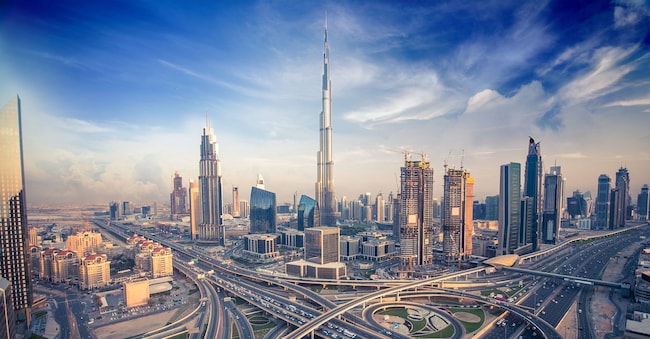
It had been a record year, 2025, for real estate in the Emirates. Then, images of the Burj Al Arab hotel in flames, hit by debris from a drone (along with the fire at the Fairmont The Palm hotel on Palm Jumeirah), in Dubai, cracked the skyline and sank the stock markets.

Loading...

Since the beginning of the conflict, the Dubai Financial Market's (DFM) property index has lost over 17%, marking the steepest decline among sector indicators. After recording returns of 180% since October 2023, it has now wiped out all gains from 2026.

Since the beginning of the conflict, Emaar Properties, one of the largest real estate developers in the Eau as well as builder of the Burj Khalifa, and Aldar Properties, the largest listed developer in Abu Dhabi, have left 18% of their value on the ground.

Both closed yesterday, 10 March, with losses of -4.1 per cent and -3.6 per cent, respectively.

In the last week, Deyaar, a Dubai-based developer specialising in residential and commercial projects, lost about 15 per cent.

The Dubai real estate market in 2025 has reached historic milestones.

According to data from the Emirates government, there were more than 270,000 transactions, a 20 per cent year-on-year increase for a value equivalent to approximately EUR 215 billion. While real estate investments (new developments) reached the equivalent of about EUR 60 billion.

According to Fitch, real estate prices in Dubai increased by 60 per cent between 2022 and the first quarter of 2025.

In Abu Dhabi, they increased by almost 32 per cent over the same period. For almost 80 per cent, residential purchases are 'on paper'. People buy, therefore, with delivery in 2-3 years. The risk, therefore, is that a flight of capital will block building sites that were supposed to open or will not complete those that are in progress.

Even before the US and Israeli attacks on Iran, however, analysts had sounded the alarm: supply would exceed population growth.

By 2025, the population of the Emirates exceeded 11 million, of which 90% are foreigners.

JPMorgan stated that Dubai's population expansion is unlikely to absorb the 300,000-400,000 new units expected by 2028.

At Cnbc, the founder of Emaar Properties, Mohamed Alabbar, said that "there might be some slowdown", adding that the Emirati real estate sector "does not rely on bank loans", the fundamentals are solid and that "smart capital will continue to invest".

"With a Roi between 8 and 10 per cent," explained Luca Dondi, CEO of Patrigest, "the Emirates already incorporated, before this crisis, the risks of the impetuous growth that characterises emerging markets. The image of a 'safe haven' is now cracked. But much will depend on how long the war will last. If, at the end, there is a repricing phase, there could also be a rush of speculative capital to buy down'.

Copyright reserved ©

Brand connect

Loading...

Newsletter

Notizie e approfondimenti sugli avvenimenti politici, economici e finanziari.

Iscriviti