
In EU countries 68% of households live in their own homes
Strong gaps between countries: very high shares in the East, lower in the richest economies. In Italia, the number of empty houses is the highest (27.3%), while in Greece ownership is at an all-time low
by Davide Madeddu (Sole 24 Ore) and Lena Kyriakidi (Efsyn, Greece)
 Aggiungi Il Sole 24 Ore
ai preferiti su Google
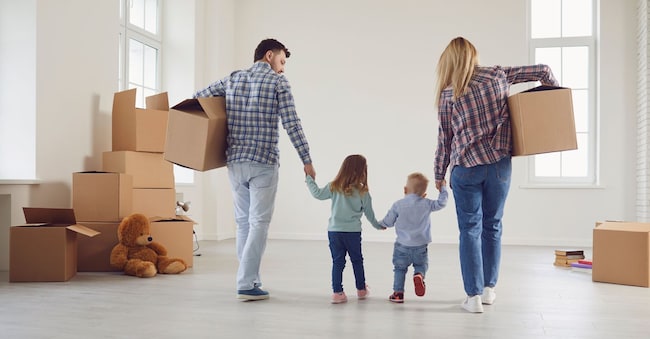
In some cases it is a dream come true, in some others a problem because finding a house to rent or buy is not always easy. A fact that about one third of the families living in EU countries have to deal with. In 2024, according to Eurostat, more than two thirds, the percentage is, on average, 68 per cent owned their own home. This is slightly down from 69% in 2023. The remaining 32% lived in rented accommodation, compared to 31% in the previous year.
In the whole picture, the highest figure was recorded in Romania, where 94% of the population owned a house, followed by Slovakia with 93% and Hungary 92%. "Owning a house was most common in all EU countries except Germany, where - Eurostat points out - renting predominated with 53% of the population being tenants. Germany was followed by Austria with 46% and Denmark with 39%'.
Italia ranks above average: 75% of Italian households live in a house they own, according to OECD data, compared to 59% in France and 41% in Germany.
In the European picture, there are also differences in how people live and what kind of housing they own or rent. A reading of the housing data shows that in 2024, 51% of the population lived in a house, while 48% lived in flats and 1% in different accommodations such as houseboats, camper vans. There is also another aspect concerning the size of houses. On average 1.7 rooms per person. Among the EU countries, the highest number was recorded in Malta with 2.2 rooms per person, followed by Belgium, Luxembourg and the Netherlands with 2.1 rooms. At the other end of the scale Slovakia and Romania both with 1.1 rooms. In spite of the high number of owner-occupied houses in Europe, there is also another aspect: in 17% of the cases the houses are overcrowded. Not only that, 33% were in an under-occupied house, i.e. too large for the needs of the family present. Situations in which, in most cases, elderly people remain in the homes after their children have left.
The Italia case
As for Italia, there is another aspect: it is the European country with the highest number of empty dwellings. Italia, in fact, has 27.3% of unoccupied dwellings, three times more than France (7.8%) and six times more than Germany (4.4%), which translated into absolute numbers means 9.5 million dwellings out of 35 million surveyed. The highest number of unoccupied dwellings is in the South, with 40% in Reggio Calabria and 39% in Messina.

