
The secret of green wellness in the 3-30-300 formula
It was conceived by forest ecologist Cecil Konijnendijk, who explained why we need to build many jungle towns and plant more and more trees. For sustainable urbanism.
4' min read
4' min read
On an increasingly hot planet, trees are the most efficient way to make urban life tolerable. Cities are peculiar ecosystems: the abundance of asphalt and concrete makes them up to five degrees warmer than the immediately surrounding countryside due to the heat island effect.
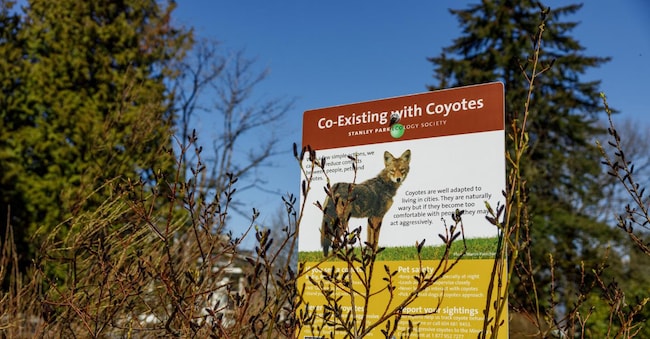
Trees lower temperatures, improve people's physical and mental health, and capture CO2. But how many are needed to cool a metropolis? The most widely adopted parameter suggests a coverage of at least 30 per cent of the surface area. The problem with this methodology is the same as with Trilussa's chicken: if someone eats a chicken and someone else doesn't, the average will say they both ate half a chicken. "Today, the distribution of trees in cities tends to reflect other inequalities: in neighbourhoods with higher incomes, better schools and cleaner streets, there will also be more green areas," explains Dutch forest ecologist Cecil Konijnendijk. For this reason, Konijnendijk developed a more accurate metric in 2021, which has since then been highly successful and has shaped the way urban greening is globally conceived. It is a simple rule, made up of three numbers instead of just one: 3, 30, 300. Thirty per cent of every neighbourhood (and not just the whole city) should be green, no one should live more than 300 metres from a park, at least three trees should be visible from every window. "This idea makes it possible to reformulate the relationship between the city and green, which should be lived in, used and seen, for everyone. The idea did not originate from a scientific paper, but from a LinkedIn post by Konijnendijk, who aggregated in that analysis data sets and research that until then no one had assembled. From the next day it exploded, politicians started putting it on election programmes, town planners on master plans: the first city to make it a public issue was Malmö, Sweden, which officially adopted the methodology, which then became the standard in very different places, Haarlem in the Netherlands, Zurich in Switzerland, Lima in Peru. However, it is not a simple problem of botanical accounting, the conflict between urban spaces and other ecosystems is rooted in the very essence of cities. "Today we are trying to change our outlook, to turn cities into forests, despite the fact that these were born in opposition to nature: they were literally the places where nature stopped and civilisation began. Now, however, we can no longer allow it to be like that,' Konijnendijk points out. The quality of life improves, but new conflicts are also created: green increases biodiversity, which as citizens we are not used to managing. Vancouver has invested in urban greenery, which has attracted different species, especially coyotes, which do very well in the city. "Vancouver organised a public education programme on how to deal with coyote encounters. They made a wise decision, the political instinct would have been to remove them as a problem, but if we want forest cities, we have to be able to deal with the consequences,' Konijnendijk explains. The real problem for ambitious city planners, however, is not animal encounters, but how to manage the rarest public resource in most cities: space. Not only the one above ground, but also the one underground. Roots need it, but so do subways, cables, fibre optics. In the first few metres of our urban soils there is a competition between the organic of trees and the inorganic of everything else: it is one of the reasons why plants tend to live short. Stockholm has an innovative programme that allows trees to survive even in the most worn-out soils, through underground structures called tree pits, soil pits connected to rainwater recovery channels.
This is what urban green needs above all: not only political will, but also technology, innovation and creative thinking. Henrik Sjöman is a Swedish ecologist and has long been fighting a battle that also angers many environmentalists: according to his research, the greenery of many cities will need exotic and not only native species. The reason is rising temperatures: we need to design not only for the current climate, but for the future one, by importing species that are suitable for living in warmer latitudes. According to Konijnendijk 'in the summer months many cities are functionally deserts from an ecological point of view, we have to design urban greenery accordingly'. It is an ongoing debate with no easy solutions, but this is also where the implementation of 3-30-300 will come from: planting more resilient species. Cities will need so-called super trees, whose characteristics are better adapted to the changing climate. In Vienna, one of the greenest cities in Europe, the hackberry tree is succeeding, forest ecologists are increasingly suggesting the curly maple or Japanese zelkova. A helping hand will come from artificial intelligence: in one of the world's first jungle metropolises, Singapore, where the coverage is over 50 per cent, a start-up called Greehill was born, which over the years has opened offices on three continents. They use the digital twin method: they create a model of the city in a computer, simulating scenarios, temperatures, diseases, and plant responses, a dynamic digital inventory that allows us to see how plants planted today will respond in the future. The challenge of urban greenery is also this: it is not enough to plant trees, you have to make sure they survive.
ThINKING GREEN GREEHILL. CECIL KONIJNENDIJK. HENRIK SJÖMAN,

