Mind The Economy

In the face of inequality, the right is deaf and the left is short-sighted.

8' min read

8' min read

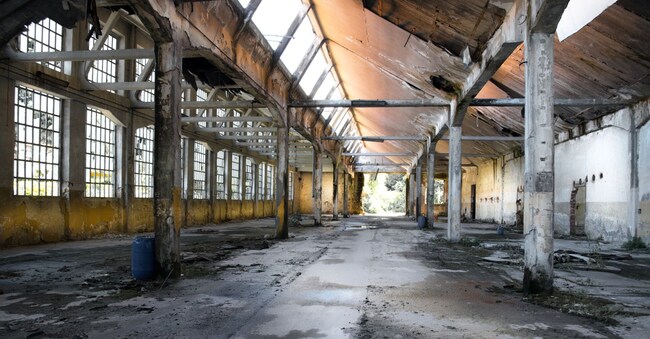
In 1985, in Bagnoli, the gates of the Italsider steelworks closed forever. Until a few years earlier, the plant smoked day and night, lighting up the sky of west Naples in red; thousands of workers came in and out in shifts, marking time in the city. Then came the slow dismantling: departments emptied, machinery sold, workshops reduced to metal skeletons. At first it was a shock: front pages in the newspapers, interviews with trade unionists, delegations of ministers in suits in front of the cameras.

But as the months passed, the clamour faded. The surrounding neighbourhoods remained jobless, bars emptied, families survived on benefits and odd jobs. Unemployment remained high, wages low, resignation deepening. The crisis was no longer an emergency: it had become normality.

Loading...

In 1992, the hum of the looms began to die down in Prato. For decades, the city had lived off textiles: warehouses full of yarns, dyehouses smelling of wet wool, trucks leaving every day loaded with fabrics bound for half of Europe. Then came foreign competition, the margins thinned, and one by one the factory gates closed.

At first it was a collective mourning: crowded assemblies in the squares, television reports, promises of recovery plans. Mayors called for urgent action, politicians came to shake hands and talk of 'a productive vocation to be defended'.

Then the silence. Empty warehouses became sheet metal skeletons, grass grew in the cracks of the asphalt, and many former workers found casual employment or emigrated. The crisis was no longer news. It had become the background of everyday life.

In 1994, in Sesto San Giovanni, Falck's last blast furnace was shut down. For almost a century, that town on the outskirts of Milan had been 'the Stalingrad of Italy': steel, trade unions, workers' struggles. The chimneys were its horizon, smoke its daily air. Then, within a few years, came the dismantling: warehouses emptied, rails rusted, entire departments dismantled piece by piece.

In the beginning there were marches every week, newspapers opened with full-page headlines, party leaders climbed onto makeshift stages in front of the gates promising conversion and investment. Then the collective voice dropped. The disused factories remained like open wounds in the urban fabric, slowly turning into brick and concrete skeletons. Unemployment remained high, but there were no more photographers' flashes: the crisis had settled in, becoming part of the landscape.

Because what happens is that if inequalities grow rapidly, altering the perception of citizens, then the left notices and mobilises, but if the differences between rich and poor are there, stable for a long time, however unacceptable, then the left adapts and keeps silent. The right, of course, on its own account, is always silent.

This, in short, is the result of an extensive study that Alexander Horn, Martin Haselmayer and Jonathan Klüser have just published in the American Political Science Review ("Why Inequalities Persist: Parties' (Non)Responses to Economic Inequality, 1970-2020"). A study, that of the three political scientists, based on a new data collection obtained from the analysis of 850,000 political statements extracted from 965 election programmes in twelve OECD countries, between 1970 and 2020. The main result is rather disconcerting. In the words of the authors "Left-wing parties react to rising inequality (...) but not to (high) levels of inequality". This is the reason why 'Inequality is not self-correcting'.

The first step necessary to understand the reactions of the various parties to changes in the economic framework is to semantically differentiate the idea of 'equality' from that of 'redistribution'. Saying that 'we believe in equal rights for all people, regardless of origin' is not the same as saying 'we want to tax wealth above a certain threshold to finance public healthcare'. Saying 'we respect cultural differences' is not the same as saying 'we raise taxes for incomes above one million euros'. The former are declarations of rights, the latter are commitments to redistribute wealth from those who have more to those who have less.

In the large datasets used so far to study the phenomenon, sentences of this kind ended up indistinctly in the same 'container', that of the 'economic left'. The results, therefore, showed parties seemingly always attentive to inequality, but in reality over time this attention changed subject: from the income dimension to that of civil rights. The new dataset elaborated by Horn, Haselmayer and Klüser, on the contrary, carefully identifies the different aspects of the topic 'equality': the economic aspect, first of all, linked to the redistribution of income and wealth, then the issue of equal opportunities in the area of access to services, education, mobility and, finally, the civil rights dimension, with the fight against discrimination based on gender, race and sexual orientation. In order to build their database, the authors analysed fifty years of election programmes presented in 12 OECD countries, filtered them through an algorithm to identify the relevant sections, and then entrusted the classification to hundreds of individuals through a 'crowdcoding' process on a specialised online platform.

A first interesting result emerges from the data 'cleaned' in this way: the correlation between economic equality and equal rights is very low. That is, these are lines that do not move together, and indeed often diverge. The attention paid to the first aspect does not imply equal attention to the second aspect and vice versa.

Regarding the historical evolution of electoral programmes, a clear picture emerges from the analysis: the focus on economic equality was high in the 1970s; it collapses in the 1980s and 1990s, in the 'third way' era of Giddens, Tony Blair and Bill Clinton. This is the crucial moment in which left-wing parties accept the logic of the market - liberalisation, privatisation, deregulation - and, at the same time, soften their focus on redistribution. A trend that will only be reversed after the 2008 financial crisis, which will once again bring the issue of economic justice if not to the centre, then at least among the topics of political debate. In the meantime, the focus on civil rights, fortunately, is growing steadily. It clearly emerges how, for decades, the left has shifted the axis of its programmes from economic justice policies to civil rights, and that the semantic confusion between these two spheres of intervention has contributed to an inaccurate and at times false narrative of the left's fight against inequality.

As for the economic aspects, there is another factor that has fuelled this ambiguous narrative: the difference between the 'level' of inequality, how much inequality, that is, there is today, and its 'variations', that is, how the level has changed. Even the way inequality is measured is not neutral. The traditional Gini index is a useful and synthetic measure but risks hiding important aspects of the phenomenon. That is why it would also be necessary to consider the ratios between the incomes of the different social strata: the income of the 90th percentile compared to that of the 10th, for example, or the share of income of the poorest 50 per cent of the population or the share of wealth held by the richest 1 per cent. The difference is crucial: while the Gini index is synthetic and uninformative, these ratios tell more detailed stories: how far the rich move away from the middle class and how far the middle class moves away from the poor.

And so we find that when the gap between the richest and the poorest increases considerably, the issue of economic equality makes its way into the electoral programmes of the left. And on the right? On the right, nothing happens at all. The issue does not seem to concern them. This result, after all, is not particularly surprising. It was to be expected. What is really surprising, however, is that when inequality is high but stable, i.e. it is an established fact within a certain country, then even the left is paralysed. When a society is unequal, even strongly unequal, but has been for a long time, the right, as always, turns its eyes away.

What is behind this insensitivity? Horn, Haselmayer and Klüser identify three mechanisms that act in concert. The first has to do with 'visibility'. The media, and with them public opinion, love novelty. A high but stable level of inequality becomes background noise. And without media attention, one struggles to build consensus, which is why parties have less incentive to deal with it. The second mechanism is related to the issue of 'mobilisation'. Inequality discourages political and electoral participation among those with lower incomes. In already very unequal contexts, left-wing parties struggle to mobilise their natural electorate. In contrast, when the gap grows rapidly, the threat is perceived more clearly and this can rekindle commitment. The third aspect concerns what behavioural scientists call 'status quo bias'. People for various reasons tend to justify the existing order. If inequality has been high for years, it becomes 'normal'. In a society accustomed to large gaps, even the perception of justice adapts. Behind this attitude are powerful factors such as the influence of the growing meritocratic rhetoric, the so-called 'just world belief' and the 'hindsight bias'. Only sudden changes make injustice evident and succeed in undermining these perceptions.

The data highlight another interesting fact. Left-wing parties are particularly sensitive to changes in the 'denominator'. This means that they are more aware of growing inequality when the condition of the lower end of the distribution worsens than when the wealth of the already very rich grows.

With such an attitude, the aggregate result is that, even when the left adopts redistributive and inclusive policies to combat inequality, inequality will continue to increase, more or less rapidly, but will certainly not decrease. In other words, left-wing parties oppose increases in inequality, but do not work to reduce the already high levels. The mechanism only works in one direction: you can stop the worsening, but you rarely go back.

What are the operational implications that emerge from this data? The first one tells us that if we really want to counteract an unjustified growth of inequalities we have to make them visible even when the distribution of income does not change. We need a narrative capable of conveying the message that the status quo is not good in itself. The persistence of inequality is not a neutral backdrop but produces daily 'costs' in terms of access to housing, care and education and presents the risk of a generational breakdown. All these factors, in turn, pose a threat to social cohesion, political participation, but also to the economic system itself and the resilience of democratic systems.

The second implication is the one that suggests acting on the 'denominator'. The condition of those who are worse off must be raised through a fight for lower wages, the funding of inclusive welfare, quality public education.

What is needed are credible and concrete political proposals, asserted with strength and determination. because the most dangerous mistake is to believe that an injustice ceases to be an injustice just because we have got used to living with it. Inequalities do not dissolve, they remain there, like a crack in the wall that everyone pretends not to see, until one day the house collapses. If we do not learn to recognise the signs of their persistence, to make them visible even when they make no noise, the fracture will become irreversible. Because time alone does not heal. Time, when it lacks courage, normalises and consolidates.

Copyright reserved ©
Loading...

Brand connect

Loading...

Newsletter

Notizie e approfondimenti sugli avvenimenti politici, economici e finanziari.

Iscriviti