
In Genzano di Lucania, an art centre in the former district prison
Renovation and re-functioning of 8,000 square metres with adaptation to energy standards, EUR 2.7 million needed for contemporary creativity, training and artistic research

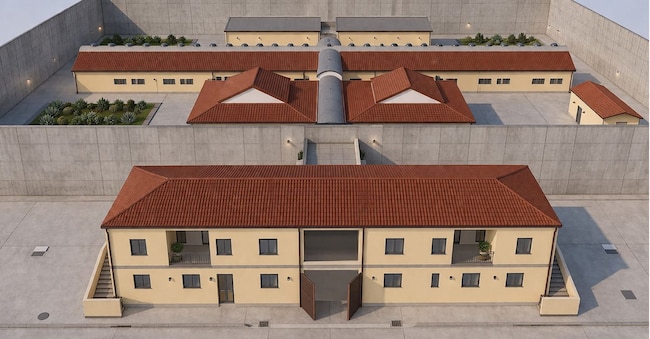
A new pole for contemporary art, training and artistic research will rise in Genzano di Lucania, in the province of Potenza. The small Upper Bradano municipality of about 5,700 inhabitants will host a cultural centre that aspires to be of national and international significance. At the centre of the ambitious project is the recovery and re-functionalisation of the former Genzano prison, at a cost of 2.7 million euro. Designed since the 1970s as a detention facility connected to the Pretura for short-term detentions, and handed over in 1981, the imposing structure, which covers an area of 8,000 square metres, has never been used. With the reform of the judicial system in Italy in the 1990s and the abolition of the Preture Mandamentali, it was decided to abolish the Pretura Mandamentali and return the buildings no longer used by the prison administration to the municipalities. With the loss of the functionality for which it had been conceived, the former prison, returned to municipal property, remained without a destination for a long time, left in a state of neglect and progressive abandonment.
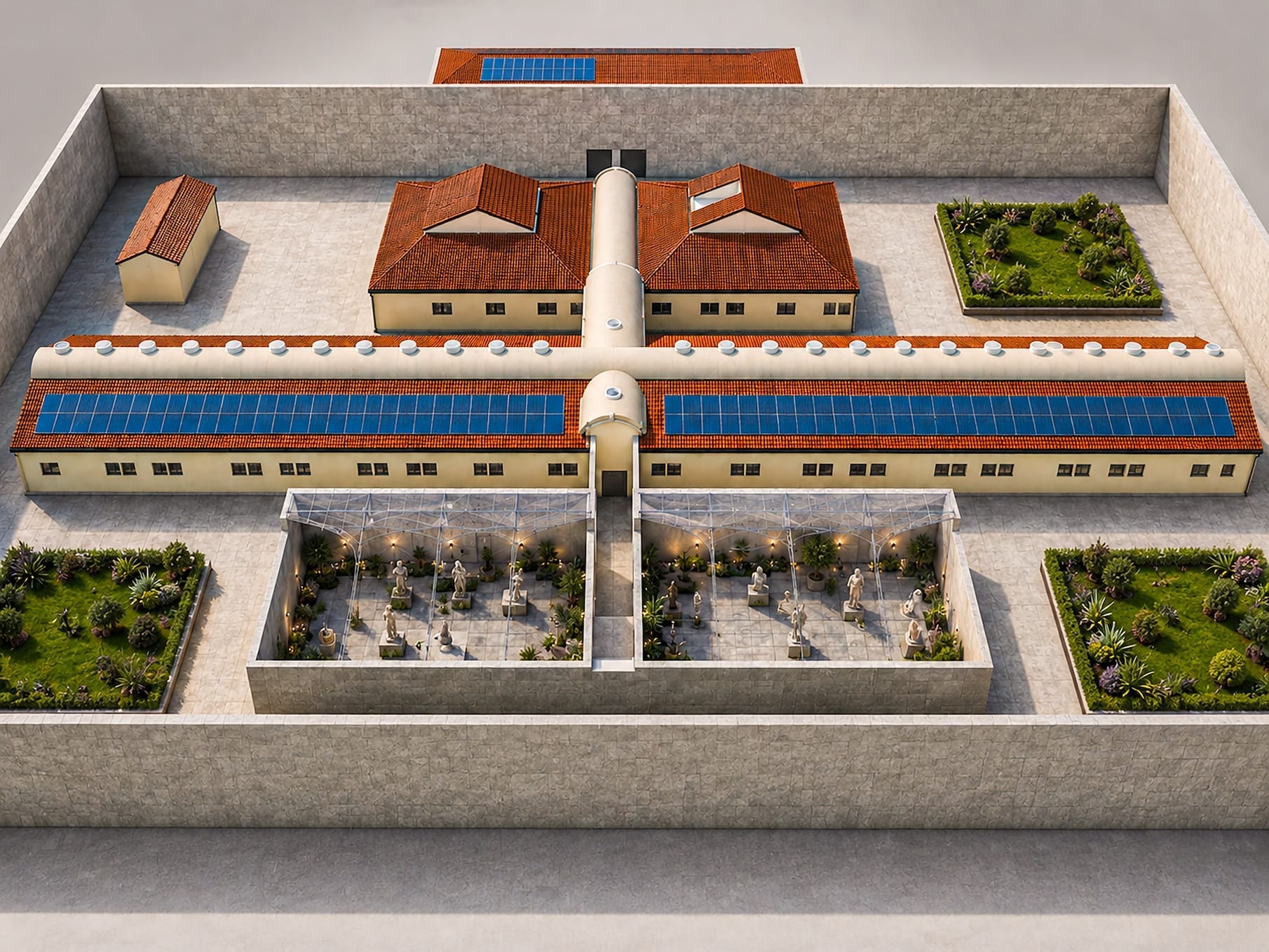
Actors and Activities
The main actor of the project is the Porta Coeli Foundation, based in Venosa, which has been active in the promotion of artistic culture for over 15 years. It has to its credit initiatives such as the Mediterranean art prize, the work done for ABCD Alto Bradano Contemporary District, 404. Contemporary Art Programme, as well as exhibitions and collaborations in Italia and the Mediterranean area. The non-profit organisation signed a ten-year free loan agreement with the Genzano municipality, owner of the property, which will finally be handed over to the community and used for positive purposes. The idea is to 'make open and accessible to the public a place designed for the restriction of freedom', explains Aniello Ertico, president of Porta Coeli. "The prison walls, which today border an unknown space, will be able to be perceived as the protection of a common space where inclusive processes take place and where culture is renewed through initiatives capable of involving the community, before artists and intellectuals".
The future centre, which aims to become a place for contemporary art, will host artistic residencies, carry out training and research activities, and promote international cultural exchanges. Therefore, spaces dedicated to training, exhibition spaces, workshops, a conference hall, offices and guest quarters are planned.
Funds and Sustainability
Thanks to the Integrated Cultural Plans (ICPs) of 2022, Porta Coeli had already managed to recover some of the structure's outbuildings, allocating them to offices, a training room and an exhibition hall. Hence the idea of developing a larger project involving the entire property, with an estimated expenditure of around EUR 2.7 million. "As a commodatary, the Foundation signed an EPC (Energy Performance Contract) with an Energy Service Company (ESCO), able to directly access the GSE measure 'Conto Termico 3.0', which will be able to guarantee the recovery of around 72% of the financial charges subject to reporting," Ertico reports. "It is precisely the EPC, through the valorisation of carbon credits on a multi-decade basis, that will allow for the complete recovery of the costs of renovation and energy efficiency".
It is, therefore, an important opportunity "deriving from the recent modifications and integrations concerning the 'Conto Termico 3.0' measure, made available by the Gestore Servizi Energetici. Regulatory implementations that favour interventions of this kind and that include as eligible subjects precisely ETS engaged in non-profit activities'.
The design and execution of the works will be entrusted to the 2D Group, a holding company from Genzano di Lucania active in the fields of energy efficiency, construction, design and consultancy. The urban regeneration project is based on a public-private model in which the collaboration, between a public body and a Third Sector entity, does not envisage any investment by the municipal administration. Shared initiatives with other foundations and agreements with main partners are envisaged for multi-year sustainability. The involvement of the Basilicata Region is also hoped for with a view to future recognition as a regional centre for contemporary arts.

