
In Gibellina, the Italian capital of contemporary art, the talents of the future
Of the 500 works acquired over the years by Francesco Galvagno, one of Sicily's leading collectors, many inhabit the offices and common spaces of his company. Because their presence enhances our way of being together.
by Patrizia Sandretto Re Rebaudengo
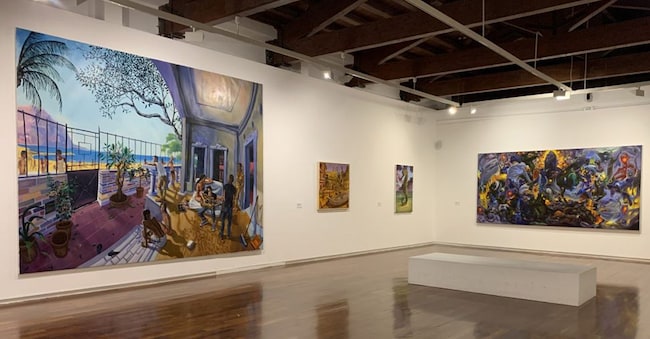
In January, I took part in the inauguration of the programme of Gibellina Capitale italiana dell'arte contemporanea 2026, Portami il futuro. It was the concluding moment of a journey that I followed closely as president of the jury appointed by the Ministry of Culture to select the winning project for the first edition of this award. Gibellina represents a worldwide unicum: after the earthquake of 1968, the town was reborn thanks to the enlightened vision of Ludovico Corrao, who promoted its reconstruction through contemporary art. From Alberto Burri's Cretto to the interventions of Carla Accardi and Pietro Consagra, from the projects of the 'architects of reconstruction' to the international Orestiadi festival, Gibellina was transformed into an open-air museum. At the Gibellina Museum of Contemporary Art, I saw Francesco Galvagno's collection and discovered a story that combines entrepreneurial success and passion for art. Galvagno is managing director of Elenka, a Sicilian company founded by his father Antonino in 1959, specialising in the production of semi-finished products and ingredients for pastry and ice cream parlours. In addition to running the company, Galvagno cultivates a great love for contemporary art, which has led him to become one of Sicily's leading collectors.
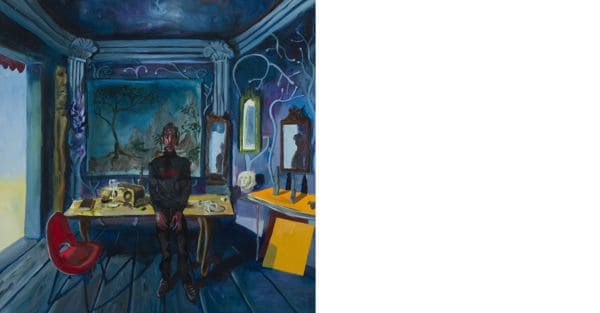
WHAT WAS YOUR FIRST ACQUISITION? AND THE LAST? I bought my first two paintings at Franca Prati's gallery in Palermo: a work by Pippo Oriani and one by Mimmo Germanà. Thanks to her precious advice, I learnt how to train my eye, got to know many artists and many galleries. The last acquisition was a few days ago, a sculpture by Giovanni Termini.
WHEN DID YOU START COLLECTING ART? In the late 1990s, just before I got married. After 27 years, my collection consists of around 500 works. Part of it was bought by my father, who had no intention of building up a proper collection, but loved being surrounded by beauty in his home.
HOW DOES HE CHOOSE THE WORKS FOR HIS COLLECTION? DO YOU RELY ON GALLERY OWNERS OR CURATORS? In the beginning I relied on the advice of gallery owners. Over time I have gained experience and today I mainly follow my feelings. I look for works that belong to the present and, at the same time, are able to dialogue with the history that precedes them.
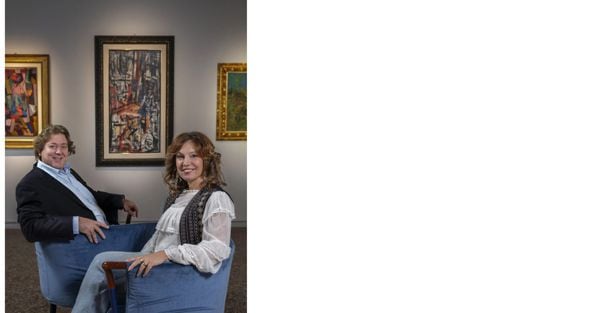
Three EMERGING ARTISTS TO KEEP AN EYE BEARING IN MIND, AND THREE TRANSCURRENT ARTISTS TO DISCOVER. I follow Roberto Orlando and Matteo Fato, although perhaps the latter can no longer be described as emerging. Another artist who is developing increasingly significant projects is Giovanni Termini. Among the figures to be rediscovered are Lucio Pozzi, whom I consider to be an artist of great depth, Paolo Icaro, who deserves more attention, Bruno Caruso and Renato Guttuso, whose work retains great historical relevance.

