In Green Spain a slow journey through the Basque Country and Cantabria
The best way to explore it is to walk the Camino del Norte, a historic pilgrimage route that leads to Santiago de Compostela and crosses four regions
by Erika Scafuro
 Aggiungi Il Sole 24 Ore
ai preferiti su Google
4' min read
Key points
4' min read
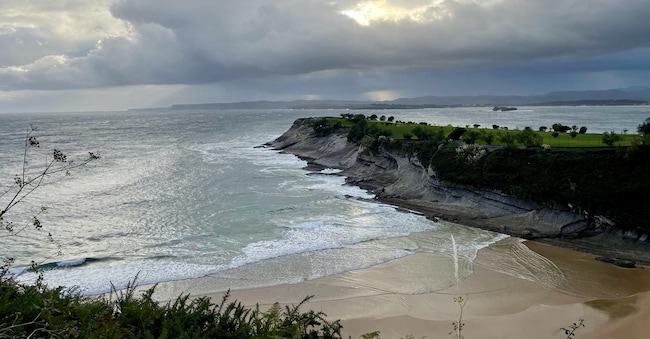
There is one expression that unites the Basque Country, Cantabria, Asturias and Galicia, and that is green Spain. This is in fact the main hue that most characterises the lush nature and rural landscape of the four regions in the north of the Iberian country, and which is mixed, as if on a palette, with the blue colour of the Cantabrian Sea and the Atlantic Ocean, whose waters lap a coastline of high cliffs. There are many ways to explore green Spain. One is the Camino del Norte, one of the historical and main pilgrimage routes that leads to Santiago de Compostela and crosses all four regions for eight hundred and fourteen kilometres. A slow-paced journey that can be done on foot or by bicycle, but which can also be planned by car, the important thing being to stop at some of the most surprising places to appreciate every facet. The experience can begin in the Basque Country and Cantabria, both reachable by direct flights from Italy, to discover amazing natural, cultural, spiritual sites, always accompanied by excellent food and wine.
Basque Country: Between Legends and the Contemporary
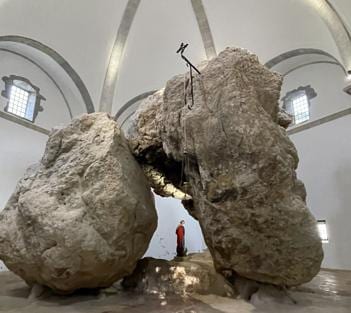
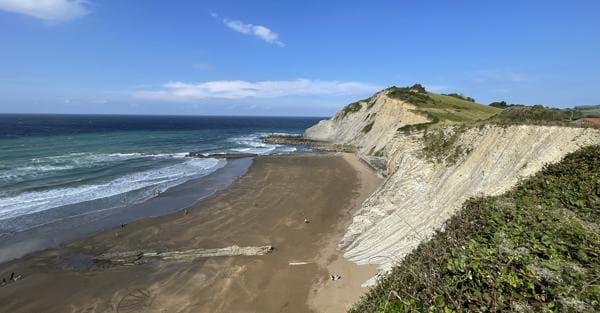
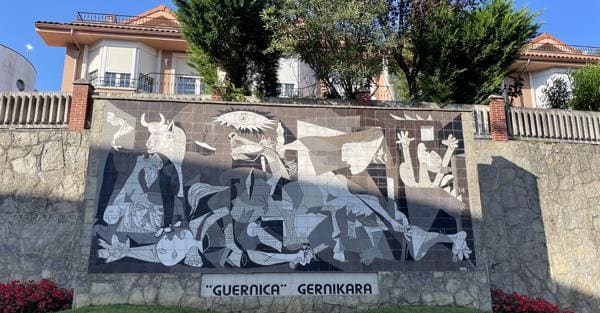
.Exploring the landscape of the Basque Country is almost like hearing a distant echo. Here, legends and traditions combine with the contemporary present to show all the cultural, spiritual and natural richness of the Spanish region. This perception is strong when one reaches the seaside village of Zumaia and finds oneself in front of the Flysch, that is, various vertical layers of cliffs - emerged when the Iberian plate collided with Europe - that show the Earth's events over more than sixty million years and that are part of the Basque Coast Geopark. The suggestion continues in the ancient medieval town of Markina-Xemein where the Ermita de San Miguel de Arretxinaga is located, a church built in a hexagonal shape to contain the three rocks that make up a megalithic monument; the town is also known as the birthplace of the most important pelota players, the popular sport played within the walls of the Frontón. Continuing along the Camino de Santiago del Norte we reach Guernika, a city of reference for Basque culture and sadly known for its bombing in 1937; as a testimony to this horror, the painter Pablo Picasso painted the famous Guernica, whose replica is located in the city centre. Arriving in Bilbao one breathes the contemporary, lively and avant-garde soul of the city founded in 1300, whose economic development gravitated around the port and the iron and steel industry; today its main symbol is the Guggenheim Museum.
Cantabria, a territory between sea and mountains
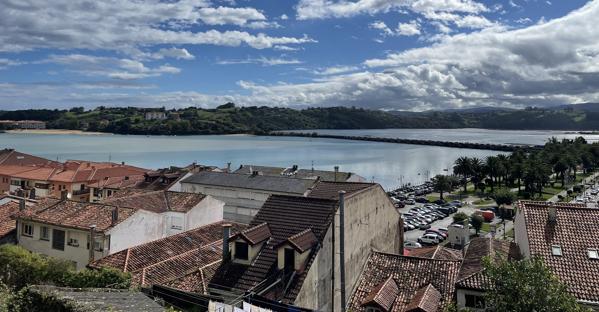
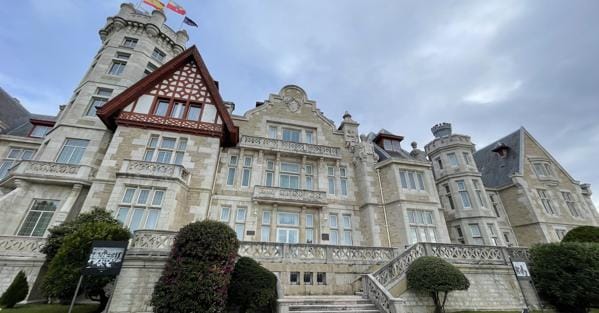
Two hundred and fifty kilometres of coastline, a coastline popular with surfers, and the lofty peaks of the Picos de Europa with altitudes of up to two thousand six hundred metres: this is Cantabria's main natural wealth. Its capital, Santander, is an elegant city built around a bay and boasts beautiful beaches such as El Sardinero. Its vocation for tourism began in the 19th century with the summer visit of the kings of Spain; for those who walk the Camino del Norte, Santander can be reached on a boat that crosses the ría and there is so much amazement when you come across the most representative buildings and new architecture, such as the Centro Botín, designed by Renzo Piano. Another must-see stop on the Northern Pilgrim's Way is the pretty medieval town of Santillana del Mar with the beautiful 12th-century Colegiata de Santa Juliana.
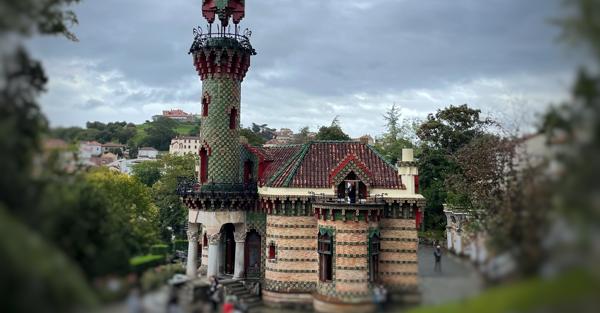
A few kilometres away is the historic town of Comillas, which offers the opportunity to visit El Capricho de Antoni Gaudí, a masterpiece by the brilliant Catalan architect. On the way back to the coast, the seaside village of San Vicente de la Barquera is worth a stop. It is crossed by the Camino del Norte and is also the crossroads for the Camino Lebaniego: a pilgrimage route (2023-2024 is the Jubilee Year) of seventy-three kilometres that leads from the hills of the coast to the imposing mountains of the Picos de Europa National Park, to the monastery of Santo Toribio de Liébana, where the Lignum Crucis, the largest preserved fragment of the Cross of Christ, is kept.
Tasteful Tables
.The sea and the land have been generous to northern Spain with its favourable climate for agriculture, fishing and livestock breeding, top-quality materials that are transformed into world-famous food and wine. The Basque Country boasts an incredible number of Michelin-starred restaurants, twenty-two at present, making the region one of the most recognised on the international culinary scene with typical dishes based on fish, seafood, meat, vegetables and cheese. Among the starred addresses is the Tayko hotel in the heart of Bilbao, which houses the Ola restaurant, with one Michelin star, under the gastronomic direction of Martín Berasategui. Not to be missed is a tour of the bars to taste the exquisite morsels that, in the Basque country, are known as pintxo; the one par excellence is the Gilda (from the title of the film in which Rita Hayworth starred): olives, an anchovy and two pickled Ibarra chillies served around a toothpick, to be accompanied by one of the wines with a Basque identity such as the white txakoli.