
In the history of clothes the history of society

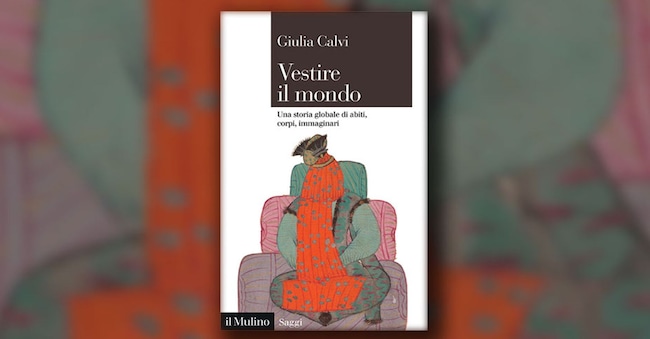
If they say 'the clothes do not make the man', it is also because for centuries people wanted to think that clothes could (and should) really reflect the inner character of the wearer. The latest book by Giulia Calvi, a specialist on modern Europe and a long-standing member of the board of the Italian Society of Historians, returns to an important chapter of this oppressive illusion, from which we are still not rid.
It does so in the wake of a literary genre that flourished in the 16th century, the costume books, in which the tradition of suntuary laws was grafted onto that increasingly in vogue of travel reports, cartography and collecting. These albums thus became the mirror of geographical expansion and European territorial conquests and at the same time instruments of proto-racist disciplining, capable of forging an imagery in which bodies - naked and clothed - expressed hierarchies and symbolic values.
The most monumental of these works is due to a distant cousin of Titian, Cesare Vecellio. A painter, engraver and printer, in 1590 he printed De gli habiti antichi et moderni di diverse parti del mondo (On the Ancient and Modern Habits of Different Parts of the World), full of no less than 428 illustrations, which became 503 in the next edition (1598). Among the second- or third-hand information that Vecellio drew on, Calvi identifies a history of Scandinavia and Lapland compiled by Olaus Magnus (1490-1557), the Catholic archbishop of Uppsala, who was well suited to represent the inhabitants of those regions from an anti-Protestant perspective.
In painting the clothes of Andalusian men and women, Vecellio relied instead on the German artist Christoph Weiditz. The presence of a large population of moriscos (Muslims forcibly converted to Catholicism) and the habit of even Christian women of covering their faces aroused particular fascination. Calvi admits that "we cannot reconstruct the subjective perception" of those who went veiled, but recalls the fear, cited in the legislation by which the practice was banned, that this guaranteed women an anonymity that destabilised the social order. Beyond this example, there remains in the book an unresolved tension between the desire to trace forms of resistance (agency) in certain images and the due insistence on the use of representations as a device of colonial rule (Bernard Cohn).
Thanks to some successful finds in the archives and libraries of Florence and Berkeley, Calvi widens his gaze to the Ottoman and Japanese costume albums of the 17th and 18th century, sketching out an analysis of the forms of circulation of this genre across languages, continents and visual cultures. It was therefore not an exclusively European production, but the mutual contaminations, specificities and adaptations need to be further investigated.

