
In Israel the papers of legendary spy Eli Cohen
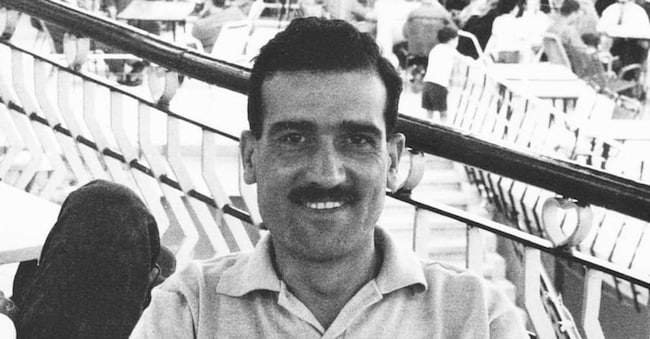
The archive contains thousands of top secret items kept by the Syrian services. In a meeting held today, in the presence of Prime Minister Benyamin Netanyahu and Mossad chief David Barnea, Eli Cohen's widow, Nadia, was presented with personal items and the will written by Cohen a few hours before his execution in Damascus on 18 May 1965
2' min read
2' min read
In a complex operation by the Mossad, in cooperation with an allied intelligence service, the official Syrian archive on the legendary Israeli spy Eli Cohen was transferred to Israel. This was reported by Benyamin Netanyahu's office.
The archive contains thousands of top secret artefacts kept by the Syrian services. In a meeting held today, in the presence of Prime Minister Benyamin Netanyahu and Mossad chief David Barnea, Eli Cohen's widow, Nadia, was presented with personal items and the will written by Cohen a few hours before his execution in Damascus on 18 May 1965.
"Eli Cohen is a legend. As time goes by, he turns out to have been the greatest intelligence agent in the history of the State of Israel. His heroism and actions contributed to the historic victory in the Six Day War. The archive brought back will be an educational source for future generations, and it symbolises our unwavering commitment to bring all our missing, imprisoned and abducted people back to Israel". Said Benyamin Netanyahu after Israel received the top secret Syrian archive of the Mossad secret agent who managed to rise to power in Damascus under a false identity.
Among other things, Cohen became close friends with many Syrian generals, most notably Amin al-Hafiz, who after becoming president of the republic appointed him deputy minister of Syrian defence.
The secret archive comprises some 2,500 original documents, photographs and personal items, most of which are being made public for the first time. These materials were collected by Syrian intelligence after Cohen's capture in January 1965, and include audio recordings and documentation from interrogation files, handwritten letters to his family in Israel, photographs of his operational activities in Syria, and personal items taken from his home after his arrest.

