
For one in two Italians living in cities, living costs and rents are putting a strain on families
According to a survey by the ‘Comunicare l’Abitare’ think tank, the main factors are inadequate housing stock and irregular wages. Young couples are struggling

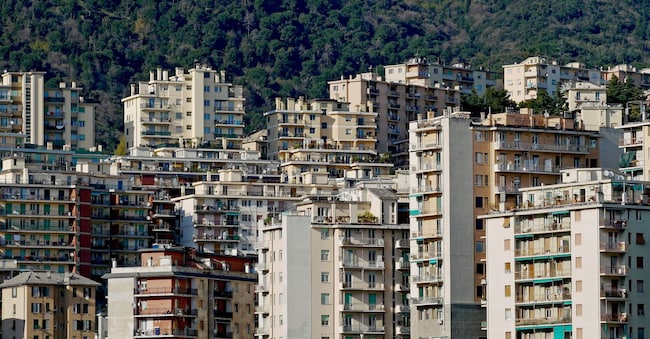
A better home is recognised as having value, but its cost often remains unaffordable. This is highlighted by a 2026 survey carried out by Casa Radio’s ‘Comunicare l’Abitare’ think tank – and presented this morning at a conference in the capital, organised under the patronage of Confedilizia Roma, the Order of Architects and Engineers of Rome, the National and Lazio Councils of Surveyors, and the Regional Council of Geologists – in which almost half (46.2 per cent of respondents) believe that living in one’s own city is, for an average family, hardly sustainable, whilst 56.5 per cent say they would be willing to pay more to buy or rent a home certified as healthy, efficient and safe – if they could afford it.
There is the issue of incomes being insufficient to buy or rent property, but there is also the issue of insufficient assets, in relation to which the landlords’ demands appear unreasonable.
On the market front, 25.1 per cent of respondents cited incomes that do not cover housing costs, almost on a par with outdated or inadequate housing stock, at 24.9 per cent. This is followed by regulatory and tax uncertainty (24.1 per cent) and the time and cost of procedures (23.3 per cent). Excessively high rents were cited by 22 per cent and sale prices by 21.2 per cent. The value placed on certified quality is subject to explicit price thresholds. 24.2 per cent are willing to pay up to 5 per cent more, 20.7 per cent up to 10 per cent and 11.7 per cent more than 10 per cent. 28.5 per cent rule out any price increases.
Among the groups identified as being most vulnerable when it comes to accessing housing are workers with irregular incomes (cited by 30 per cent of respondents), followed by economically vulnerable households (24.8 per cent) and young couples (24.5 per cent). It is not just a question of income level. When the focus shifts from desired quality to renovation, the conditions surrounding the investment come to the fore. Costs are the primary obstacle (15.8 per cent), followed by bureaucratic complexity (13.3 per cent). Among public measures, stable, multi-year tax incentives account for 17.1 per cent, the simplification of planning permissions for 13 per cent and clearer certification requirements for 12.8 per cent.
“The solution,” emphasised Giorgio Spaziani Testa, president of Confedilizia, “must be to encourage investment, incentivise the refurbishment of properties and create the conditions to expand the housing supply. We need policies that encourage this, not new restrictions and further burdens on property owners.” “We need to build more new properties for sale and rent,” added Federico Filippo Oriana, CEO of Aspesi Unione Immobiliare. “Having a large number of new homes would automatically lead to a fall in prices and a significant increase in the average energy and environmental efficiency of Italia’s housing stock.”
Brand connect


Newsletter RealEstate+
La newsletter premium dedicata al mondo del mercato immobiliare con inchieste esclusive, notizie, analisi ed approfondimenti
Abbonati