Transport

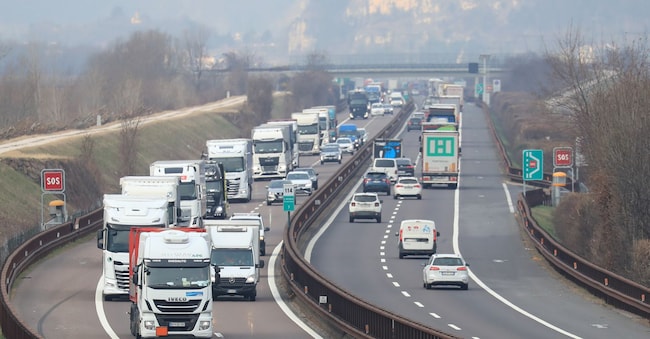
Italy is short of 30,000 drivers: job-finding platform launched

According to trade associations, the driver shortage in Italy is now a structural problem. Anita, Anav, Unasca and Confarca have launched a platform to facilitate the matching of supply and demand for drivers
by Pietro Menzani

 Pierre Teyssot / AGF

4' min read

Translated by AI
Versione italiana

4' min read

Translated by AI
Versione italiana

According to surveys by trade associations, Italy is short of 10 thousand drivers for passenger transport and 20 thousand for freight transport. And the picture - due to the loss of appeal of the profession and the demographic crisis - seems destined to get worse.

Precisely in order to structurally address the shortage of drivers, Anita, the association founded by Confindustria to represent road haulage and logistics companies, Anav (National Association of Road Haulage), Unasca (National Union of Driving Schools and Automotive Consultancy Firms) and Confarca (Confederation of Driving Schools and Automotive Consultants) have launched an inter-associative platform aimed at simplifying access to the profession.

Loading...

The context

The platform - presented on Tuesday 26 May in the press room of the Chamber of Deputies in front of the chairman of the Transport Commission Salvatore Deidda - aims to intervene on the systemic vulnerability that characterises the entire road transport sector. According to estimates, in fact, the situation is alarming: the average age of freight drivers is 47 and 5% of them are under 25, while that of passenger transport drivers is 50 and only 3% are under 25.

For the trade associations, the driver shortage represents a structural criticality from an economic, social, operational and strategic point of view and in the short to medium term could lead to supply bottlenecks, increased costs and the deterioration of collective mobility and tourism. In the long term, however, it could lead to a reduction in economic growth and a deterioration in the competitiveness and effectiveness of road transport in the country.

As Riccardo Morelli, president of Anita, explains, 'the availability of qualified drivers is an enabling factor for the competitiveness of road haulage and logistics companies, on which the continuity of production chains and the growth capacity of the country system depend'. Moreover, Paolo Colangelo, president of Confarca, reiterates that 'the job of driver is still very important: if we don't have drivers, the buses and goods will stop, and in Italia road haulage remains predominant compared to other types of transport'.

The Project

Anita, Anav, Unasca and Confarca have therefore joined forces to tackle a challenge they consider to be a priority: making the profession more attractive and enhancing the value of the workforce. The aim of the platform is to attract and retain new professionals and improve working conditions by promoting training and innovation in cooperation with institutions and national stakeholders.

Nicola Biscotti, president of Anav, states that 'the shortage of drivers is now a strategic priority for the entire mobility and logistics system,' adding that 'without structural intervention, the risk is that of compromising the continuity and quality of services. With this initiative, the associations intend to build a shared model that focuses on professional qualifications, the link between training and business, and the valorisation of driver work as a lever for the growth and modernisation of the sector'.

At the heart of the initiative is the ANITA/ANAV&Jobs inter-associative digital platform, an evolution of the already existing ANITA&Jobs, which aims to promote projects to facilitate the matching of supply and demand of drivers and strengthen the link between training and employment. It is a free tool made available to Anita and Anav member companies to create a meeting point between companies in the sector and professionals.

For workers it is a privileged gateway to companies in the sector, for companies a specialised recruiting tool. In order to support qualified placement in the sector,' it is explained, 'ANITA/ANAV&Jobs offers real employment opportunities, professional growth paths and continuous training programmes.

The role of driving schools

Essential in this context is also the role of driving schools, represented by Confarca and Unasca, which represent the start of the path for those who want to approach the profession of driver. The driving schools, in synergy with Anita and Anav, have made themselves available to contribute to feeding the platform through constant promotion and orientation activities.

Andrea Vannucchi, president of Unasca, says that 'training is an essential investment to guarantee the future of professional transport and to respond to the growing need for new skills in the sector' and that it is 'an initiative that looks to the future, promoting a new culture of safety, competence and responsibility, indispensable values for modern, sustainable and qualified transport'.

Regulatory proposals

The document signed by the associations then lists several regulatory proposals aimed at facilitating the access to the profession of driver. These include the possibility of participating in distance learning courses and the introduction of theory tests in English.

In addition, the associations call for the granting of temporary driving authorisation for drivers undergoing training and the refinancing of the Bonus patente giovani, which covers up to 80 per cent of the expenses incurred to obtain the Cqc - the driver qualification card required to access the transport of goods or persons - up to a maximum of EUR 2,500 for each beneficiary.

Copyright reserved ©
Loading...

Brand connect

Loading...

Newsletter

Notizie e approfondimenti sugli avvenimenti politici, economici e finanziari.

Iscriviti