The costs of conflict

War in Lebanon: 80% of farmers in the south forced to flee, agricultural and economic damage over $20 billion

Lebanese Agriculture Minister Nizar Hani: 'The war has already cost our country's economy more than $20 billion'

by Micaela Cappellini

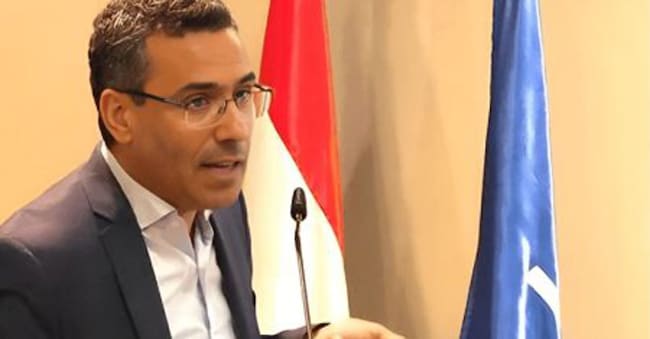
Nizar Hani

3' min read

Translated by AI
Versione italiana

3' min read

Translated by AI
Versione italiana

From the 7 October 2023 attack on Israel to date, to Lebanon's economy the war has already cost more than $20 billion. "From road infrastructure to tourism, from agriculture to water and electricity pipelines, and even destroyed homes," explains Lebanese Agriculture Minister Nizar Hani, in Rimini for the Macfrut fair, where he signed a cooperation agreement with his Italia counterpart Francesco Lollobrigida.

If the damage caused by the conflict started two and a half years ago, with Israel's first responses to Hezbollah attacks, the bulk of the destruction came when the Iran war broke out and Israeli IDF troops invaded South Lebanon.

Loading...

Minister Hani, in Lebanon today there are about one million displaced persons due to the war: how many of them are farmers?

80% of farmers living south of the Litani river, in areas occupied by Israeli troops, had to abandon their land. A very high number. The Lebanese army has made many efforts to help as many farmers as possible to move their livestock and hives to a safer area. The government also provides them with cash support to buy fodder or keep their farms going. But the situation is very complicated.

How important are the Israeli-occupied Lebanese territories south of the Litani River for your country's agriculture?

They are decisive. The conflict directly affects 22.5% of our agricultural area, a territory of over 50 thousand hectares. The south of the country is home to 70 per cent of all our citrus fruit production and also 90 per cent of our banana production. In this area, the war not only affects domestic fruit consumption, but also influences a wider regional market that includes Syria, Jordan and Iran itself, all countries that depend on Lebanese supplies of citrus fruits and bananas at this time of year. The war therefore also affects Lebanon's agricultural exports: for our farmers, this is a major decrease in cash receipts.

How much has this war cost Lebanon so far?

This war for us started at the end of 2023, with Israel's response to the Hamas attack on 7 October. With the help of the FAO and the World Bank, the Lebanese government calculated that the war cost Lebanese agriculture EUR 800 million in the first year. To date, however, we estimate that the impact has doubled. The problem is that some of the damage is long-term because greenhouses, farms, infrastructure, in short, have been destroyed. Moreover, even after replanting, it will take years to restore the destroyed citrus and olive groves. Also for the first year of the conflict, together with the World Bank we had made a precise assessment of the impact of the conflict on the entire economy of Lebanon: the result is an 11 billion dollar bill. And even this figure, to date, we estimate has doubled. The cost of the conflict now exceeds $20 billion.

Libano, raid israeliano rade al suolo un edificio commerciale: i negozianti tra le macerie

Do you think the ceasefire will last?

I am not optimistic, but we must do everything in our power to maintain it. What happens between Israel and Lebanon depends on what happens between the US and Iran. The will of the Lebanese government has always been to stop this war, the problem is Hezbollah and its relationship with Iran, because they receive orders from Tehran more than from the Lebanese government.

Does Hezbollah have an influence in Lebanese agriculture?

Directly as an organisation, no. But the main agricultural areas of Lebanon are two, the territories south of the Litani river and the Bekaa valley, and in both of these areas the majority of the population is Shia. For many Hezbollah supporters, it is a given that agriculture is the primary source of income.

With what funds do you plan to start reconstruction?

Several international organisations and many countries have said they are ready to support us: in Europe, France and Italia, then Egypt and other Arab countries. The point is that none of these are willing to finance us as long as Hezbollah remains in Lebanon, because so far most of the money that has arrived in our country has ended up in its hands.

Copyright reserved ©
Loading...

Brand connect

Loading...

Newsletter

Notizie e approfondimenti sugli avvenimenti politici, economici e finanziari.

Iscriviti