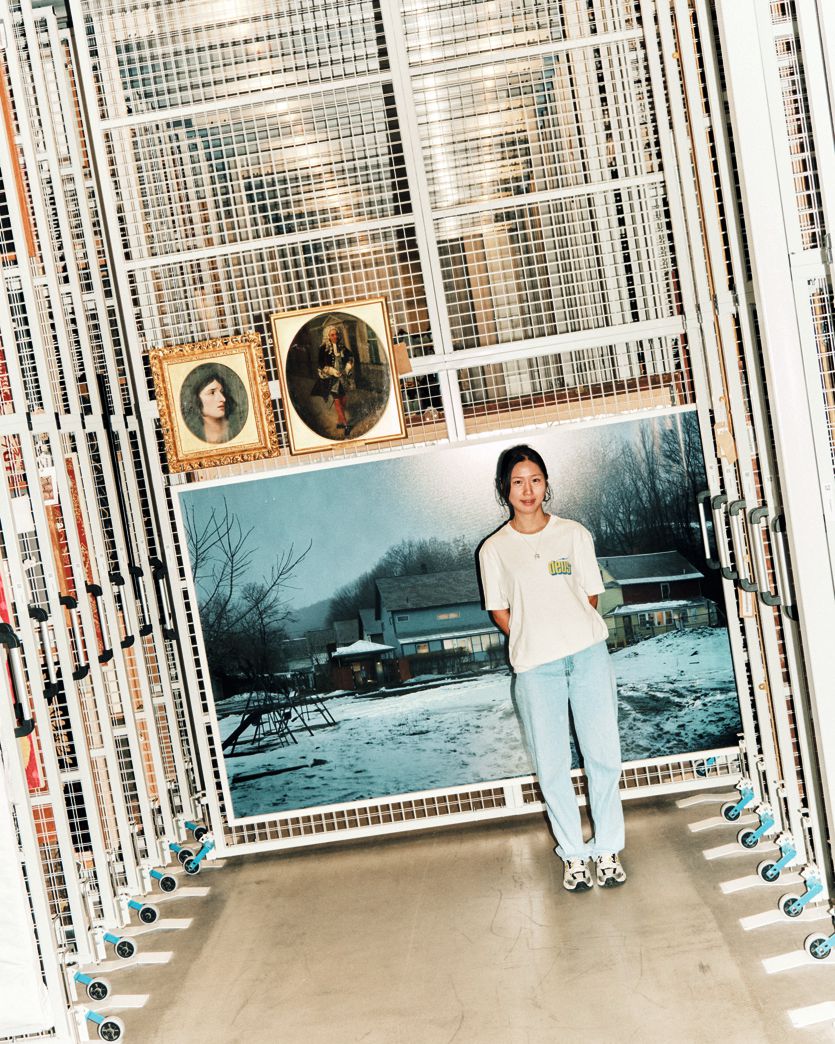
As a child, the assistant curator at V&A East, Miri Ahn, wanted to be a filmmaker. It was only while studying film at university that she realised she could also work with still and moving images as a curator. This large-scale photograph (measuring more than 2 metres wide) by American photographer Gregory Crewdson attracted her because of its cinematic qualities: it depicts a mysterious and anonymous suburban city. "It looks like a frame from a film and that was the photographer's intention," says Ahn. "It is not documentary photography: the environment is staged with a specific choreography, including lighting. It reminds me of cinema. You can imagine the story before and after". According to Ahn, the work can only be fully appreciated in person. 'The scale is really important, it allows you to see all the details'.
MOJISAYO ROBSON
MOJISAYO ROBSON, creative, writer and former member of V&A East Youth Collective
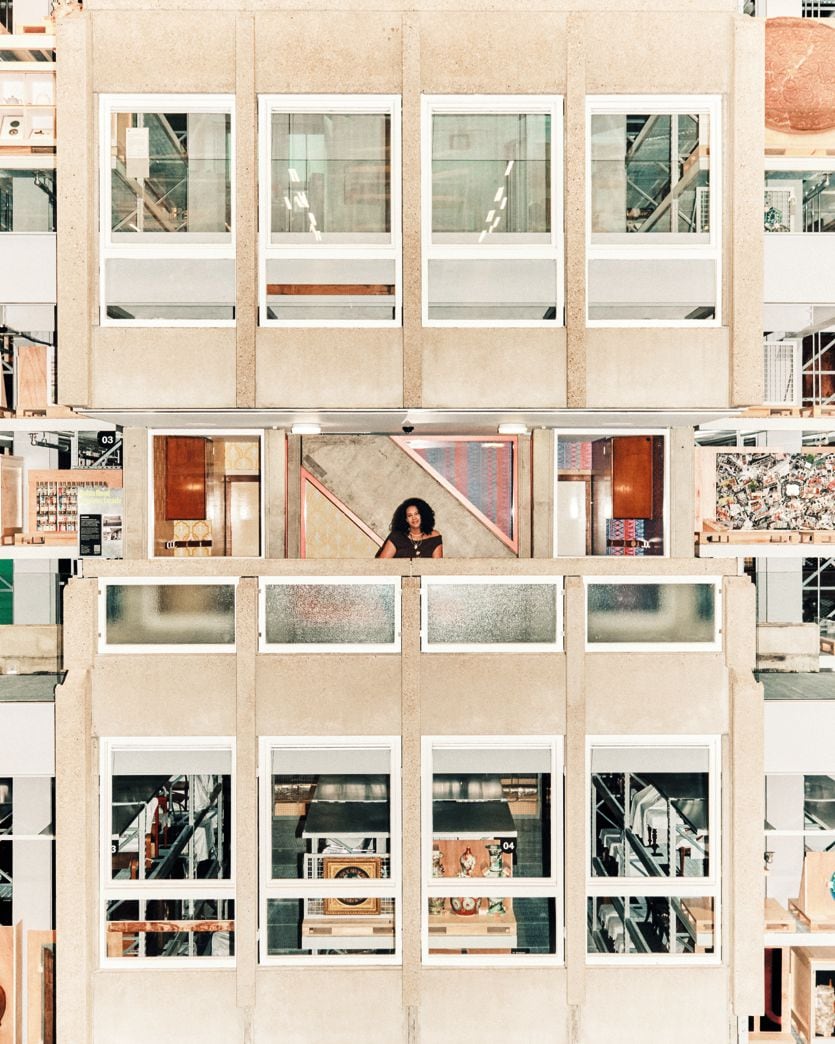
Robin Hood Gardens, Poplar, London, 1970-1972, by Alison and Peter Smithson
For a year, starting in November 2024, Robson, who was born in the London borough of Hackney, was part of the local team of young people who went to the Storehouse once or twice a week to think about how to make the space accessible and inviting to the local community. The aim was to 'try and make people feel welcome', Robson explains. That was when she came across this piece of architecture: a three-storey section of Robin Hood Gardens, the social housing building in Tower Hamlets designed by Alison and Peter Smithson in the late 1960s. Branded as a striking example of Brutalist design, it was demolished in 2017 due to maintenance issues and a low level of safety for residents. "I was very impressed that the façade of a building is in a museum," says Robson. "Within the youth collective we talked about this at length: what makes things worthy of being remembered, of being archived?" For her, this piece represents "how much London has changed through regeneration and gentrification. And how areas such as Robin Hood Gardens and social housing complexes - rough areas - have transformed, for better or worse'.
ROBYN LYNCH
ROBYN LYNCH, designer
Chair, 1968, designed by Poul Kjærholm and made by E. Kold Christensen
"I'm currently in my furniture period," says the Dublin-born menswear designer. "After dealing with clothes for so long, I found this new interest." He saw the challenge of having to choose just one item from the Storehouse as an opportunity to get closer to "things I wouldn't normally have access to". This 1960s leather and steel chair, designed by Danish 20th century modernist Poul Kjærholm, is something that "I would love to have in the house. Mid-twentieth-century furniture is so trendy at the moment'. She was drawn to this piece because 'it's organic and natural, it's sophisticated, but also contemporary. And quite low, with interesting proportions'.
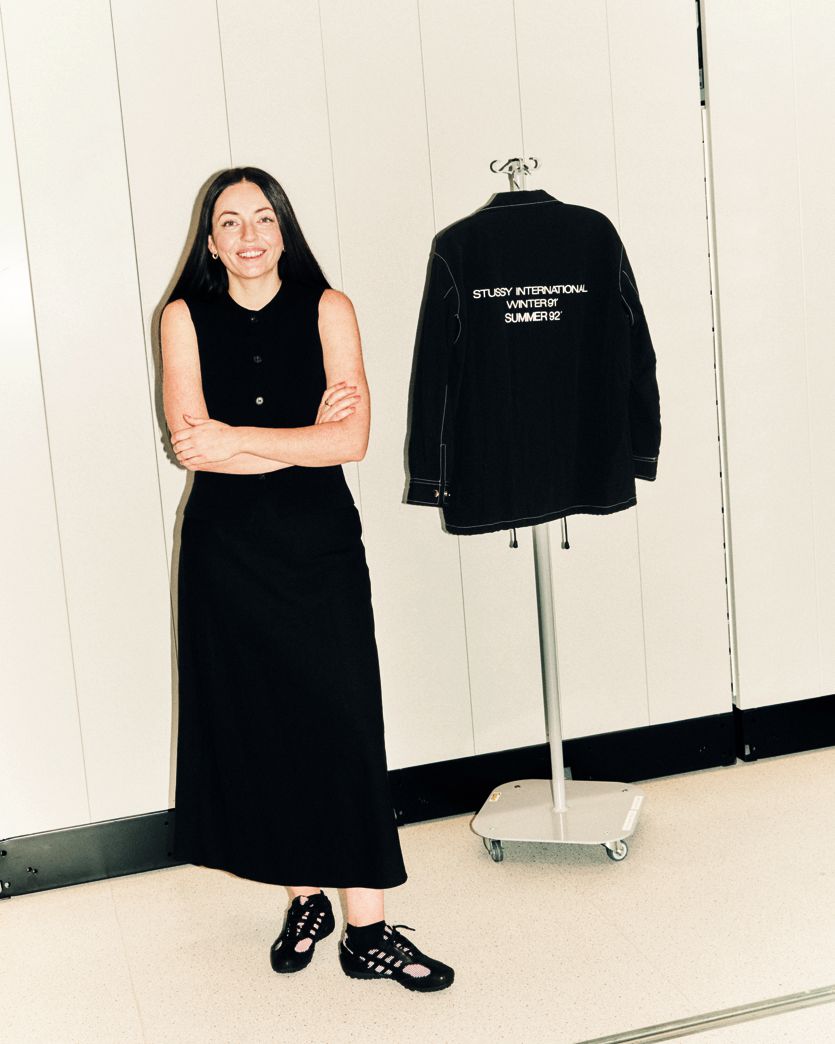
Jacket, 1992, from the Stüssy brand
When Lynch was commissioned to design uniforms for the Storehouse, she sought to create garments that were 'universal, for everyone'. This Stüssy jacket with its clean shape - inspired by workwear - and boxy fit has a similar timeless aura. "What I love about this jacket is that it could very well be in one of the brand's shops even today," says Lynch. "It is a true testament to a brand that has endured for so many years and still maintains a strong design ethos and timeless appeal. It's a piece I dream of having for my own brand one day - it felt right to opt for something I would happily wear."
YSABEL HANNAM
YSABEL HANNAM, responsible for the accessibility of the V&A East Storehouse collections
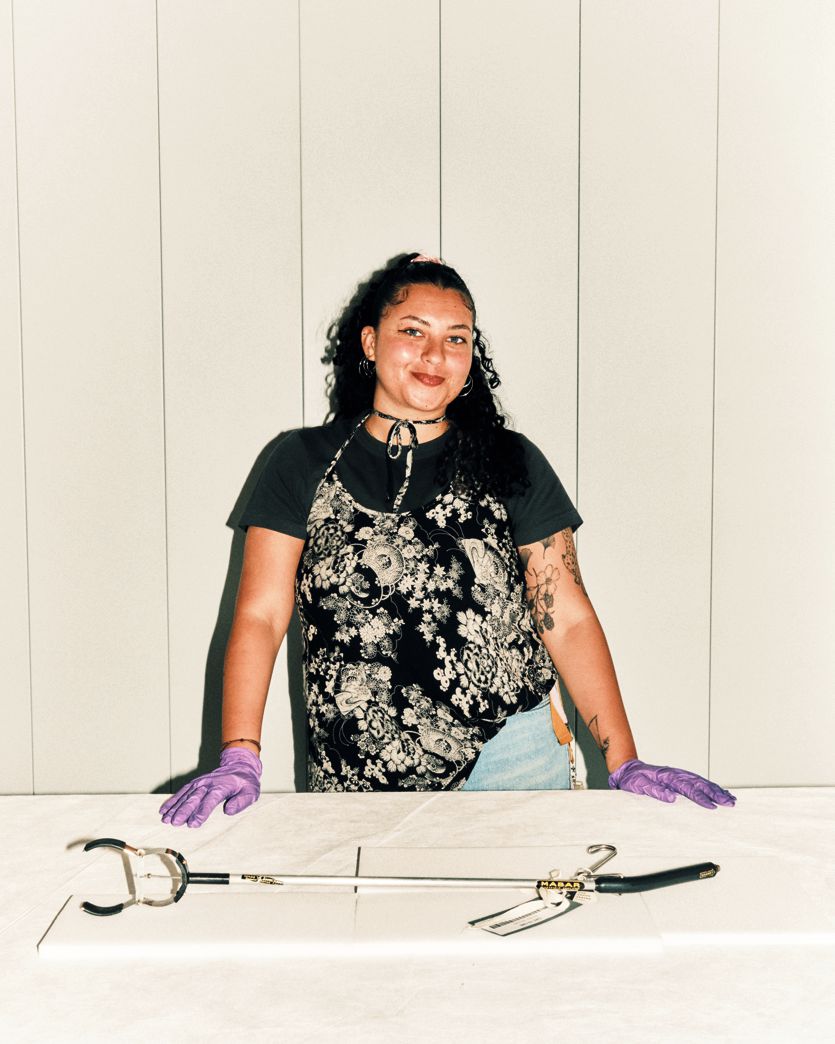
Prestile gripper arm, 1966, designed by D.A. Morton
This aluminium and stainless steel handicap aid was designed by an engineer who worked in an orthopaedic hospital. Since the early 1960s, he had seen room for improvement in the wooden sticks with rope pulleys that were given to patients to help them reach objects. Together with two engineering colleagues, he created this stronger tool capable of lifting up to about 2 kilos, almost the "weight of a brick", says Ysabel Hannam, who works at Order an Object. "I think it's ingenious. I like tools that are part of everyday life, but have that extra something."
Torsion Box Shell chair, 1970, designed by Brian Long
This seat inspired by a seashell was designed by designer Brian Long. Hannam was struck by the story a visitor told her about it. It turned out that this person wanted to see the chair because Long was her father: a prototype with the same shape had furnished her childhood bedroom. "It was quite exciting to be with her and hear her story," Hannam says. "She described all the ways she used to sit on it as a child." Hannam saw this almost surreal aubergine-coloured chair in a new light: "Why don't we have purple chairs anymore?" she has been asking herself ever since.
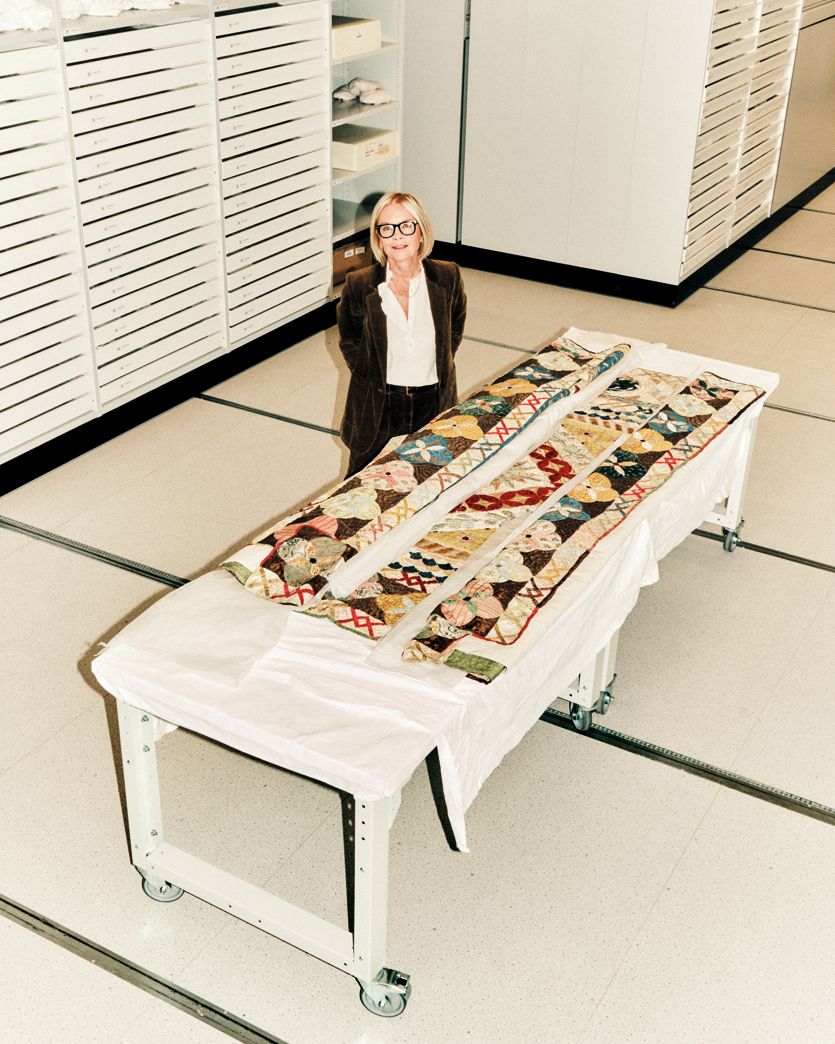
MARIELLA FROSTRUP
MARIELLA FROSTRUP, journalist, presenter and board member of the V&A
Copriletto, 1690-1720, maker unknown
"I always wanted the V&A to mount an exhibition entitled Women's Work to map the way women's work has been shaped by society over the last four hundred years," Frostrup explains. 'This was going to be an important piece in my dream exhibition: the centre piece'. The quilt was made for a medieval estate in Devon, once used by the bishops of Exeter, not far from where Frostrup lives. "I like it because it makes me happy. It's all scraps of fabric. It's an incredible gateway to that era and what people wore, the fabrics their curtains were made of and the colours of the rooms. Even though it is just a patchwork bedspread, it contains so many storytelling cues". A section of lime green silk with pink flowers is particularly attractive: "It's so faded and you can barely make out the tiny remnants of what was definitely a very bright pink," she says. "It looks incredibly fresh and modern, yet it has come to us steeped in the stories that date back 300 years."