
In Milan, after the Games, two super arenas for live events
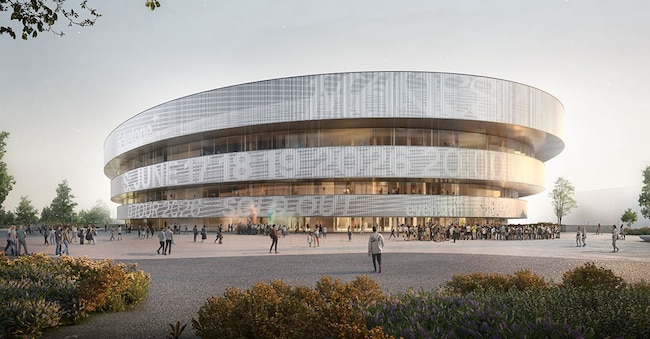
The Lombard capital will have two new arenas for indoor events, the 16,000-seat PalaItalia Santagiulia and the 45,000-seat Live Dome in Rho

San Siro, Assago, Rho and Santagiulia: this will be the quadrilateral of the Milan venues for the Winter Olympics. The Inaugural Ceremony, on 6 February, will take place at the Meazza Stadium, while the Forum - named 'Milano Ice Skating Arena' for the occasion - will host the figure skating and short track competitions. The Rho Fairground, on the other hand, will be the home of long track speed skating and ice hockey, which will see most of the matches played at the 'Santagiulia Ice Hockey Arena'.
The latter is in fact the only new sports facility built for the Games in the city. The PalaItalia, designed by the English architect David Chipperfield and owned by the German entertainment giant Eventim (which operates in Italy through its subsidiary TicketOne), has had a troubled history, amid delays (work will be completed on 9 January when the test-event will be staged, although many of the related works, especially the connections, will not be completed) and extra costs. The initial investment for a 16,000-seat indoor arena was 180 million. Mainly the increase in the prices of raw materials, however, has led to increases of about 90 million, which will be partially financed by the government, the Lombardy Region and the Municipality of Milan (to the 21 million of the Sport Decree of August were added the 30 million allocated by the so-called 'Anticipi' decree in November).
The same fate will befall the extra costs of the Villaggio Olimpico, built by Coima Sgr as part of the redevelopment of the former Porta Romana airport area, which after the Olympics will become a 1,700-bed student residence. Compared to the initial cost (100 million), there could be additional expenses of around 30 million.
For the long-track speed skating competitions, the renovation of the Baselga di Piné rink in Trentino, the Italian cradle of the discipline, a return to the Lingotto in Turin, the venue of the 2006 Games, or the use of the Arena in Milan, was initially considered.
In the end, the Milan Trade Fair in Rho, already the site of Expo 2015, was chosen. The cost of the operation borne by Fondazione Fiera Milano was approximately 25 million. The 'Milano Speed Skating Stadium' was built in pavilions 13-15, for a total of 35,000 square metres of covered surface area, including the 400-metre oval track (as many as an athletics track, but with flatter curves and longer straights), with stands for 7,500 spectators and all the technical areas necessary for the workers.


