Tourism

In Modena the '25 edition of the Michelin Guide, from the starred impact of half a billion

Growing impact on services and allied industries - On 5 November the presentation of edition number 70 for Italy

3' min read

3' min read

Seventy years on, the Michelin Guide Italy is presenting a new study dedicated to 'Taste Tourism', to analyse tourist flows and the economic impact generated by the presence of Michelin-starred restaurants in Italy, and a presentation of the 2025 edition on 5 November in Modena.

The survey carried out for the first time in 2016 records an important increase in the induced revenue generated by starred restaurants, from EUR 280 million to EUR 438 million, a figure that excludes expenditure tout court in the restaurant but covers the hotel, trade and related service sectors.

Loading...


Taste Tourism celebrates the link that is strengthened year after year between tourism and excellent food and wine, in the perfect spirit of the Guide. Restaurants, thanks to the Michelin Guide, benefit from an international showcase that offers great visibility in this travel sector.

According to 2023 figures, Italian starred restaurants welcomed 2.4 million customers, more than 40% of whom came from abroad, in particular from 43 countries, with an induced revenue of almost half a billion euro. For 2024, forecasts indicate a further increase in this value, based on the trend recorded in recent months.


Underlying the economic impact generated by restaurants is the fact that '74.6 per cent of foreign customers and 39.5 per cent of Italian customers spend at least one night in the destination or in its immediate vicinity,' the report specifies, generating indirect benefits for hospitality (around 355 million), trade (48 million) and local services (35 million).

As the number of Stars awarded to restaurants rises, so does the economic value generated: each 1 MICHELIN Star restaurant generates direct benefits in the area of 805,000 euros, rising to 2.4 million when it is a 2 MICHELIN Star restaurant, up to the 3-Star category, 'the restaurants that deserve the trip', with a result exceeding 6.5 million for each.

The analysis carried out by JFC identifies the United States, France and Germany as the countries most represented by foreign customers, while from the point of view of the supply chain linked to stays, almost 70% of hotel managers (from 3 to 5-star luxury) close to a Michelin-starred establishment claim to have customers who come to the hotel precisely for a Michelin-starred lunch or dinner.

The Italian region that benefits most from the presence of starred restaurants is Lombardy, followed by Campania and Piedmont.Among the provinces in the lead is Naples by value of impact followed by Rome and Milan. Among the municipalities, after a podium formed by Milan, Rome and Florence, smaller realities such as Senigallia in fourth place and Massa Lubrense in fifth place. In the Top Ten also Orta San Giulio, Alba and Brunico, alongside Turin and Modena.


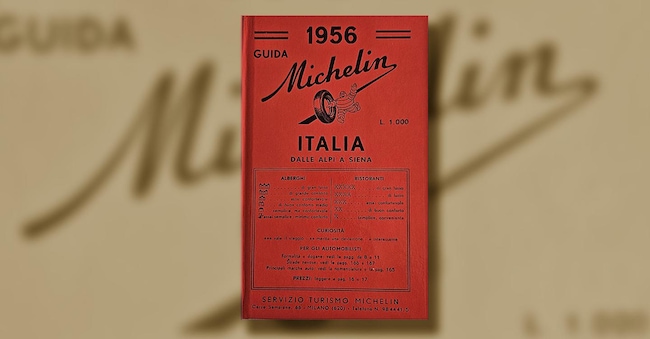
While the first Italian edition of the Guide dates back to 1956, the first Michelin industrial sign in the country dates back to 1906, with the Group's important industrial presence mainly in Piedmont, where there are two tyre production plants, in Cuneo and Alessandria, as well as the head office and European Logistics Centre, in Turin.

"Almost 120 years after its arrival in Italy, Michelin is still Italy's leading manufacturer and employer in the tyre sector. A presence that, just as the MICHELIN Guide does through its Michelin-starred restaurants, generates an induced activity in the territory, in this case direct, that in 2023 is quantifiable at 343 million euros, disbursed to more than 3,000 Italian suppliers," the French Group announced.

Copyright reserved ©
Loading...

Brand connect

Loading...

Newsletter

Notizie e approfondimenti sugli avvenimenti politici, economici e finanziari.

Iscriviti