Berlin

In a more cautious market, Gallery Weekend retains its centrality

Between shrinking demand and signs of resilience, the event reflects more selective exchanges, while the format evolves with new openings for galleries

by Maria Adelaide Marchesoni

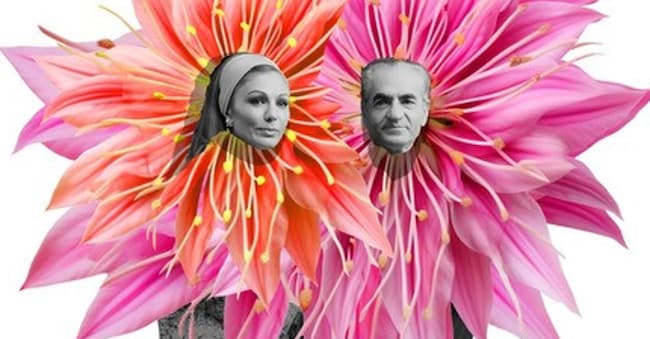
Walid Raad, «Better be watching the clouds again and again», 2026, da Thomas Schulte GalerieCourtesy: Thomas Schulte Galerie

5' min read

Translated by AI
Versione italiana

5' min read

Translated by AI
Versione italiana

In an art market still marked by uncertainty and shrinking demand, the GWB - Gallery Weekend Berlin (1-3 May) takes place in a context that is anything but expansive. The event, now firmly established in the international calendar, continues to attract collectors and operators, but reflects the tensions of a more selective phase. A sequence of close signals contributes to defining the climate: video art collector Julia Stoschek has announced the closure of her Berlin space as of October; info-provider Artnet is going through a complex phase; while the resignation of the senator in charge of culture, linked to significant budget cuts, raises questions about the resilience of the city's cultural policies. Despite this, some galleries recorded solid results, with several sell-outs indicating that, even in a more demanding market, quality and positioning remain determining factors.

Perspectives broadens access without sacrificing selection

The 22nd edition of Gallery Weekend introduces some novelties in the format, while maintaining the criteria that have defined its identity: participation by invitation only, rigorous selection, permanent venue in Berlin, continuous representation of artists and a regular exhibition programme open to the public.
The main innovation is the debut of Perspectives, a section that expands access in a controlled manner, attenuating - at least in part - the event's traditional aura of the elite, while meeting the need to maintain a sustainable exhibition route for visitors and a high standard of quality. Perspectives introduces, in fact, a more gradual entry threshold for emerging galleries, also thanks to a participation fee reduced by 50% compared to the standard €9,000.

Loading...

Alongside the approximately fifty galleries of the historic core - which, thanks to unusually summery weather, enlivened the courtyards of Mitte, the industrial spaces of Kreuzberg and the premises of Charlottenburg - seven new realities were invited. Among them, Mountains, already seen in Milan at the first edition of Paris Internationale. "Perspectives is a long overdue and welcome step in the right direction," says co-founder Markus Summerer.

For the section, the gallery presented 'A Guide to the Interior for a House on Ambiguous Grounds' by the South Korean artist Shinoh Nam (born 1993): works described as 'architectural fragments', including wood, handmade steel and glass, with prices ranging from EUR 2,000 to EUR 16,000. There was no shortage of sales, including a sculpture purchased by a Polish foundation. Also in the section Max Goelitz exhibited backlit glass works by James Turrell.

Berlino, la centralità del Gallery Weekend

Photogallery10 foto

Museum exhibitions, site-specific interventions

Several museum exhibitions enriched the Gallery weekend such as the one at Chert Lüdde dedicated to the artist Petrit Halilaj (prices from 25,000 euro) also on show at the Hamburger Bahnhof, 'An Opera out of time' (until 31 May) curated by Catherine Nichols, a project that was supported (100,000 euro) by the Italian Ministry of Culture through participation in the Italian Council of 2025. "For us, this edition," explains Clarissa Tempestini, a partner of the gallery, "is very special because we are presenting an exhibition by Petrit Halilaj, an artist we have been working with for more than 15 years; it is a complex and very profound project, which we care so much about; as for the Gallery weekend, the impression is very positive, in line with last year "the format always works very well in Berlin, it is widespread, pleasant to experience and creates a good dialogue between galleries and the public; there is a lot of international presence, as well as a good local audience and many institutions, so I would say a very lively energy," concludes Tempestini.

Daniel Buren at the Konrad Fischer Galerie on the occasion of the first exhibition in the gallery building in Neue Grünstraße, has created an intervention in the gallery façade, a work that underlines the artist's constant interest in the dialogue between art and its environment. A new series of large-scale circular mirror surfaces, each measuring over two metres in diameter, are displayed on the different floors of the gallery.

Painting, installations, sculptures

In spite of the variety of languages, it is painting, declined in multiple directions, that imposes itself as the prevailing medium, continuing to provide more stability than other formats. At Esther Schipper, Tauba Auerbach, who has long been interested in the science of perception, presents a series of pointillist acrylic paintings. At Galerie Max Hetzler, up-and-coming artist Vivien Zhang (1990) debuts with her first solo show, "Field Conditions": a project that, drawing on biological sources - from floral motifs to endangered species to butterflies - relates visual perception and geopolitical dynamics.

The figurative finds space in the works of Adam Gordon (1986), presented by Isabella Bortolozzi with his solo exhibition "Months Turn to Years", in which a new series of paintings is conceived as "a single organism" (prices between EUR 25 and 50,000). Sold out instead for Adam Lupton at Galerie Judin (€4,500-16,000): his works, shot through with a sense of melancholy and suspension, reflect on a generation marked by anxiety, isolation and questions of class and masculinity, reworked through a delicate palette that questions traditional models of male identity.

At Galerie Buchholz, Yuji Agematsu presents the first part of a two-part exhibition devoted to his "Zips": tiny assemblages made from debris collected during daily walks in New York. Enclosed in the cellophane of cigarette packets and arranged on shelves designed by the artist, these fragments become a silent calendar of time and attention, the result of a practice carried out since 1996 (12 shelves, €40,000).

Finally, Walid Raad's installation from Galerie Thomas 'Schulte: Better be watching the clouds again and again' brings together digital collages and inkjet prints linked to international political figures. The work is based on a fictional premise according to which the Lebanese security services attributed botanical code names to political leaders; Raad thus superimposes black-and-white portraits on top of illustrations of Middle Eastern flora, constructing a layered imagery of history, fiction and power (3 + 2 AP, $50,000).

Italy: between public support and international visibility

"A Naked-Eye Blue", a solo exhibition by Elisa Giardina Papa at Galerie Tanja Wagner, presents an installation developed in connection with the project "She Flickered In and Out of History", consisting of a video (on sale for 30,000 euros) and glass elements. The work completed in the last two years with the support of the Italian Council (13th edition, 2024; 150,000 euros) will soon be exhibited at the ICA in London. "She Flickered In and Out of History" is part of a video trilogy dedicated to forgotten Mediterranean stories, questioning notions of borders and belonging. The project follows 'Scantu: A Disorderly Tale' (2022), presented at the 59th Venice Biennale, 'The Milk of Dreams'.

Last February, Giulia Andreani opened the 30th anniversary celebrations of the Hamburger Bahnhof with her solo exhibition 'Sabotage' until 14 September. For the occasion, the artist has reinterpreted the historical collections through a contemporary gaze: the installation dialogues with the 1997 exhibition "The Three Lies of Painting" by Sigmar Polke and relates her paintings with works from important Berlin museums, creating a visual and conceptual interweaving of past and present. His practice, often referred to as 'painting with photographs', takes shape from family archives and albums, where tensions emerge between authority figures and forgotten protagonists of history. In his figurative works, immersed in shades of Payne grey that evoke period images, Andreani brings to light hidden tales and removed memories, challenging collective oblivion and offering new keys to interpreting the present.

Copyright reserved ©
Loading...

Brand connect

Loading...

Newsletter

Notizie e approfondimenti sugli avvenimenti politici, economici e finanziari.

Iscriviti