In Nepal, dreaming of Siddhartha and reflecting on oneself and life
(Re)discoveries. References to Buddhism are everywhere: one encounters pilgrims, praying monks in often untouched natural landscapes and fantastic animals, such as red pandas, deer and bears

3' min read
3' min read
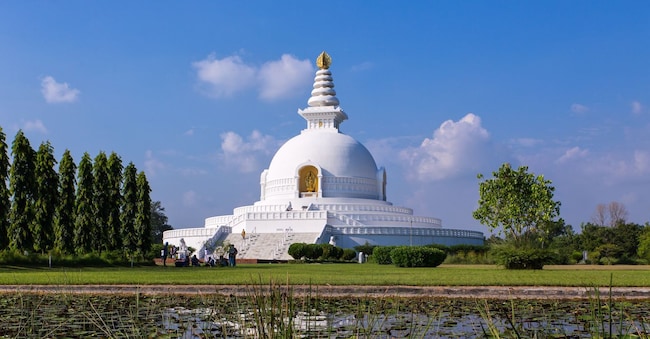
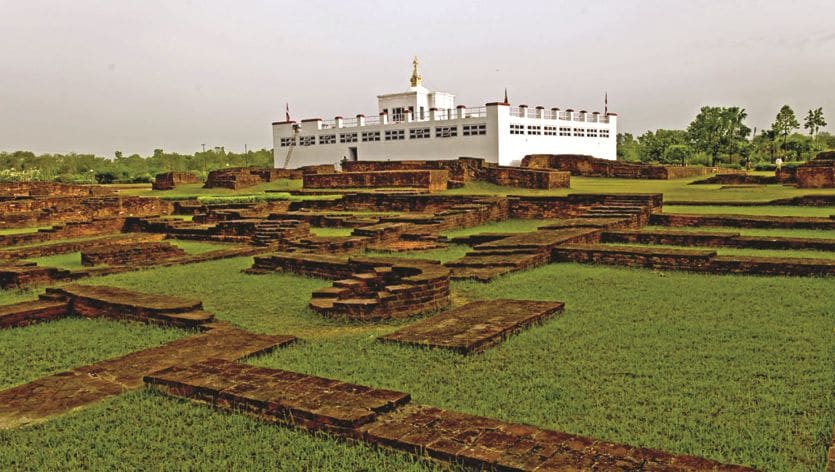
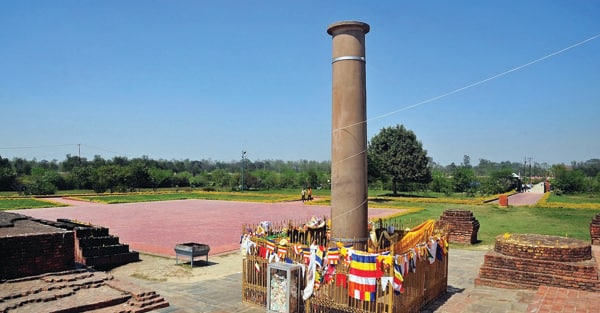
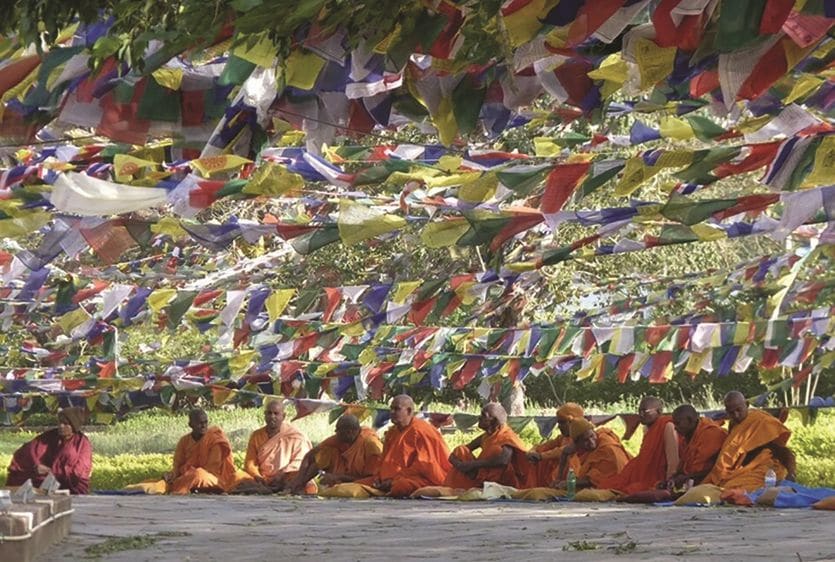
An intense, acrid scent of flowers and sandalwood pervades the air already at dawn in the sacred area of Lumbini where Siddhārtha Gautama, universally known as Buddha, was born in 623 BC. The wind shakes the colourful prayer flags, stirring the rustle of the orange tunics worn by the monks who have flocked in large numbers just after sunrise here in the Terai plains, south of Nepal. Someone is reading passages from the Dhammapada, one of the fundamental texts of Buddhism, right next to the inscription in Brahmi script on the historic sandstone pillar erected by the emperor Maurya Ashoka in 249 B.C. in which it is stated that this place, recognised by Unesco as a World Heritage Site, is dedicated for eternity to Buddha. Its sacredness can be perceived by wandering inside what has become a vast archaeological area over the centuries, including the red brick cross-shaped architecture of the Shakya Cistern and the remains of the Maya Devi Temple, considered the specific place of Siddhārth's birth on a full moon in May. There are also numerous underground remains of small monasteries, the so-called vihara dating between the 3rd century B.C. and the 5th century A.D., as well as stupas, the typical religious monuments that were erected without interruption until the 15th century A.D.
Testimonies of Buddhism
.They all testify to the uninterrupted flow of pilgrims to the Rupandehi district, heading to this forest where Mayadevi, the wife of the king of Kapilvastu, Shakya Śuddhodana, bathed in the sacred pond of Lumbini and soon after gave birth to Prince Siddhārtha: Today, one can practise yoga or meditate in the Panditarama Vipassana Centre together with monks or stand in the shade of the ficus religiosa also known as the Bodhi tree, sacred to Buddhism, a botanical totem of the subtropical garden of Lumbini divided into three sections of one square mile each, joined by the course of a canal and some paths.

Natural Wonders
.You can then set off to discover Nepal's natural wonders, starting with the spectacular Jaljala Rolpa, a mosaic of soaring peaks, pristine lakes, lush green forests and terraced agricultural fields. This paradise of biodiversity is home to rare species of fauna, including the red panda, musk deer, Himalayan black bear and many birds, especially in the protected area of the crystal-clear Rara Lake, the country's largest reservoir, in which the white peaks of the Himalayan range are reflected.
Here you can visit the villages inhabited by the Magar, Gurung and Tamang communities, listen to the sounds of their languages, attend ritual moments and secular festivals during which men and women alike wear costumes with wide-brimmed skirts that swell with every movement. Then, in the morning, we will get up early perhaps to embark on a trekking route to the peaks of the Jaljala Himal and Dhaulagiri together with the guides along the Jaljala Trekking.
A safari to meet the tiger
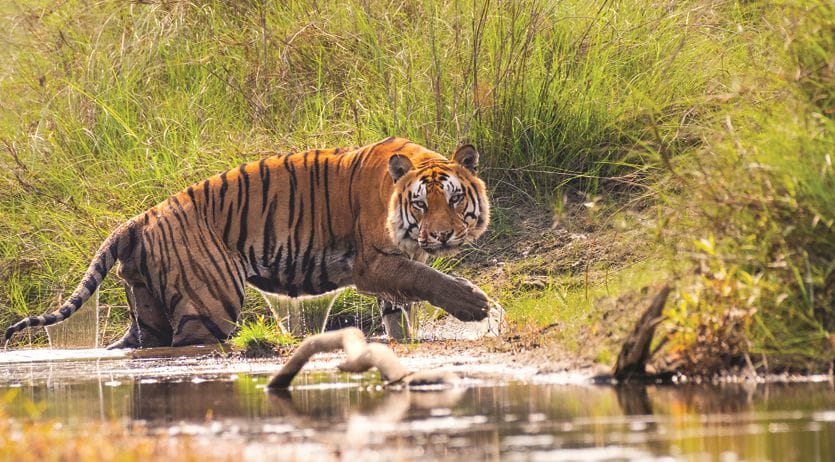
.Seeing the Royal Bengal tiger yawning up close is also an unmissable nature adventure that can be achieved by taking part in an exciting safari in the Bardiya National Park, the largest in the Terai plain with an area of 968 km² in a landscape of savannahs and grasslands: it was established precisely for the purpose of preserving the natural habitat of this splendid feline, as well as the other thirty mammals that live here, including the Indian rhinoceros, the elephant, the swamp deer and the cervicapra antelope with its long, twisted horns in the shape of a perfect letter v, while in the waters of the Karnali River, the Ganges dolphin can be spotted. To encounter the tiger above all, one mounts a jeep and patrols the Babai valley, until the moment one sees it popping up among the reeds, apparently bored and listless. To appreciate Nepalese architecture, one must finally cross the threshold of the Rani Mahal in Tansen. A gift from Khadga Shamsher, the governor of Palpa, to his beloved Tejkumari, it condenses Victorian and Mughal elements reminiscent of the princely residences of Rajasthan, including fine wood carvings, sumptuous arches, frescoes of mythological scenes and floral motifs, courtyards and balconies, as well as garish gardens overlooking the Kali Gandaki on the banks of which monks can be seen praying.