
In Northumberland as dukes with castle and Roman legionaries
Among the many routes to take, one winds through the Simonside Hills, from whose peaks you can enjoy a view of the Cheviot Hills opposite and the North Sea coast

3' min read
3' min read
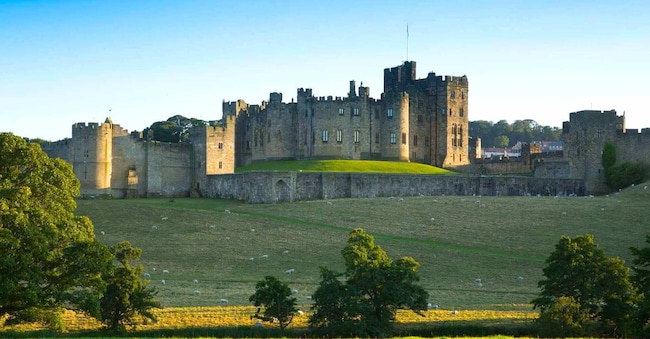
You can hear the hiss of arrows shot from the bow then as now as you approach Alnwick Castle, where the journey into Northumberland, England's most north-eastern region, coveted by Vikings and Romans, begins. Erected at the end of the 11th century, this military fortress, later converted into one of the most spectacular and extensive family homes, contends with Windsor for the record of the longest inhabited castle. A film set for some forty films and series, including Robin Hood - Prince of Thieves, Downton Abbey and no less than two episodes of Harry Potter, its host is Ralph Percy, 12th Duke of Northumberland, who inherited it from his brother. In its rooms one can admire collections of Roman and British as well as Celtic archaeology, together with the artefacts of art and everyday life that marked the Percy's existence. Above all, one can walk in the mythical Hogwarts courtyard imagined by J.K. Rowling and in the garden that the current Duchess tends herself: her collection of poisonous plants from all over the world would please Lord Voldemort, Harry Potter's sworn enemy.
The scenic Bamburgh Castle
.Bamburgh Castle with its Norman architecture is also very scenic, built on a volcanic rock overlooking the beach below. Instead, only a few ghostly ruins of Dunstanburgh Manor remain, between the hamlets of Craster, where you can sample a crab sandwich at the Jolly Fishermans Inn, and Embleton. Among the many backpacking routes, one winds through the Simonside Hills, with views of the Cheviot Hills opposite and the North Sea coast, and the chance to see curlew, red-legged partridge, mountain bumblebee, emperor moth and red squirrels as you walk through the forest or near the wind-sculpted monoliths: the itinerary can start from Tosson Tower Farm, a typical family-run cottage with an ivy-covered stone façade in the village of Rothbury, not far from the Victorian mansion of Cragside where Lord William George Armstrong, the famous inventor of hydraulic devices and even cannons, lived.
In the clearest skies in Europe
.This is the right time of year to tackle Hadrian's Wall, the boundary and containment wall from the Pictish hordes that the Roman emperor had built over a period of just six years from 122, involving no less than 15,000 men in the erection of massive stones, sometimes up to six metres high: The National Trail, divided into eight stages, follows its original route for some 155 kilometres from coast to coast in England, but the wide stretch in Northumberland, in the north-east of the country, is the most virgin, precisely because it crosses its moors. The starry skies here, moreover, are considered by astronomers to be ideal for spotting the Milky Way and even the Andromeda Galaxy with the naked eye on the clearest, darkest nights, especially within the Kielder Forest. One walks beside Hadrian's Wall imagining the Roman legions who also walked along its route, and learning about it in the small museums open in Maryport and Vindolanda. Also not to be missed is Tynemouth, a fishing village near the mouth of the River Tyne, where there is a priory and castle with the ruins of a large medieval church, the tombstones of local sailors, the tiny, 15th-century Percy Chantry chapel with its rose window, ceiling populated by sculptures of saints and cannon batteries. Also not to be missed is an adventure to the Farne Islands, to see colonies of Fratercula Brisson, birds with colourful beaks, or to Lindisfarne, with its austere abbey dating back to 635.

