
In Paris, Alstom’s share price falls; trains in the red with a sharp rise in debt
A loss of 954 million euros in the first half of the year. Since the start of the year, the share price has fallen by over 60 per cent

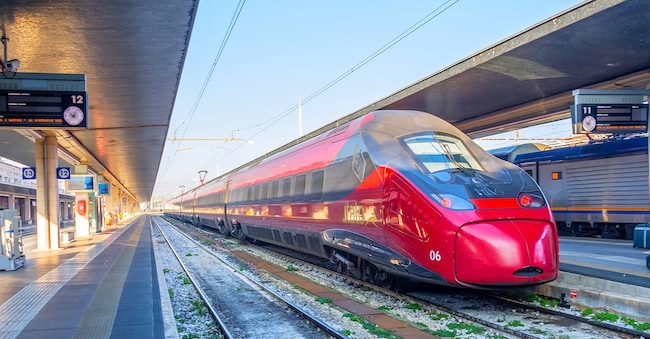
(Il Sole 24 Ore Radiocor) – Alstom’s share price has plummeted on the Paris Stock Exchange after publishing half-year results in the red, weighed down by a sharp rise in debt, which has heightened market concerns about a capital increase. Shares in the world’s second-largest rail manufacturer fell by more than 9 per cent and were the worst-performing stock on the Stoxx Europe index, having hit €9.06 earlier in the morning – a 21-year low. Since the start of the year, the share price has lost over 60 per cent of its market value.
Alstom reported a loss of 954 million euros in the first half of the financial year, compared with a net profit of 220 million in the previous year, due to operational problems in Germany. The adjusted net loss amounted to €822 million, compared with a net profit of €338 million. In the first half of the year, Alstom generated turnover of €9.33 billion, up 3 per cent. Over the six months, it received new orders worth €10.9 billion, bringing the total order book to €111 billion and ensuring “strong visibility on future sales”. The group’s net debt as at 30 September stood at 1.1 billion euros, compared with 404 million six months earlier.
Against this backdrop, the Board of Directors “has committed to maintaining a solid investment-grade credit rating and has therefore decided to review all possible options, including organic initiatives and inorganic measures, such as disposals and equity financing and similar arrangements, with a view to achieving a debt reduction of approximately €2 billion by September 2027”, according to the financial results statement. “The first-half results reflect the recently identified difficulties in project execution”, commented CEO Martin Sion. “We are taking decisive action on key levers to improve execution, including the operating model and commercial strategy, whilst pursuing a debt reduction target of €2 billion to strengthen our balance sheet,” he added.
In Germany, the technical difficulties encountered relate to the design and manufacture of the Coradia Max regional train, of which 1,300 units were ordered under six separate contracts signed between 2021 and 2024 with various German Länder. The group has had to postpone the expected certification date for this train and the associated delivery dates until 2028. “Project management has not met the required standards,” Sion explained to analysts. “There were design errors that were not identified in a timely manner.” The group therefore plans to reorganise the upstream design processes, as well as the project management and monitoring phases, the CEO added, whilst emphasising that “the development of the Coradia Max train is proving problematic, is taking longer and is more expensive than anticipated, but the product is sound”.
In general, by the end of the current financial year, Alstom expects that all its commercial contracts worldwide will have been reviewed and verified by the ‘teams of experts’ that Sion set up upon taking office to assess the quality of their industrial execution. According to Deutsche Bank, Alstom’s opportunities for asset disposals appear relatively limited, and a capital raise is expected to finance the majority of the €2 billion debt reduction programme. The bank believes that this outlook will continue to weigh on the share price due to the lack of clarity regarding the use of equity capital.

