In Paris, a designer flat is transformed into a cabinet de curiosités
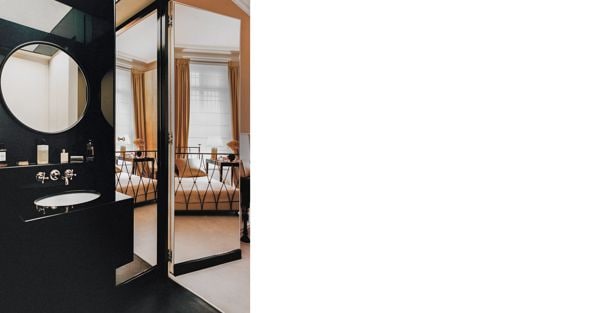
At the home of interior designer Martin Brûlé, on the Left Bank, among secret doors, cocoon rooms, large rooms with floor-to-ceiling windows and neo-deco furniture pieces.
5' min read
5' min read
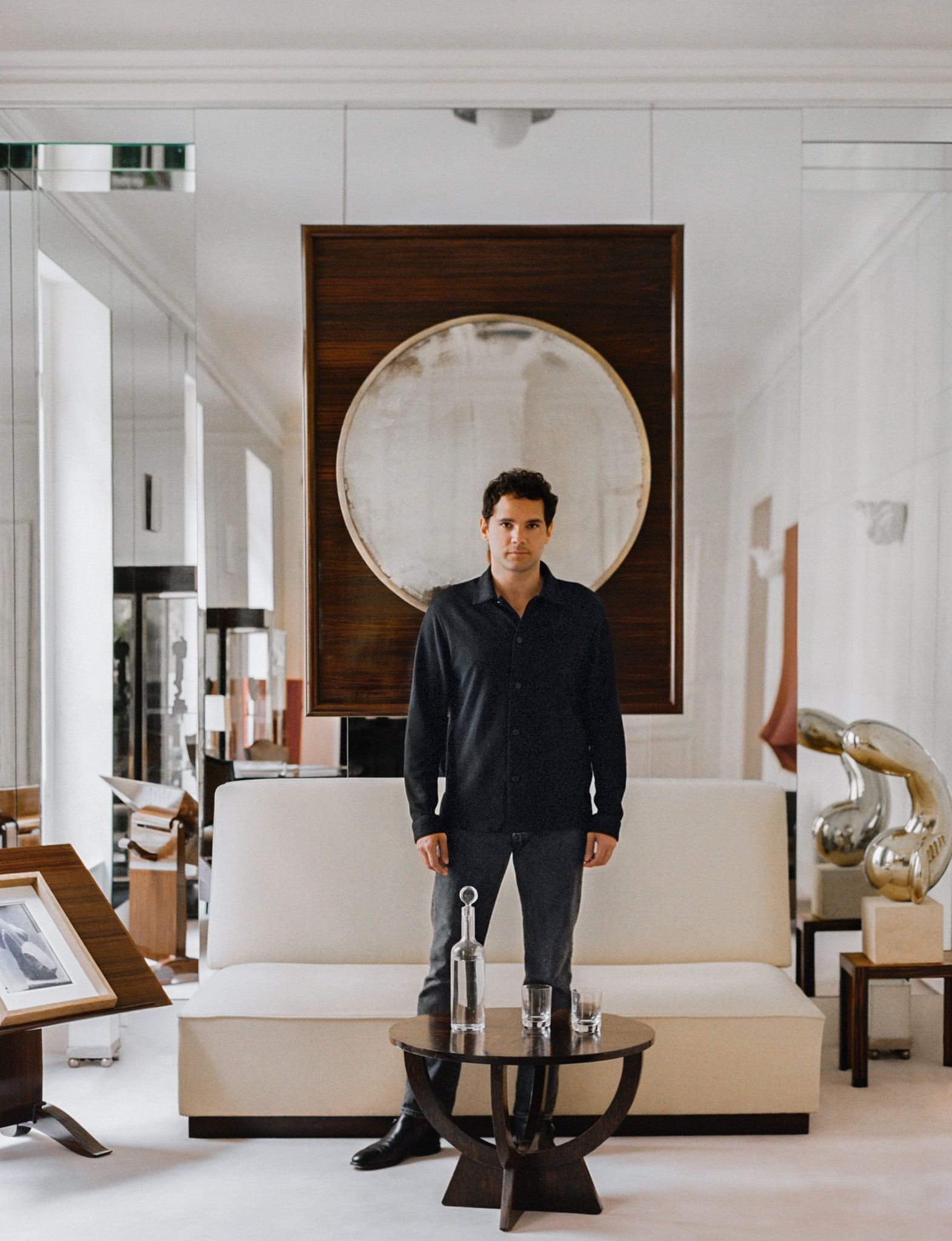
For Martin Brûlé, a Montreal-born, New York-based interior designer, the boundaries between home and work can only be blurred. This is especially true in his Paris outpost, a studio/pied-à-terre in Saint-Germain des-Prés. "It is entirely dedicated to the art of living, a creative space in which to exhibit my work and ideas and in which I can also indulge in a little rest. There are no boundaries,' he says as he sips tea, wearing a navy blue knitted pullover by Loro Piana, black jeans and John Lobb loafers.
Brûlé, self-taught, opened his studio in New York in 2016. His portfolio, which mainly collects work created in private residences and rarely published, reveals a penchant for understated opulence and European savoir-faire. Amidst refined materials and high-quality finishes, his style is marked by emblematic furniture and objects, particularly from the early 20th century.
"The way Martin conceives the interior is very romantic," says American actress Dianna Agron, his client in New York. "In the space in front of him, he manages to visualise an entire story - he organises your first dinner party even before you do." Brûlé started looking for a foothold in Paris two years ago: a place to welcome clients, given the growing demand for his services on this side of the Atlantic. He was attracted to the Left Bank, which has always been a point of reference for collectors, with its narrow streets running perpendicular to the Seine overlooked by antique shops. "The galleries are a fundamental part of the experience. There are so many incredible characters and personalities here,' Brûlé says of the atmosphere surrounding his new studio. The 37-year-old found the flat thanks to one such character: Alain Finard, an 80-year-old antique dealer whose atelier, Galerie Alain et Gerard, has been an institution on Rue de Beaune since the late 1970s. In the 1980s, Finard acquired a second space across the street: a flat on the first floor that he used as a gallery to display his rarest pieces.
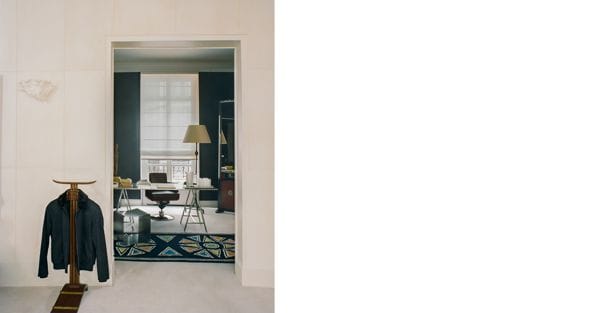
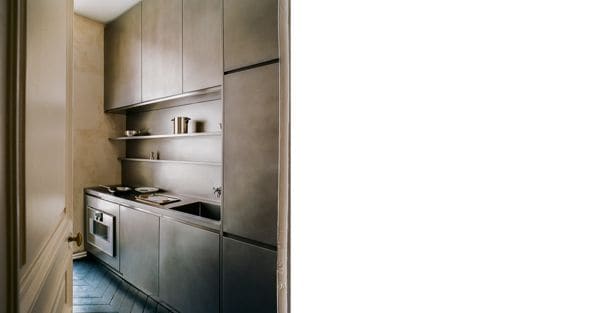
There he hosted collectors and aesthetes such as Yves Saint Laurent and his partner Pierre Bergé, Hubert de Givenchy and even Rudolf Nureyev, who lived not far away in a furnished flat on Quai Voltaire. "It was like a cabinet de curiosités," is how Brûlé describes the old life of his flat, adding that when he came into possession of the keys, the premises had been unused for more than 30 years. 'The ceilings were falling apart and the silk wallpaper was damaged by infiltration,' he recalls. He removed everything and turned first to practical needs: he converted two small rooms at the side of the entrance into a stainless steel kitchen from the specialised Abimis atelier, and an office corner for his satellite team.
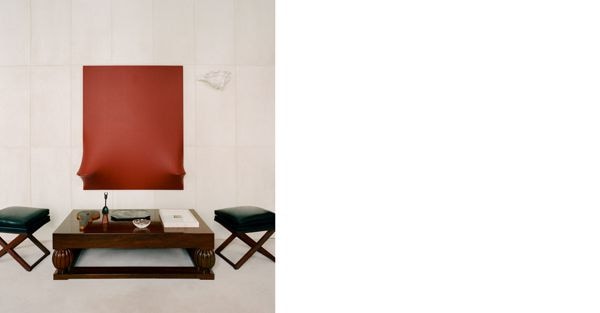
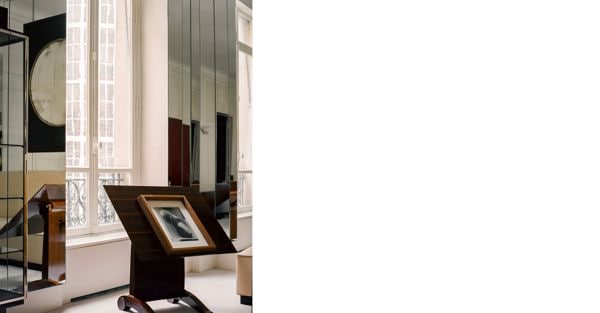
The main hall, which faces directly onto the corridor, is a large rectangular room with four-metre high ceilings and large windows on one side. The narrow proportions give it a gallery-like atmosphere, which is exactly how Finard imagined it. Brûlé honoured this idea in part: the furniture and objects in the room are mainly in the Art Deco style, a style that also characterises his Manhattan home. "These elements always find a way to creep into my work and my form of expression. I think it's a point of view, a matter of taste,' he says in reference to his long-standing obsession with this period, which is now experiencing a renaissance. 'The clean, functional aesthetic seems to be attracting more people again. That said, Art Deco has always been the foundation of the homes of great collectors,' he adds, and cites the collections of fashion designer Jacques Doucet, the legendary Maharajah of Indore with his Manik Bagh palace, and trendsetters Michael and Tina Chow.