Circular economy

In Prato, AI is sorting fabrics at the new 31-million hub

3' min read

Translated by AI
Versione italiana

3' min read

Translated by AI
Versione italiana

‘This can be reused, that needs to be recycled.’ These are the voice commands that integrate the work of humans and artificial intelligence at the new Textile Hub in Prato. The project represents an investment of €31.3 million for the Tuscan multi-utility company Plures, which has received €900,000 in funding from the National Recovery and Resilience Plan (PNRR) and a tax credit of €850,000 under the Industry 4.0 scheme.

The aim is to become a centre for the production of secondary raw materials. When operating at full capacity, the plant will employ 50 staff across two shifts, with around 40 people involved in the semi-automatic sorting of materials, during which garments are categorised as either reusable or recyclable. According to Alberto Irace, managing director of Plures, it is necessary to ‘meet a need that is set to grow rapidly in the coming years: to recover as much value as possible from textile materials and return them to the production cycle’.

Loading...

A collection equivalent to the needs of the entire region of Tuscany

The plant can process up to 33,000 tonnes of textile waste of all types per year. Twenty thousand tonnes come from the extensive collection network that Plures operates across the region via collection bins, door-to-door collections and recycling centres.

In addition to these post-consumer materials – which amount to the estimated requirement for the whole of Tuscany – there are a further 13,000 tonnes of so-called pre-consumer waste: surplus materials from supply chains (mainly from companies in the Prato district) that can be recovered.
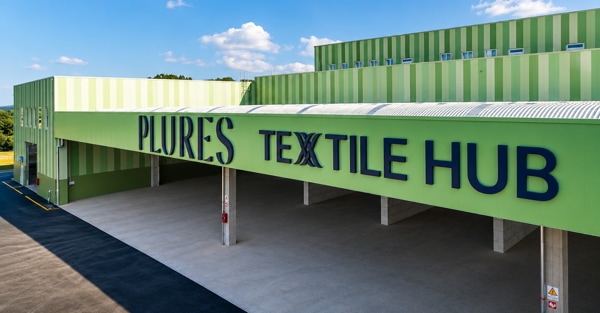
Items that are still usable will be sanitised and sent for reuse; those that cannot be returned to the market will be sorted by composition and colour, then sent for pre-shredding and mechanical recycling. According to Plures’ estimates, around 60 per cent of post-consumer materials can be reused straight away; only the remaining 40 per cent will go on to fibre sorting for recycling. “The green transition can become a driver of industrial development when investment is made in infrastructure, innovation and skills,” says Lorenzo Perra, chairman of Plures.

Artificial intelligence and infrared

The Textile Hub uses near-infrared (NIR) technology to identify the composition and colour of fabrics, and then applies an artificial intelligence-based recognition system: “It’s called Fiber-Sort; it combines precision and speed whilst interacting with staff,” explains plant manager Francesco Tiezzi.

The algorithm learns to recognise materials thanks to training provided by workers and is able to adapt to changing contexts thanks to artificial intelligence. The technology has already been trialled in a number of European projects, but the Prato project is one of the first Italian applications on an industrial scale.

The issue of fast fashion is the most sensitive one: “The European Union is asking us to consume less, and I believe we will move in this direction,” continues Tiezzi. The sector’s regulations are shifting towards greater environmental sustainability: separate collection of textiles, extended producer responsibility and digital product passports; measures that are encouraging companies to design garments that are more durable and easier to recycle.

The processing of lower-quality clothing is, however, on the rise thanks to technological innovation: ‘New chemical recycling and advanced mechanical recycling techniques are able to isolate and extract even materials such as elastomer (an elastic fibre used in fast fashion and difficult to recover, ed.)’.

Fully operational by 2028

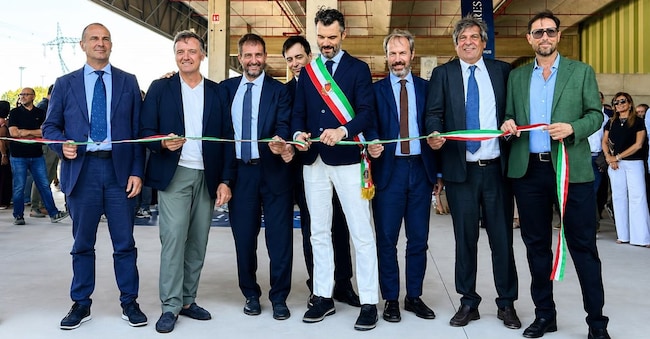
The project is the result of a collaboration between Plures, the Municipality of Prato, trade associations, trade unions and Next Technology Tecnotessile, the scientific and technological partner, and was completed within 24 months, in time for the PNRR deadline of 30 June 2026.

The 31.3 million allocated forms part of Plures’ 2025–2029 business plan, which provides for total investment of 2.5 billion in the environment, energy and water services sectors. The plan now provides for a six-month trial period for the new plant, running until the end of 2026; this will be followed by an acceleration of the programme with the aim of reaching full operational capacity by 2028.

Copyright reserved ©
Loading...

Brand connect

Loading...

Newsletter

Notizie e approfondimenti sugli avvenimenti politici, economici e finanziari.

Iscriviti