The interview

'In Saudi Arabia, 90 per cent of water will be renewable'

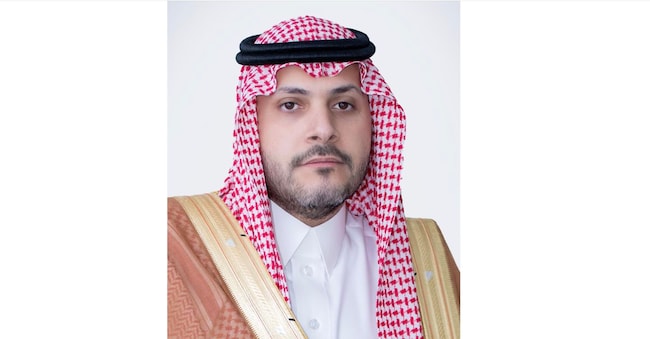
Abdulaziz Al Malik, Saudi Deputy Minister for Innovation and Research, speaks to Sole24ORE and says that Italy can be an excellent partner

by Biagio Simonetta

3' min read

Translated by AI
Versione italiana

3' min read

Translated by AI
Versione italiana

Technological innovation as the new pole star for transforming a country that for too many years has been oil-centric. In Saudi Arabia, efforts are strongly in this direction, with major investments also and above all in artificial intelligence.

At the Digital Innovation Forum organised by Micromegas, we interviewed Abdulaziz Al Malik, Saudi Deputy Minister of Agriculture with responsibility for innovation and research.

Loading...

You are moving from an oil-based economy to one focused on research and innovation. What is the most difficult aspect of this change?

"Since the inception of Vision 2030, the entire country has been undergoing a transformation. The ministries are working together with the Research and Innovation Authority to move from a supply-based model to one based on the demand for innovation. This is happening in three ways. The first is by anchoring the sector to national missions: for example, one of ours aims to reduce non-renewable water withdrawal by 90 per cent and to decrease the cost of water production by 50 per cent by 2035.

And the other two?

"The second result is the creation of certainty in the innovation market. In the past, we invested a lot in capacity, but innovators did not know if their ideas would be adopted. Today, with the right policy tools, they know that if they achieve certain goals, their solutions will be accepted and rewarded with further funding. This has generated confidence and attracted new innovators: today, the Saudi tech startup ecosystem is among the largest in the Middle East. The third transformation is about technology diffusion. Ministries are creating testbeds, sandboxes and open data platforms to allow innovators to test and launch their projects."

You said that every euro or dollar invested in innovation returns four to five. How do you measure this result? And which area is growing fastest?

"This is an estimated calculation based on econometric models. We try to measure not only the final impact, which is long-term. For example, among the 18 programmes of our Ministry, we have implemented 30 high-demand technologies in the fields of water, agriculture and the environment, trained 2,500 innovators and created almost 200 national and international partnerships. These are concrete results that, over time, will also produce the desired impact in macroeconomic terms.

Your plan is to reduce the use of non-renewable water by 90% by 2035. Which technologies will make this possible?

"Smart Leakage detection, desalination, wastewater reuse and smart agriculture are among the key technologies we have identified after research involving hundreds of experts, studying some 300 technologies and mapping dozens of technological alternatives. By 2030, we also aim to reuse 90 per cent of the water in the country: it is an ambitious goal, but this is the innovation."

You mentioned Italy as a possible partner. What kind of collaboration do you imagine?

"We discussed with the Undersecretary for Technological Innovation and Digital Transformation several areas of cooperation, including the co-development of technologies in which Italy and Saudi Arabia excel and the creation of joint talent training programmes. There are potential synergies in co-investment as well, and we are particularly interested in collaboration on AI and quantum computing for applications in the environment, water and agriculture sectors."

Saudi Arabia has a very structured system for innovation. How do you keep creativity alive in such an organised environment?

"We have a young and naturally innovative population. We keep participation high by ensuring that the voices of innovators and entrepreneurs are heard by policy makers and by involving them in sector alliances, which bring together the private, public and university sectors. Saudi Arabia's entrepreneurial culture is growing rapidly: when opportunities and a clear demand for innovation are created, talented people respond enthusiastically.

Copyright reserved ©
Loading...

Brand connect

Loading...

Newsletter

Notizie e approfondimenti sugli avvenimenti politici, economici e finanziari.

Iscriviti