
‘In Saxony-Anhalt, businesses are drawn to the AfD out of disappointment’
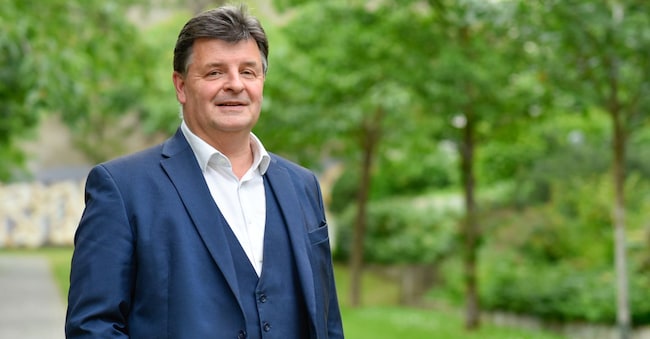
Thomas Brockmeier, managing director of the Halle-Dessau Chamber of Commerce and Industry: “When asked why they vote for Alternative für Deutschland, most people give an answer that has nothing to do with the party’s manifesto.” “We cannot shut the door on immigration; we could lose 100,000 workers here within 7–8 years.” “If the climate changes, we could lose investors. And the signs are already there.”
from our correspondent in Magdeburg Gianluca Di Donfrancesco
 Aggiungi Il Sole 24 Ore
ai preferiti su Google
Key points
After nearly 35 interviews in a month, Thomas Brockmeier still has the energy to get worked up. In Magdeburg for a series of meetings, the chief executive of the Halle-Dessau Chamber of Commerce and Industry explains that business owners who vote for Alternative für Deutschland in Saxony-Anhalt do so mainly out of frustration. ‘Several of them say so openly; it’s their right. But when you ask them why, most give an answer that has nothing to do with the AfD’s manifesto, but rather reflects their frustration with the other parties. And that’s rather strange. You’d expect a business owner, in particular, to put forward reasonable arguments. But no, most simply reply that the others are terrible. Naturally, as a Chamber of Commerce, we do not comment on individual voting decisions.”
‘We cannot turn our backs on immigration’
Brockmeier is convinced that the AfD’s programme will not help the state’s economy: ‘A couple of points are in line with our platform, for example on bureaucracy and energy costs. But on immigration…The population is shrinking and ageing; Saxony-Anhalt could lose around 100,000 workers over the next 7–8 years. We cannot turn our backs on immigration and give the impression that people from abroad are not welcome.”
The AfD claims it will bring back to Saxony-Anhalt the Germans who left after reunification. A sort of return migration, which leaves Brockmeier sceptical: ‘When I read about it, I asked myself, if there are people keen to return, why haven’t they done so already? The state isn’t the same as it was 20–25 years ago: unemployment has fallen, there are plenty of opportunities, there’s a vibrant cultural life, and the environmental situation is much better. If these people wanted to return, why have they waited so long? Are they waiting for someone to press a button and say: ‘Wow, now you can come back?’”
High-risk investments
On 6 September, the voters will decide. The AfD has the chance to form a government in Magdeburg. Many warn that this could scare off investors. ‘These decisions,’ explains Brockmeier, ‘depend on many factors. It starts with the fundamentals: labour costs, taxes, energy prices, infrastructure, bureaucracy, stability. Germany has serious problems in many of these areas.” Then there is the business climate: “a minimum level of openness and a mindset that encourages people to come here. And when you don’t have the best fundamentals, openness towards other people, other cultures and other countries becomes even more important.”
International companies, Brockmeier emphasises, need to bring in managers and specialists: ‘It’s not just about money; it’s about people, and we want to be sure they feel at ease. If the climate were to change, this could obviously drive investors away. And the signs are already visible. Not many are openly saying they want to cancel their plans, but you can sense that something is about to happen. I get this from talking to hotel owners and bank managers.”


