
In search of Etna's energy among ancient paths, lava fields and fragrant wines
Starting from nearby Catania, the area lends itself to year-round exploration
by Erika Scafuro
 Aggiungi Il Sole 24 Ore
ai preferiti su Google
Key points
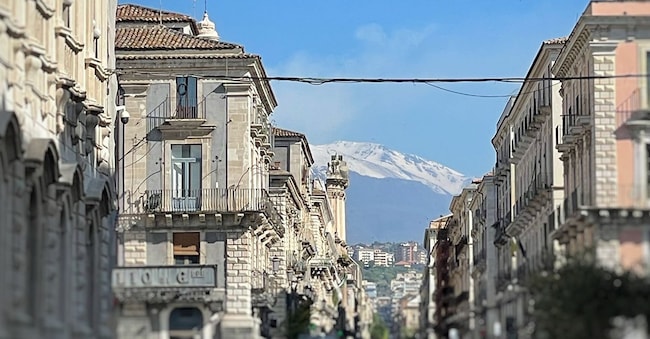
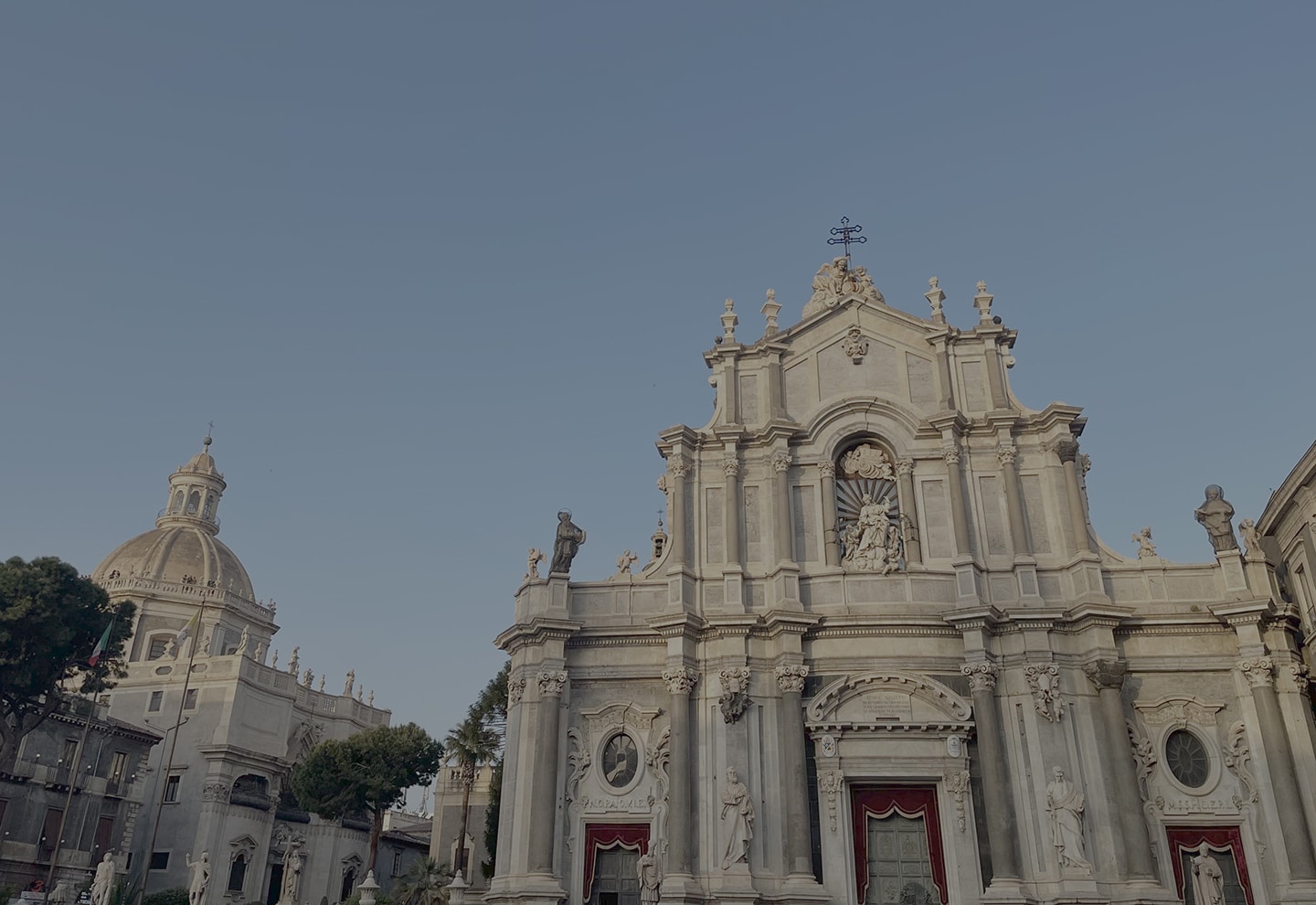
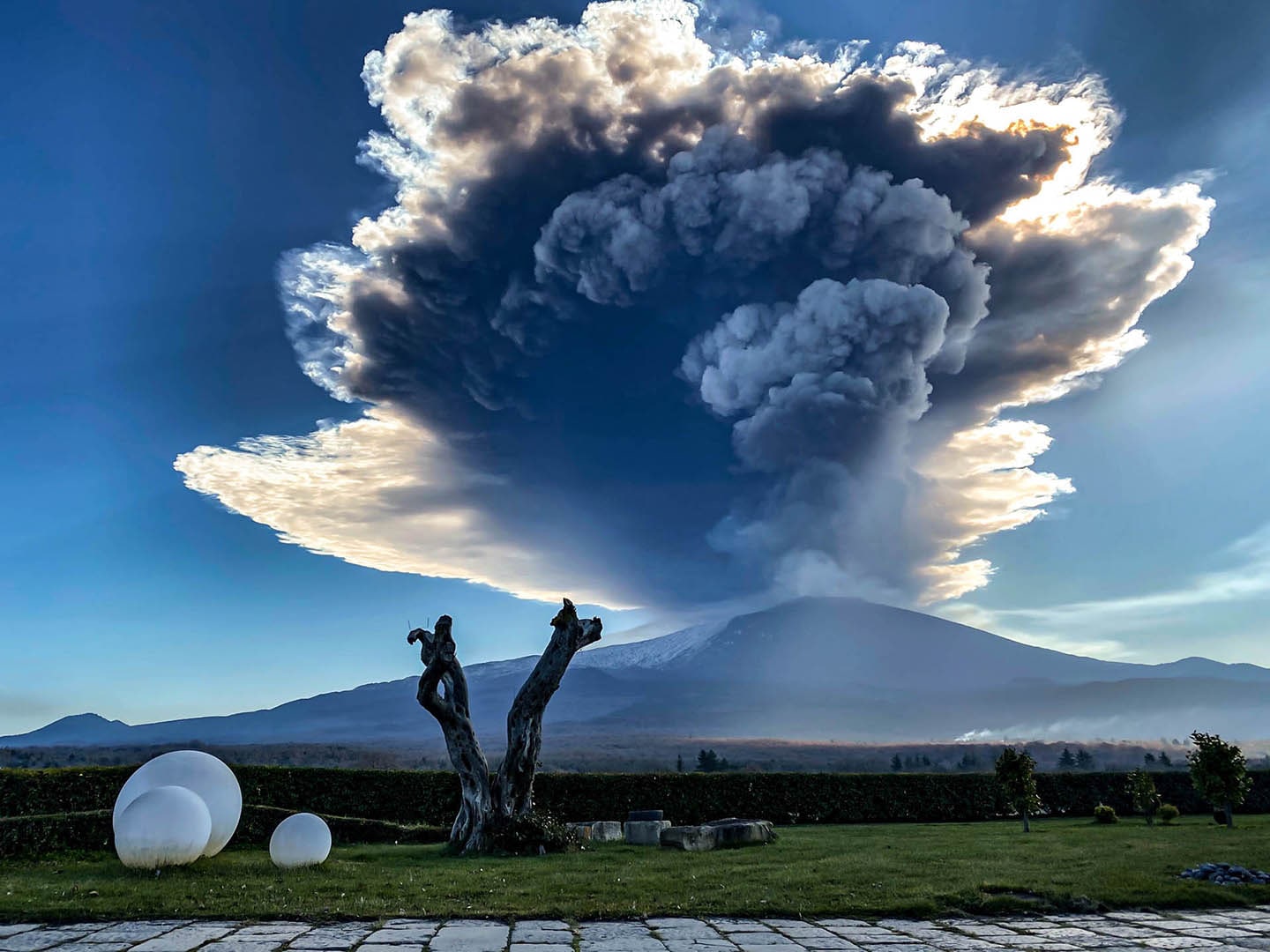
In the heart of Catania's historic centre, amidst streets and squares lined with elegant Baroque palaces and monuments of enchanting beauty, one above all the cathedral dedicated to Saint Agatha, sounds echo incessantly. They are the enthusiastic voices of tourists, the festive laughter of school groups on field trips, the clicks of cameras and the lively calls of vendors at the historic fish market and the Fera o Luni. A pulsating energy that seems to contrast with the silence of Etna, shrouded in a profound stillness as it peeps out from the central Via Etnea. Only in appearance, however: along the slopes and up to the summit of Europe's highest active volcano, a Unesco site since 2013, nature is in constant activity and, amidst recent and ancient lava flows, shapes an ever-changing landscape. A Muntagna, as the locals call Etna, rises majestically to about 3,300 metres and, from its slopes, offers a world to explore. To walk along its paths is to listen to a different kind of voice, one that tells of past eruptions.
Trips and trekking in Etna Park
Stretching from the summit of the volcano to the upper belt of the Etnean towns, the Etna Park is an extraordinary protected area, a territory of surprising landscape variety: lava flows and caves, craters, black expanses of solidified lava - the Valle del Bove, on Etna's south-eastern slope, is a testimony to its geological history - orchards, vineyards, holm-oak, oak and chestnut woods. A landscape rich in natural symbols, among which the Cento Cavalli chestnut stands out, located in the Sant'Alfio area and considered one of the most imposing trees on earth (its name is said to derive from the legend that tells how Queen Giovanna D'Angiò found shelter under its branches together with a hundred knights); continuing towards Milo, after a short walk, we come to the Ilice di contrada Carrinu, a majestic holm oak over twenty metres high. Hiking is the main activity for exploring the extraordinary scenery of the Etna Park, which is different in every season of the year: with appropriate clothing and footwear, it is possible to take part in organised tours every day, accompanied by mountain and volcanological guides, leading up to Etna's summit craters. On the southern slope, passing through Nicolosi - known as the gateway to Etna - one arrives at the Rifugio Sapienza, located at an altitude of 1,920 metres, which can also be easily reached by car. From here, one can set off on a short and easy excursion that allows one to familiarise oneself with the volcanic environment and find oneself walking on the edges of craters that are now extinct: this is the path that leads to the Monti Silvestri, formed following the eruption of 1892. Then there is the Monte Nero degli Zappini path, starting and ending at the plateau west of Monte Vetore at 1,740 metres, which allows you to walk through ancient and recent lava fields, caves and to visit the 'Nuova Gussonea' Botanical Garden, the habitat for some of the most significant species in the Etna area. Another easily accessible route is located on the north-eastern slope and is that of the Sartorius Mountains: a ring of about four kilometres that is interesting both from a geological and botanical point of view. While a convenient way to observe the volcanic landscape from above is to take the cable car up to an altitude of about 2,500 metres. Etna's territory is also criss-crossed by long-distance itineraries, which require more preparation and time, but offer an immersive experience in the primordial scenery of the volcano, such as the Pista Alto Montana dell'Etna - Sentiero Italia, which runs for more than forty-two kilometres inside the State Forestry Department at an average altitude of 1,750 metres, and circumvents the western and northern slopes.
Experiences and Food & Wine Tourism
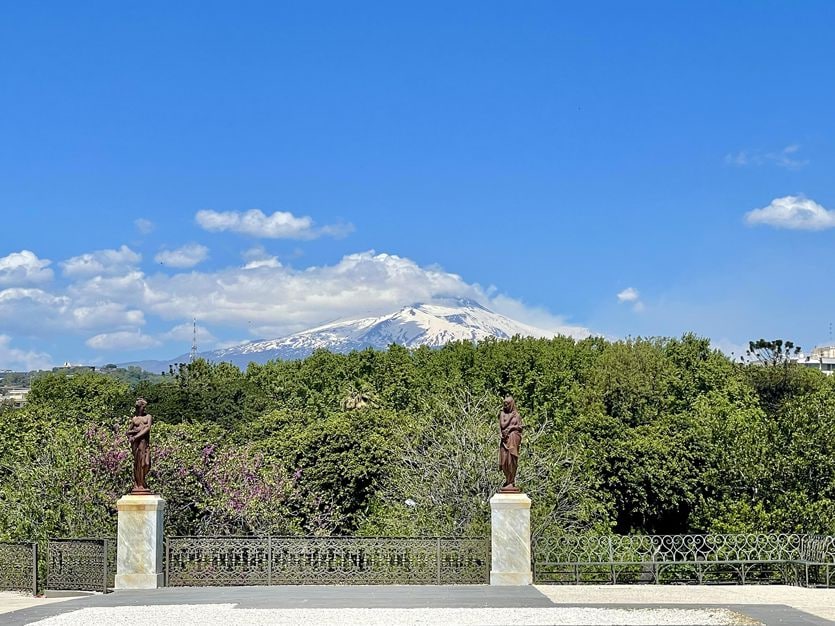
Etna also shows itself through a constellation of villages located on its slopes, with unique characteristics and a strong agricultural vocation. In fact, the fertility of the lava soil has created ideal conditions for certain crops. Thus, amidst woods and lava flows, there are vineyards, olive groves, pistachio groves and orchards that create quality products. To name a few: the Maletto strawberry, Zafferana Etnea honey, Bronte pistachio and some very old varieties of apples, such as the cola, cultivated since 1700 near the Benedictine Monastery of San Nicolò La Rena, now the headquarters of the Etna Park. Among the agricultural excellences of the Etnean territory, a prominent role is played by the vine. Each vine bears witness to a dialogue between the energy of the volcanic soil and the environmental conditions that make possible a mountain viticulture that has been practised since ancient times. The municipalities that fall within the Etna Park are home to a wine production that is appreciated throughout the world and protected by the Denominazione di Origine Controllata, which includes the wines: Etna Bianco Superiore, Bianco, Rosso, Rosso Riserva, Rosato and Spumante, mainly obtained from native varieties such as Nerello Mascalese and Nerello Cappuccio for the red berries, Carricante and Catarratto for the white ones. Etna has thus become a popular destination for wine and food tourism, an experience that combines landscape, culture and hospitality.
Dimore in the vineyard
There are numerous wineries, united in the Assovini Sicilia association, that also cultivate vineyards on the slopes of the Muntagna and tell fascinating family stories and the deep connection with the energy of the volcano and the tenacity of the vine. They do this through their production, but also through experiences dedicated to visitors, such as tastings, visits to cellars and vineyards, and wine and food tours. To name a few: the historic Benanti winery, with its Tenuta Monte Serra in Viagrande, offers visitors wine tourism experiences that combine oenological excellence, culture and terroir; Donnafugata, founded in 1983 by Giacomo Rallo, together with his wife Gabriella, a pioneer of winegrowing in Sicily, on the Etna estate, offers guided tours of the vineyards and cellar and food and wine tastings; Tasca d'Almerita, one of Italy's oldest family-owned wineries, with Tenuta Tascante, offers various experiences and visits among the vineyards on the northern slope of Etna. Some wineries, in addition to wine production and experiences, have opened up to hospitality to offer elegant and unique stays in the fascinating Etnean landscape: such as the Cottanera winery with the eponymous Dimora immersed in the vineyards of the Cambria family's farm in Castiglione di Sicilia, a historic villa renovated in a contemporary key; Zash, owned by the Maugeri family, a country boutique hotel with spa that also offers its guests a restaurant led by chef Giuseppe Raciti, Michelin Star 2026. Among the most beautiful accommodation facilities in the area is Monaci delle Terre Nere in Zafferana Etnea, a 15th-century aristocratic villa immersed in the heart of the Etna park and transformed into a luxury hotel.
Whether it is a walking trail, a glass of wine or a stay in its volcanic environment, Etna is capable of giving voice to the energy and authenticity that makes it unique.

