
Short-term rental fleet utilisation rises to 78.2 per cent
The figure (up 3.4 percentage points compared to Q2 2024) confirms the ability of renters to keep vehicles on the move

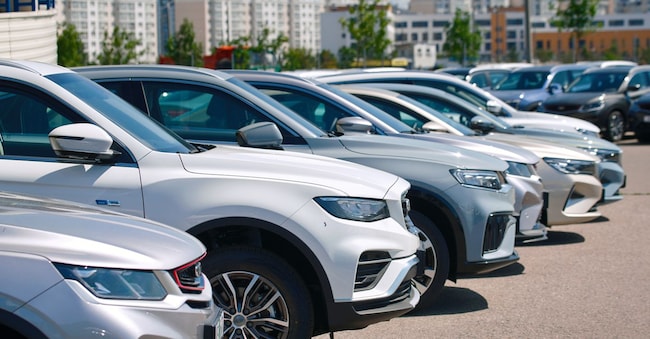
Short-term rental operators brought home a good result in the second quarter of 2025. In fact, turnover was, according to Aniasa, 436 million euros, 31 million more than in 2024, representing growth of 7.8%. But if the market has produced an excellent result on the value side, this does not apply to volumes. Customers rented less: 1.3 million rentals, almost 32 thousand less than in 2024. The decrease amounted to 2.3 per cent.
What probably happened was that the rental companies either anticipated a lower demand than that which then presented itself in front of the station counters, or they chose not to purchase a suitable quantity of vehicles to meet demand levels. The result was an average fleet, i.e. the average number of vehicles available for hire at the forecourts, of 139,900, 4.7% less than in the same quarter of the previous year.
Despite this, charterers were very adept at containing the contraction in volumes: the performance of the number of rental days recorded a minimal decrease (-0.4%). This was due to fleet utilisation reaching 78.2%, a good 3.4 percentage points higher than the previous year. This indicator photographs the ability of renters to keep vehicles on the move, i.e. rented, and to avoid them remaining stationary at stations. Each additional day of rental, in fact, translates directly into turnover. In other words, the level of utilisation becomes the perfect summary of the organisational and commercial capacity of companies in the sector.
Extremising and in simple terms we can conclude that during the second quarter each vehicle was rented for 70 days.
Customers spent more and rented for longer than in the same period last year. The price boosted turnover. The revenue per rental day was EUR 44.3 (+8.2%) in the second quarter. Renting a vehicle cost the customer an average of EUR 326 (+10.3%). This was due to the combined effect of the increase in the rate per day and the rise in the average duration from 7.2 days in 2024 to 7.4 days in 2025 (+1.9%).

