
In South Korea, fried chicken has become a national case
In a country where this food is almost a religion, the drop in prices to unprecedented levels has lit the fuse
3' min read
Key points
3' min read
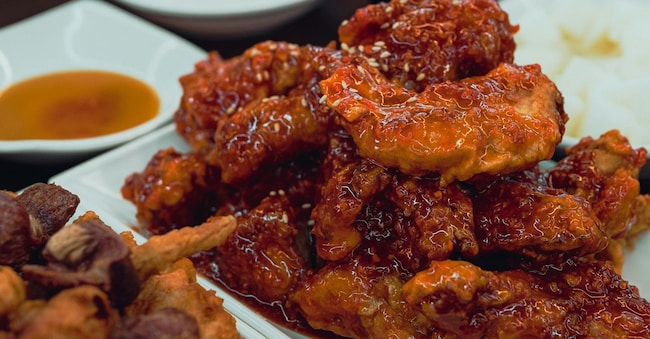
It is a war of wings and crispy legs that is being fought in South Korea. The country's three major supermarket chains - Emart, Homeplus, and Lotte Mart - have set off an unprecedented challenge, offering fried chicken at prices so low as to put to shame any promotion seen in recent decades. Buckets (buckets) of chicken sold for less than 5,000 won (about EUR 3.12) triggered an epidemic of kilometre-long queues as early as the early hours of the morning, turning the outlets into savings battlegrounds.
A shock offer that moves a troubled country
.Lotte Mart, the flagship brand of the Lotte Group, kicked off the contention on 26 June with a week of discounts: a bucket of chicken for 5,000 won, a price cut from the traditional 12,500 won. Result: 100 thousand pieces sold in a few days in the chain's 110 stores. Emart, the leading large-scale retailer with more than 150 branches, then stepped in and responded with an even more aggressive offer: 3,480 won (2.17 euro) for a whole chicken, for three days. Shortly afterwards, Homeplus launched its four-day event at 3,990 won (2.49 euro), completing an unprecedented 'chicken trilogy' between the three chains.
Koreans went crazy. Interminable queues, with lines starting before the shops opened. The limited quantity - 50-150 chickens per day per shop and only one bucket per customer - made the rush even more hectic and fuelled discount chicken fever.
Fried chicken as crisis thermometer
.Fried chicken isn't just a food in Korea: it's a cultural icon, starring in evenings with friends, family gatherings and even in successful TV dramas (in "My Love from the Star", heroine Cheon Song-yi declares her love for the famous chimaek, chicken + maekju, chicken + beer, in a scene that has become cult). But since 2016, when Genesis BBQ, the first major local franchise, first surpassed 20,000 won for a whole chicken, the price has done nothing but rise, driven by a steady increase in raw material costs, wages and delivery fees related to food delivery apps. Today, a chicken from Genesis BBQ, BHC or Kyochon costs at least 23 thousand won (about EUR 14.34). The domestic comfort food has thus turned into a small luxury.
The avian epidemic and the role of Brazil
.Worsening an already ailing market came in May 2025 the suspension of chicken imports from Brazil, the world's largest exporter, following an outbreak of avian influenza. South Korea was importing up to 90% of the quantity for the food market from there. The blockade drastically cut the availability of the product, causing prices to skyrocket. And even though the big franchise chains claim they only use domestic chicken, this shortage has affected the whole industry, especially companies that used to base their supply on Brazilian meat, which is now unavailable or too expensive.


