In Stockholm, the Tech scene supports art
High quality of offer and excellent sales under 50,000 euro at the Market Art Fair

The name is programme. At the Stockholm Market Art Fair, which took place from 23 to 26 April, people sell and buy. On the other hand, it is a deeply business-oriented city, where there is a very high concentration of innovative start-ups and highly successful tech companies, including Spotify, Klarna, King.com.
A strong market
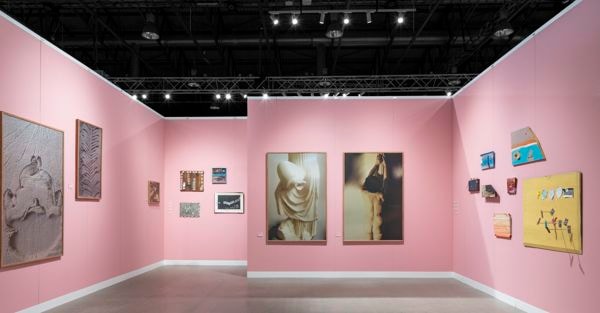
And it was precisely from this sector that numerous art collectors came, who bought heavily during the VIP opening day of the fair. "It was a successful edition," commented Sara Berner Bengtsson, director of the fair for the past five years and head of a small, young, all-female team. "Sweden and the other Nordic countries remain rich, despite the recession. For our part, we have tried to create sales opportunities for gallery owners, who are now faced with new, younger collectors, who are looking for the event, so the fair benefits. 80-90% of the galleries come back every year, so they have established solid contacts'.
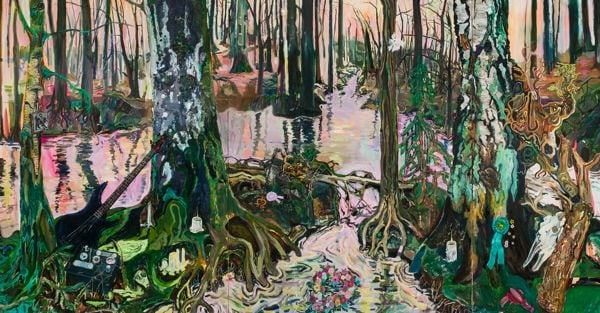
"During the VIP opening day, we had the impression that, in the global context in which we find ourselves, people felt like distracting themselves and spending money on themselves," said Ola Gustafsson of Elastic Gallery, who was showing embroidery on canvas and wood sculptures by Dick Hedlund (Sweden, class of 1985, prices 1,500-10,000 euro).
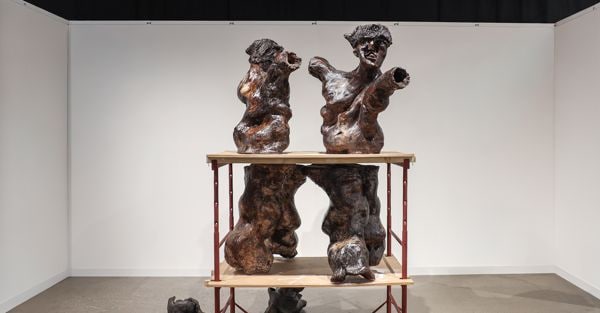
The Fair Structure
The fair was founded 20 years ago by gallery owners from Sweden, Denmark, Norway, Finland and Iceland as an event for art from the Nordic countries. But in 2025 it opened up to foreign galleries: "because in an increasingly closed and nationalistic world we believe that art should mean openness, inclusion and cross-cultural exchange," explained director Berner Bengtsson. "Moreover, it benefits the local scene, and here too there are many galleries showing international artists."
The galleries are selected by a committee that, unlike many other fairs, is composed of curators and museum directors chaired byLars Nittve, who was founding director of the Tate Modern and director of the Moderna Museet, which is reflected in the quality of the offer. Personal, bipersonal, or curated presentations are favoured.
Another novelty this year was the location: the institutional charm of the old palace was dispensed with, to go to a former port area with a post-industrial atmosphere, which conveyed to collectors the idea of a real fair.