
In Tel Aviv, life suspended between normality and war: 'It's not strange for us'
The pony-tailed female soldier walking in front of me at the Savidor train station in Tel Aviv is very young, she is bent over under the weight of the army-green duffel bag she holds on her shoulders. On one side she has hung a small pink teddy bear. On the other she holds a machine gun.
Tel Aviv is like this: suspended between normality and war, lightness and violence. Many post-adolescent soldiers with little beards crowded the station platforms on Monday. Many were returning home for the Sukkot holiday, which strangely coincided with the anniversary of 7 October and two years since the start of the war. Their presence, along with the photos hung everywhere of fighters and hostages, are a constant mental post-it note of the fact that even if it all seems normal, even if you don't remember it, the country is at war. And on the other hand, sirens sometimes sound. Yesterday, rockets, intercepted, were fired from the north of the Strip towards the central area of Israel, which responded with a raid towards Gaza.
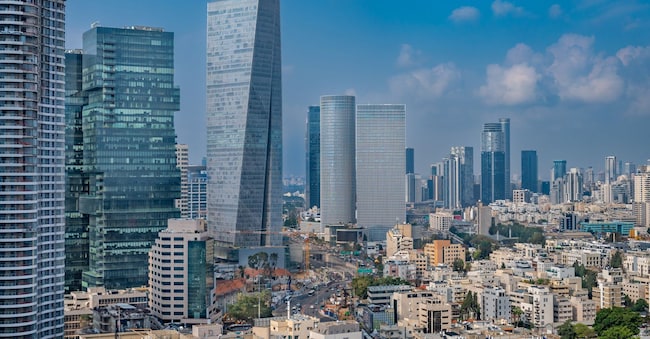
But for the most part, life is relaxed: the beach is crowded, there is sport on the promenade, restaurants serve elaborate dishes and exotic milkshakes, young boys smoke and drink beer. It's not just the surface: the stock market here has risen 200% in two years, the economy is doing reasonably well, the birth rate is surprisingly high. People grab a rifle or sunscreen depending on the moment. How all this comes together is hard to explain.
Eli is 28 years old, has a degree in engineering and works in the technology sector. Lying in the sun, he says straight away that he does not want to talk about politics, he is not interested: 'It is strange this life for Europeans, but it is normal for Israelis. We have been living with this situation for a long time, not just two years'.
Her friend Avigail, 27, has a degree in management: 'We live in a country at war and sometimes we are forced to go to shelters. But at the same time we can also go to the beach. Yes, it's all very strange'. I ask her if she ever thinks about what is happening in Gaza, just a few kilometres from here, and how she lives with this awareness: 'With mixed feelings: sometimes we feel guilty because we can enjoy ourselves while our soldiers are fighting'. Avigail, like many others I talk to, doesn't even think that when I say if they think about Gaza I am also referring to the Gazans, the more than 67,000 dead, the displaced, the destruction in the Strip. When I say what is happening in Gaza she only thinks of the IDF soldiers.

