Book fair

'In the 21st century, the home will be made of people and words'

The nation of foreigners is getting bigger and bigger and also includes those who, politically and morally, do not feel at home in their own country. Turkish journalist Ece Temelkuran has written an exciting book that addresses them (us)

by Lara Ricci

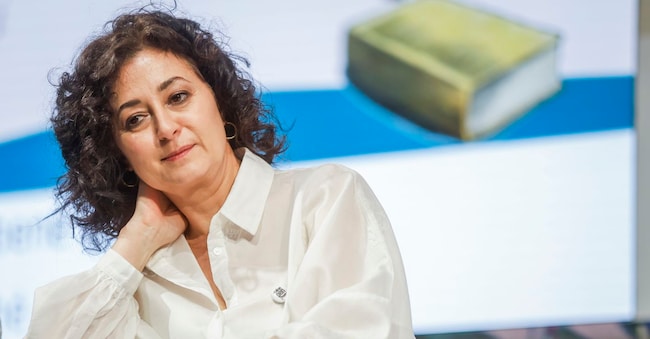
Ece Temelkuran al XXXVIII Salone Internazionale del Libro, Torino LAPRESSE

3' min read

Translated by AI
Versione italiana

3' min read

Translated by AI
Versione italiana

'The foreigner is not the exception but a central and symbolic figure of our time'. After writing How to Break a Country in Seven Moves. The road from populism to dictatorship (2019) and Trust and Dignity. Ten Urgent Choices for a Better Present (2021), Turkish journalist Ece Temelkuran has printed a very different one, full of energy and hope: Strangers Like You. La nazione degli esclusi nel nuovo millennio (translated by Giulia Boringhieri and published by Bollati Boringhieri, like the other two). It is an imaginary epistolary collection of letters addressed to a foreigner, a nation of people who, like the author, in exile for ten years, have lost their home, materially or symbolically.

Turkey used to be a model democracy, what happened?

Loading...

It is happening everywhere, but Italia and Turkey can understand each other well because of Berlusconi, because of what happened in the 1980s. What has happened in the world is that neo-liberalism has swallowed, chewed and spit out democracy. The fundamental promise of democracy, which is equality, has been erased by neo-liberalism. Big business does not need democracy. I talked about this inHow to Break a Country in Seven Moves. Then I wrote Strangers Like You because I think we are all in the situation, we all feel alone, because of fascisms, because of wars, because of the climate crisis. We feel like foreigners in this time, in this place, we don't recognise our country, we don't feel at home any more, that's how it is for many people. The consequence of this political reality is also a sense of loneliness.

So the word home, in this situation, what does it mean to you?

Space is shrinking: wars are creeping into Europe, the climate crisis is making some territories uninhabitable, fascisms are conquering more and more countries. We need to redefine what home is for us. It may be that what we call home is no longer connected to a place. The experience of refugees, exiles, migrants, of all people who have had to leave their homes and rebuild them can teach us how to make a home when there is no more space: home is people. In the 21st century, home could be made of people and words.

The nation of foreigners is getting bigger and bigger. Can we make it a good thing?

I think so. Foreigners also include all the people who feel foreign because of the cruelty of today's world, in fact in the book I also write about those who feel homeless because of a politics and morality in which they do not recognise themselves. If all these people who feel homeless morally, politically or physically recognise themselves and realise that they are a majority, they will be able to bond in such a sincere way that it will be possible to change the world.

Does living a life as a foreigner mean surviving?

It is survival, but I believe that all these people who have lost their homes carry hope with them, the hope of surviving with morality. But the book is also made up of more intimate, poetic reflections. I want with this book to create a language that is common to all those who feel they can come closer and unite. I did it to feel less alone and to make all foreigners feel less lonely.

In the book he manages, through unusual word associations, to identify very well common feelings, common situations. For example, he speaks of political nervous breakdown...

Yes, I had one.

And what is that?

That's why in this book I tried to talk a lot about emotions: people think that emotions are only theirs, and that makes them feel lonely, but instead we all have them. This is the case with political exhaustion, which makes us feel alienated. And that means there is something wrong in the world right now. People who are real human beings do not feel that they belong. Peter Thiel, Elon Musk, Mark Zuckerberg and all the others are imagining a non-human future, or one with very few humans: this book is probably also a manifesto against this vision of a non-human future.

Copyright reserved ©
  • Lara Ricci

    Lara Riccivicecaposervizio curatrice delle pagine di letteratura e poesia

    Luogo: Milano e Ginevra

    Lingue parlate: Inglese e francese correntemente, tedesco scolastico

    Argomenti: Letteratura, poesia, scienza, diritti umani

    Premi: Voltolino, Piazzano, Laigueglia, Quasimodo

Loading...

Brand connect

Loading...

Newsletter

Notizie e approfondimenti sugli avvenimenti politici, economici e finanziari.

Iscriviti