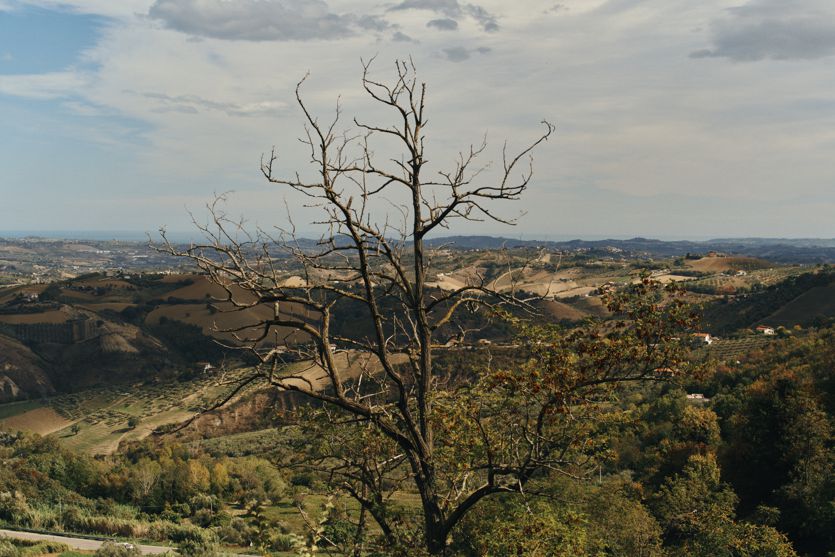
In the Abruzzo village where Brioni grows new tailors
The brand reopens the Scuola di Alta Sartoria named after its founder Nazareno Fonticoli in Penne, which has always been the home of its manufactures, to hand down the art of handmade
3' min read
3' min read
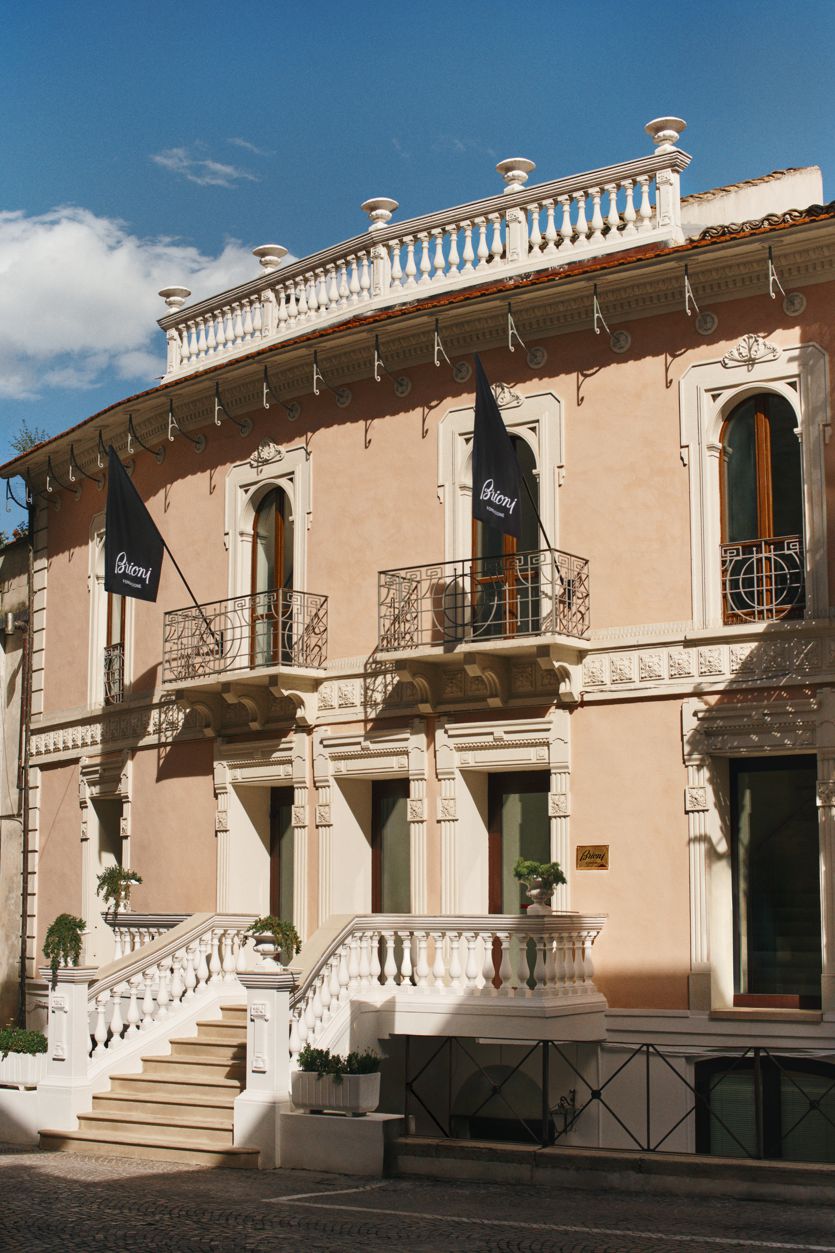
The 18th-century painting of St. Omobono, the medieval patron saint of tailors, is just across the street. With its Baroque façade, the Santissima Annunziata church that guards it is opposite the Scuola di Alta Sartoria and the Foundation named after Nazareno Fonticoli, where young tailors learn techniques, knowledge and sensitivity of the craft that has made the Abruzzi town of Penne famous throughout the world.
It was 1945 when the Pennese tailor Fonticoli, together with his partner Gaetano Savini and with a capital of 150,000 lire, opened his men's tailor's workshop on Via Barberini, in the fervent post-war Rome, christening his brand Brioni, like the Istrian island that was the heart of worldliness in the 1930s and 1940s. Their style was so successful that in 1959 Fonticoli wanted to open the factory for the production of the garments in his own Penne, 220 km away from the capital and where tailoring is a centuries-old art handed down through the families. The approach was visionary: to propose a pret-a-couture, i.e. to subdivide tailoring into precise phases, each carried out by specialists, separate but linked together like the parts of an organism.
In 1985, with the first generational change, Brioni opened its training school for new recruits in Penne, and the first course was also attended by Angelo Petrucci, who has been Brioni's master tailor for decades. After closing in 2020, the brand - since 2012 belonging to the Kering group - is relaunching the School today with new courses, objectives, ambitions: lessons began in September, for 16 girls and boys with an average age of 19. Most of them are from the area (where 10% of the population works for Brioni), many are children of the artisans working in the brand's three factories in the area, one student is from Paris.
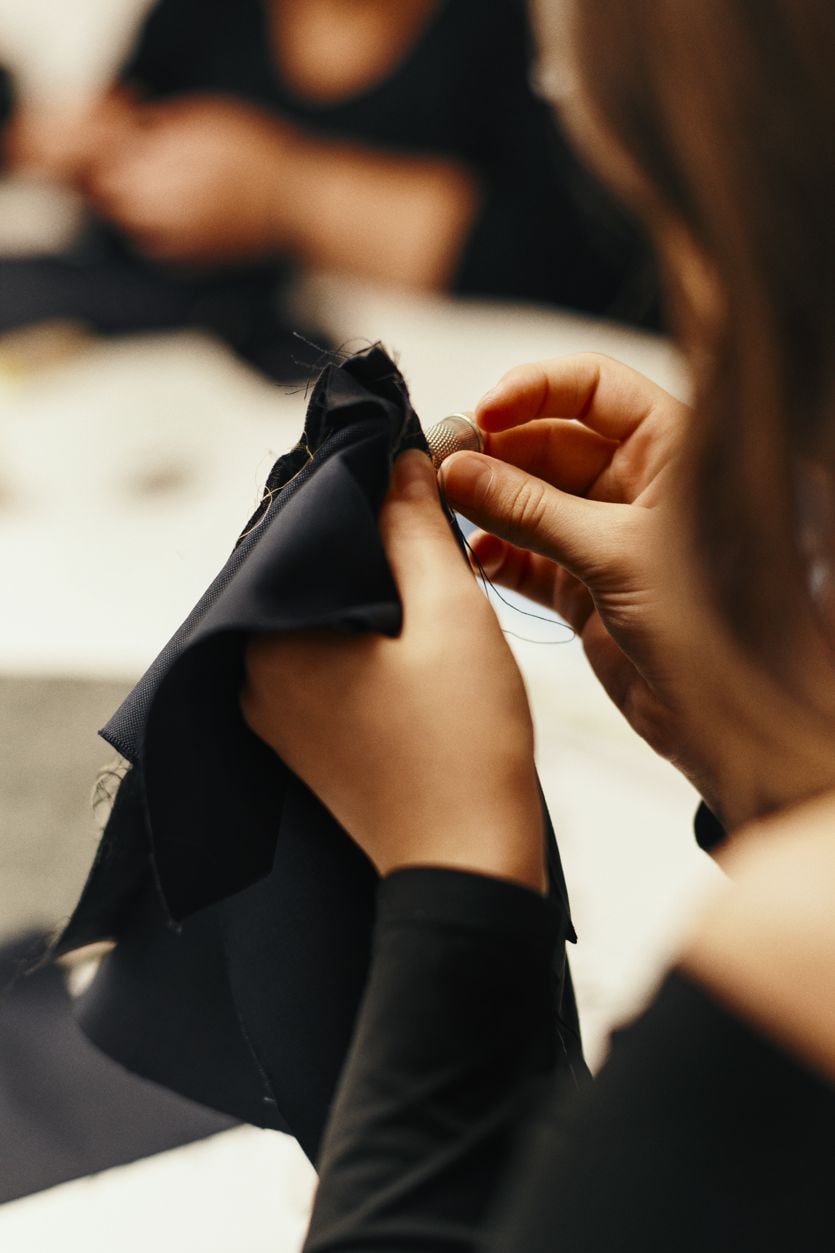
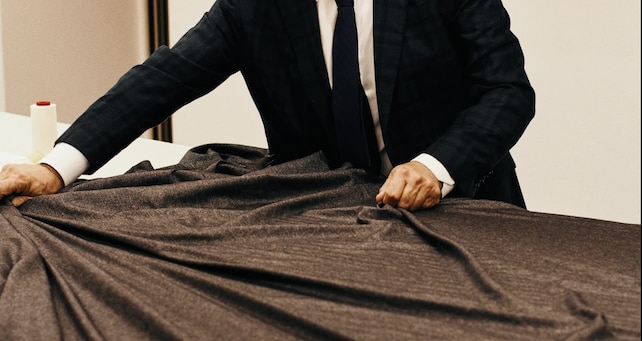
Admission does not require a specific curriculum, but passion and motivation. The entrance exam also includes a practical sewing test, deliberately prolonged to allow a glimpse of whether even an uncertain hand hides the talent for needle and thread. At the school, in fact, 800 of the 1,300 hours that make up each of the two years of the course are dedicated precisely to this: to make the hands learn the art of tailoring. The students can then continue to learn it and apply it, if they wish, in the brand's factories.
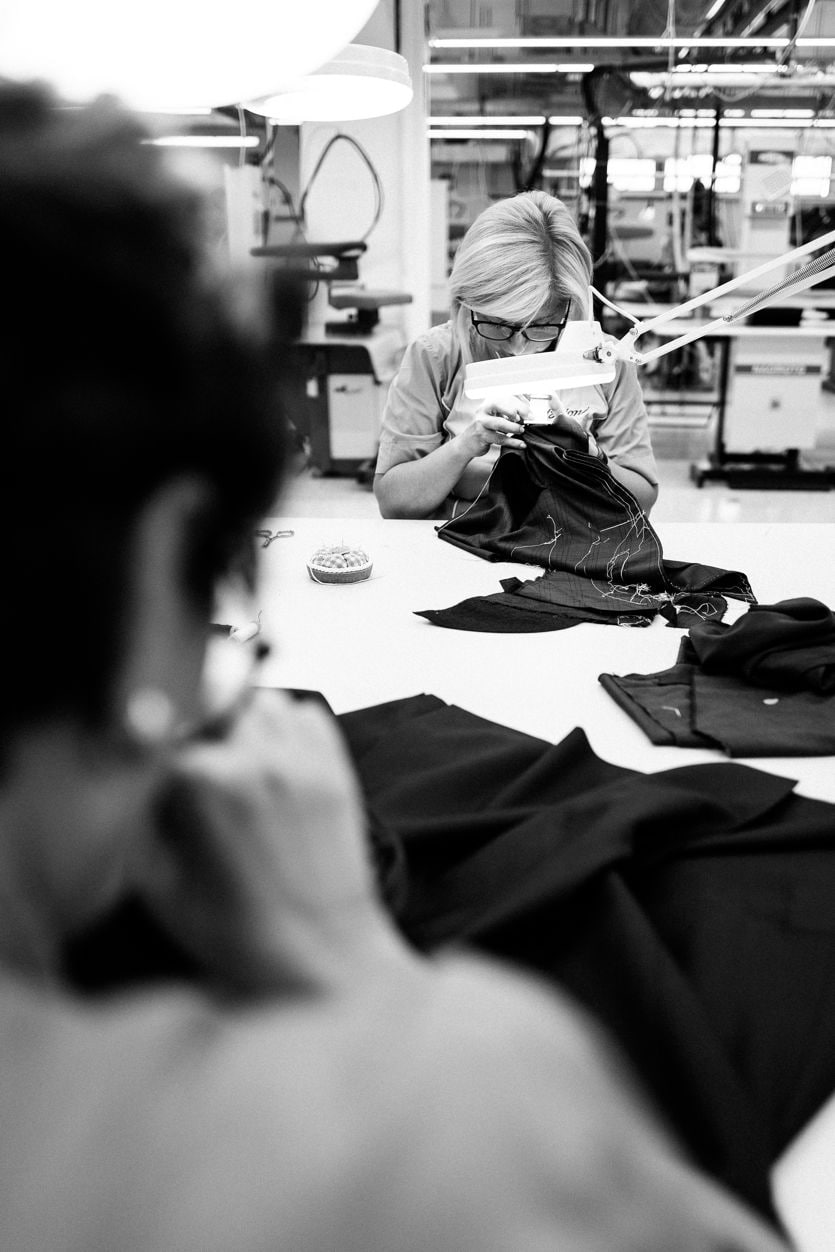
At the one in Penne, which is located where Via Nazareno Fonticoli crosses Via dei Sartori and is dedicated to the making of jackets, hundreds of people in sage green shirts look like monks in a medieval scriptorium, such is their concentration and dedication. More than 16 hours are needed for them to make a blazer, 32 for a tuxedo jacket. Some can even sew with their eyes closed, with enchanting speed. They work on the sleeves, collars, juxtaposing generous layers of fabric, with seams that are invisible but crucial to guarantee impeccable and comfortable wearability of the garments, whose ready-to-wear models, called Parioli, Belsiana, Chigi, evoke Brioni's link with Rome.