
School decree approved by the Council of Ministers: burqas and niqabs banned, 30 per cent cap on new admissions
Discussions with the Quirinale right up to the last minute. Powers vested in schools and Regional School Offices (USR); the draft also includes the new technical and vocational ‘licei’

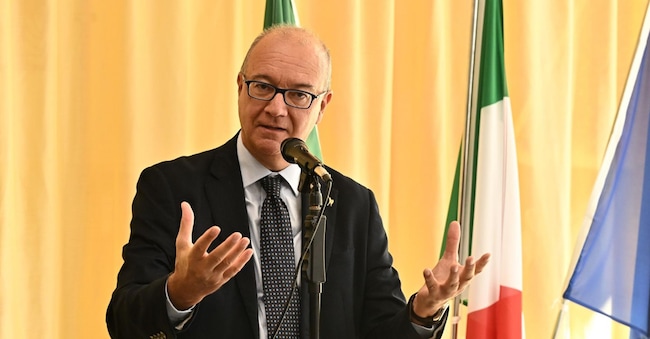
Tighter restrictions on the wearing of the full-face veil in schools. As a result of a draft decree expected to be tabled before the Council of Ministers today – the same measure that will enshrine in law the 30 per cent cap on foreign pupils in classes who do not yet speak our language – both the niqab and the burqa will be banned. Confirmation came yesterday from the Minister for Education and Merit, Giuseppe Valditara, during a meeting organised by the Lega in the Chamber of Deputies (see separate article on this page), who described the forthcoming crackdown as ‘a battle of civilisations: if we wish to combat patriarchy and the isolation of women, we cannot condone practices that treat them as inferior’. He went on to confirm that the text relating to schools will be a single document and will take the form of a decree-law.
The 30 per cent cap
The main points are in line with what was reported in this newspaper in recent days. Starting with the 30 per cent threshold for foreign pupils in class composition, which will be based on a purely linguistic distinction; that is, it will apply to ‘non-Italian-speaking’ pupils from abroad (without distinguishing between EU and non-EU countries) and will take effect immediately for new arrivals, without this meaning – as the Minister of Education himself clarified – that existing classes will be broken up. This provision, together with the additional resources already allocated for this year, serves to ensure the requirements of necessity and urgency essential for a decree-law and thus to address the concerns raised by the Quirinale. Indeed, yesterday too, talks between officials from the Ministry of the Interior, Palazzo Chigi and the Quirinale continued throughout the day in the search for a final agreement on the draft bill.
Exemptions
Alongside the cap, the Decree-Law will also introduce a number of exemptions. Starting with the two years already spent in nursery school, which become three in the other stages of education (primary, lower secondary or upper secondary). But that is not all. The same mechanism for applying the cap provides for a further exemption. If the school, as a first resort, or the Regional School Office (USR), as a second resort, are unable to find a local school (as is already the case for excess enrolments) or if organisational solutions compatible with the exercise of the right to education cannot be put in place, the new rules will not apply. There is a further addition here: to help precisely these schools, the Decree-Law will allocate 14 million euros to launch language enrichment courses. This refers to the measure already in force from 2025/26, which provides for the deployment of around a thousand teachers (of whom over 750 will be in the first cycle) dedicated to enhancing Italian language skills for foreign nationals in classes where new arrivals in Italia account for 20 per cent or more (or who do not possess basic language skills equivalent to at least level A2).
The two measures, in fact, overlap. If the existing 20 per cent threshold for newly arrived foreign nationals is exceeded, an additional teacher is allocated immediately; if, on the other hand, the additional threshold of 30 per cent of non-Italian pupils with limited knowledge of our language is exceeded (and it is not feasible to transfer them to other classes or schools, ed.), language support programmes funded by the incoming resources will be launched.
Other measures
The Decree-Law is expected to include Italian language courses for parents of children with severe learning difficulties, involving social services and adult education centres (CPIA), although it is not certain that these will be compulsory. It should also introduce a change in the name of technical and vocational schools, which would become ‘licei’. A further 170 million has been earmarked to bolster certain areas in need (inspectors, school administrative offices, etc.) and to provide bonuses for teachers. This includes extending additional duties and remuneration for tutor and careers counsellor teachers.


Brand connect


Newsletter Scuola+
La newsletter premium dedicata al mondo della scuola con approfondimenti normativi, analisi e guide operative
Abbonati