
In the event of a collision with wildlife, it is up to the driver to prove that they acted with due care
It is the driver’s responsibility to prove that the animal’s behaviour caused the accident. Only then will the regional compensation be paid
Key points
- The Supreme Court’s position
In the event of an accident involving wildlife, it is the driver’s responsibility to prove that the behaviour of the animal was in fact the cause, or at least a contributing factor, of the accident. This was established by the Third Civil Section of the Court of Cassation in judgment 16888/2026, published on 29 May 2026.
The story
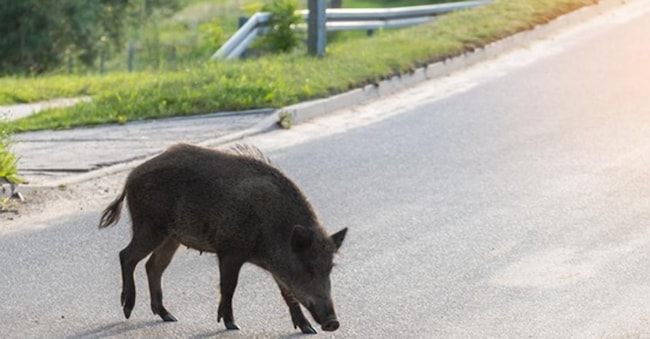
The case concerned the driver of a motorcycle who, whilst travelling along a main road in the Marche region, had collided with a roe deer that had crossed the carriageway. The Justice of the Peace in Macerata, having upheld the driver’s claim, ordered the Region to pay compensation of €2,250 plus interest and costs.
The administration had lodged an appeal with the Supreme Court on three grounds. Article 2052 of the Civil Code was not applicable to the present case, which was better described by Article 2043 of the Code: it would therefore have been necessary to establish, in concrete terms, negligent conduct on the part of the Region itself, which, moreover, was neither the owner nor the user of the wild animals. The Court, however, rejected the ground: damage caused by wildlife is compensable by the public administration, in accordance with the provisions of Article 2052 of the Civil Code. What matters, in fact, is not the duty of care but the ownership or use of the animal; furthermore, protected wild species form part of the State’s inalienable assets and are entrusted to the care and management of public bodies.
The Supreme Court’s position
Despite this, however, the Court of Cassation upheld the other two grounds of appeal put forward by the Marche Region, according to which it is incumbent upon the driver to prove that they acted with due care. Furthermore, according to the Region, it was wrong not to apply the presumption of fault against the driver of the vehicle involved in the accident. Indeed, as stated in the grounds, in the case of damage caused by animals, in accidents involving a vehicle not running on rails, the party bringing the action must provide evidence of the exact circumstances and dynamics of the accident.
‘In the absence of adequate, comprehensive and sufficient evidence—positive and certain—that the animal’s behaviour, in conjunction with the driver’s conduct at the wheel, was in fact the cause, or at least a contributing factor, of the damaging event, the claim for compensation by the driver and/or the owner of the vehicle (or third parties) cannot be upheld, not even in part’, the Court concludes.

