
In the king's garden: a trip to Scotland to discover Dumfries House
In the fireplace hall, listening to the legends of a modern-day storyteller. Among three thousand rose specimens, guided by the royal gardener. It is here that a jewellery collection inspired by nature is born.
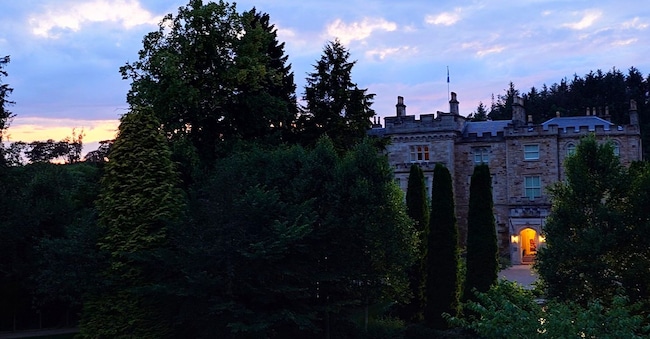
This story has two narrators. The first is a professional storyteller: a craft that in Scotland has a specific course of study and that prepares tightrope walkers of the word, enchanters of legends and folklore. Her name is Beverley Bryant and her art is recognised as a Unesco heritage site. She enters the fireplace room of Crossbasket Castle, in Blantyre, not far from Glasgow. Outside you see only moss, woods, and a light mist of rain, inside velvet and warmth, tea and scones. The show starts immediately and it's all in the listener's imagination. Beverley uses only her voice, but she speaks 'eye to eye and heart to heart', weaves myths, poems, folk tales, doses emotion and suspense, noir and fairy tale. He brings us before a great white unicorn, a magical creature with power as limitless as his freedom. It bows white, solemn, slow, and from that moment on, everything precipitates: we avert an encounter with the Loch Ness monster, only to drown in the abysses at the gallop of a kelpie, we travel into lakes filled with the tears of beautiful maidens, we open treasure chests of pearls and rubies protected by mermaids, and we follow the fairies, the little fairy folk who make every green corner a secret theatre out of leaf, bark, and cave. In two hours we sail from the windswept Highlands to the Isle of Skye, we walk, enchanted and transfixed, from Argyll Forest to Edinburgh.
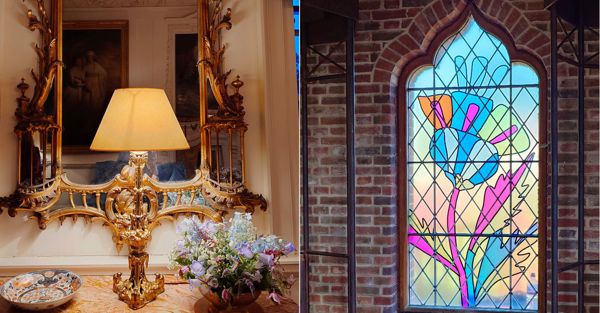
Our second storyteller is the king's gardener, but before she takes us by the hand, we must move to Dumfries House, in Ayrshire, and here we digress into a story within a story. In 1752, William Crichton-Dalrymple, fifth Earl of Dumfries, was made a member of the oldest and noblest Order of the Thistle, a privilege that only the king could confer. Either to honour his investiture, or out of aristocratic narcissism, or the dream of a long lineage, he decided to have a mansion built to live up to the title. He summoned the best architects of the time and for the furnishings he personally went to the cabinetmaker Thomas Chippendale to commission chairs, furniture, bookcases and a four-poster bed in that exquisite Rococo ornamentation, a little Oriental and a little Gothic, tinged with exoticism. The count died without the son he so longed for and had sought in vain with his first and then his second wife. The jewel-like estate, surrounded by more than two thousand acres of green, passed from heir to heir and from century to century, until 2007, when it was put up for auction.
Loading...
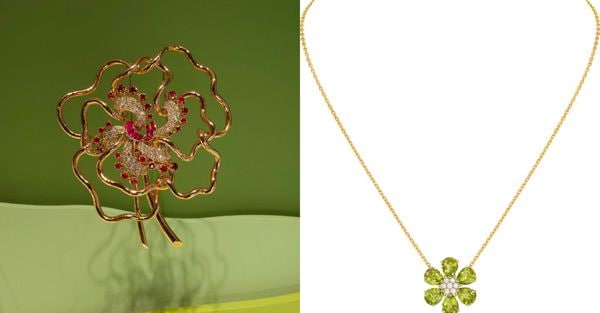
It is said that it would have become a golf course had it not been for the intervention of His Royal Highness, then Prince of Wales, Charles: it was he who saved the house, the park and one of the nation's most important collections of Georgian, Scottish and English furniture. From that moment, the story of Dumfries House also became the story of the English monarchy and above all the mirror of the King's Foundation and its commitment to sustainability and the preservation and transmission of traditional crafts. This is where Melissa Simpson comes in, the woman to whom the ecologist king entrusts the care of his beloved roses and his two favourite places, Highgrove and, indeed, Dumfries House.
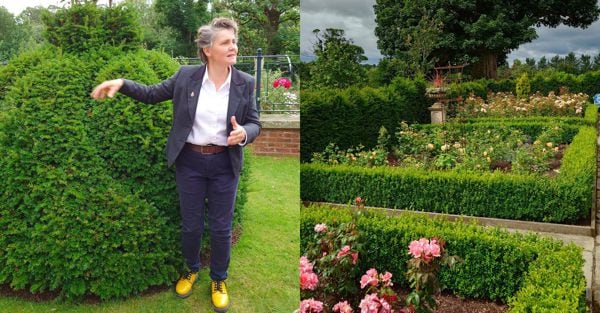
"When the king visits, he spends two or three hours walking around the gardens and giving his directions. He has very clear ideas and everything here reflects his vision," he says. "Even the way the rows of Delphinium are arranged!". They are among Her Majesty's favourite flowers: spectacular spikes of petals coloured from deep blue to purple, perfect for these climates. With the measured and determined pace of the gardener, we walk along a long, tall and compact border, sloping from soft shades to deep tones. As she speaks, the head gardener plucks off a dry leaf, corrects a branch that is leaning too far, fixes a loose, misaligned net out of the corner of her eye. This garden seems to mirror his manners, a mixture of order and naturalness. The parade of Delphiniums at attention, softly coloured and mobile, speaks of a stubborn care and a fearless confidence in doing and redoing, planting and pruning, indulging and correcting the course of nature. 'Believe me, with the wind blowing around here, keeping them straight is my first thought'.
The priorities are not only aesthetic, although 'King Charles has a keen sense of design and harmony', Dumfries promotes biodiversity and best biological practices. The distribution of plants is designed according to soil, temperature, humidity, but also bees, insects, butterflies. Each corolla has its shape and therefore its pollinator of choice, and the arrangement of the species takes into account the routes of these microscopic flights. Beverley Bryant's undergrowth of invisible fairies and elves, after all, is not far removed from Melissa Simpson's green undergrowth where each seed is a constellation of trajectories.


Loading...
