In the heart of the Adriatic, heading for Hvar, the jewel of Dalmatia
It is one of the largest islands along the coast, with a very ancient history, stunning bays and plenty of small coves to take refuge in

Key points
A crystal-clear sea with decidedly cool water, thanks to the underground currents that flow from the mountains down to the coast. Mostly rocky beaches nestled in small coves, surrounded by dense pine forests that provide shade even on hot summer’s days, and villages often clustered around small harbours, with clusters of houses huddled at the bottom of quiet coves – in some cases completely deserted. This is Dalmatia, a succession of islands (over 900) that have brought the Adriatic to life since time immemorial. Among these are Solta, Brač and Hvar, the three islands facing the Split coast and the Makarska Riviera. Each has its own character: the small island of Solta is secluded and almost secretive; Brac is beloved for its beaches and water sports; Hvar is decidedly more cosmopolitan, frequented by the international jet set and considered the most elegant island in Dalmatia.
Discovering Lesina
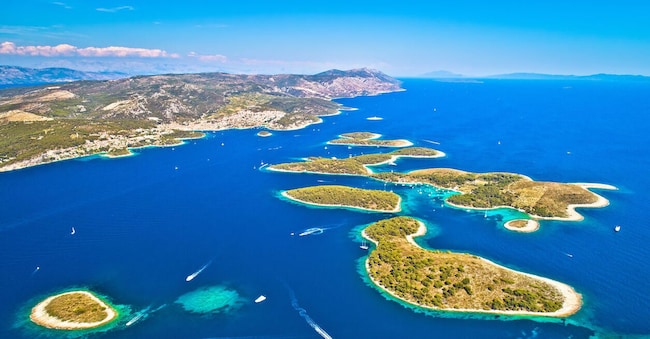
Hvar, known in Italia as Lesina, is the island’s most important town, featuring a succession of historic buildings, a lively harbour and stylish bars. From above, the Španjola fortress overlooks the town, offering sweeping views over the rooftops, the sea and the beautiful Pakleni Islands. Like a true Mediterranean stage, the town captivates visitors with its unique charm and renowned social scene: the Hvar Theatre, Europe’s first municipal theatre housed within the historic Arsenal building, is something you wouldn’t expect. Founded in 1612, it reveals Hvar’s cultural and maritime heritage. An architectural gem whose exterior has remained virtually intact for centuries, whilst the interiors reflect the elegance and style of the 19th century. You cannot leave Lesina without discovering its famous agave lace (a UNESCO Intangible Cultural Heritage), produced and displayed exclusively at the Benedictine Monastery, where it has been crafted since 1664 using threads extracted from the agave plant.
Khora Pharu, the Stari Grad plain
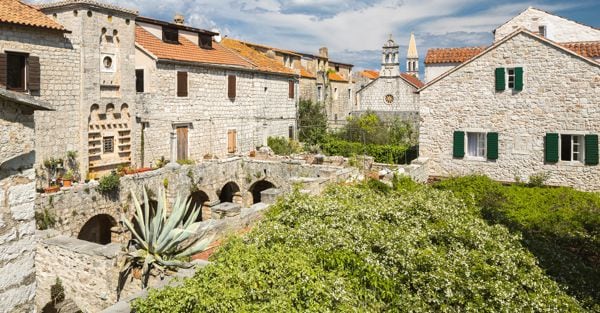
The atmosphere is equally enchanting in the streets of Stari Grad (the oldest town on the island and in the whole of Croatia), Jelsa and Vrboska, where you can soak up the truest essence of the Adriatic. You can stroll along ancient paths, past dry-stone walls, passing traditional stone houses, chapels and historic churches. In the Stari Grad plain, also known as Khora Pharu, you feel as though you are walking through an open-air museum that captures the essence of Mediterranean heritage. This plain is, in fact, an extraordinary testament to the ancient agricultural techniques of the Mediterranean. A typical landscape characterised by vineyards and olive groves, retaining its original territorial layout dating back over 2,400 years (it has been on the UNESCO World Heritage List since 2008). And then there are the lavender fields, which every summer transform into a vibrant mosaic, adorning the island with a palette of shades of purple, not far from the picturesque villages of Malo and Velo Grablje.
Recreational boating
The real gem, however, is the sea. Alongside Dubrovnik, Hvar is one of the most popular Croatian destinations for yachting enthusiasts, and ‘Stori Grod’, as it is known in the local dialect, is the first town in Croatia where sailing was practised. The reason is simple: the long fjord that cuts inland right up to the town centre is one of the safest natural harbours in the Adriatic. Its distinctive V-shape offers protection from almost all winds, with the exception of the mistral, the typical north-westerly wind that has made Stari Grad a key destination for yachtsmen. It picks up just before midday, gradually increases in strength during the afternoon and dies down at sunset, providing ideal conditions for sailing, windsurfing and kitesurfing.
The bays in the Gulf of Stari Grad
The Stari Grad inlet begins at the Kabal peninsula, the entrance to which is dominated by a rocky headland some 80 metres high. Looking south-east from the stern of the boat, you can see Brusje, a small village perched inland, set amidst a rugged landscape characterised by vast fields of lavender. By land, you can reach the viewpoint at the top of the hill and observe the distinctive shape of the Kabal peninsula, which resembles an open hand. The entire gulf is dotted with bays much loved by sailors, all characterised by safe waters and excellent anchorage.On the northern side lies Luka Tiha, the widest of the area’s inlets, comprising no fewer than seven small bays, some of which are better sheltered than others from the sirocco and libeccio winds. In summer, these bays are home to plenty of traditional restaurants with a simple, relaxed atmosphere, where you can enjoy fresh fish and shellfish caught that very day. Continuing towards Stari Grad, past Luka Tiha, you come to Zavala Bay: wide, deep and ideal for anchoring, bathed in sunshine from dawn until dusk. Further along the route lies Arkada Cove, which offers good anchorage points and is flanked by a major hotel complex. From here, it is also possible to reach Stari Grad by water taxi.