
An Ambrosian monastery will be built in the Mind district
The work will be realised by architect Stefano Boeri
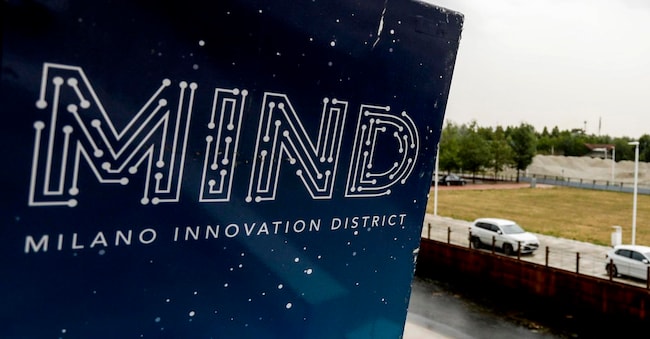
At a crossroads between the Cardo and the Decumanus of the former Expo 2015 area, which is expected to host around 70,000 people including residents, workers and students by 2030, a new space inspired by the monastery model will be built over the next three years. This has been announced by the Diocese of Milan, specifying that the structure will have a stable presence of ordinary pastoral care, entrusted to a small community that will mark the rhythms of prayer and liturgical life. The 'Ambrosian Monastery' project was presented at the Abbey of Chiaravalle and will be the heart of the Diocese's presence in Mind, the Milanese district dedicated to the development of life sciences.
There will also be a Cloister of Religions, representing the first form of welcome and openness, a Garden of Religions, where the different monotheistic traditions present in Milan are symbolically recalled through plant essences, and a Library of Religions.
"The choice of the Abbey as the venue for the presentation was intended to signal the ideal continuity between the experience of the Cistercian monks who arrived in Chiaravalle in 1135 and the challenges of the present day," the diocese emphasises. The monks were not only protagonists of the spiritual life of their time, but also innovators capable of transforming the territory through hydraulic works, agricultural development and innovative production. The 'Ambrosian Monastery' is therefore proposed as a space for spirituality, confrontation and reflection, to bring faiths, cultures and knowledge into dialogue in the 21st century.
The project stems from the awareness, matured within the Ambrosian Church, of the opportunity offered by Mind: to contribute to the transformation of a new part of the city, in continuity with some significant seasons in the life of the Diocese, such as the post-war reconstruction, when urban development and church growth were thought of in an integrated manner.
It was in this perspective that dialogue began with Principia, a publicly-owned company responsible for the development of Mind, with which the area within the site was identified (taking into account that the Territorial Government Plan envisages the presence of a Catholic place of worship) and the prospect of integration with the other functions of the innovation district.

