
At the sites of Bad Ischl, European Capital of Culture 2024
With 22 municipalities, it is an Alpine and rural region between Upper Austria, Salzburg and Styria, famous for its spa and traditional music
4' min read
4' min read
For the nobility of the 19th century, Bad Ischl was a compulsory stop, ever since the Habsburgs discovered it as a holiday resort. Archduchess Sophie was advised to go there to 'take the waters' as a cure for pregnancy problems. The cure is successful and over the next few years three so-called 'salt princelings' are born, including the future Emperor Franz Joseph, who becomes engaged to Sissi in Bad Ischl and, for the rest of his life, will visit the Imperial Villa in Bad Ischl every summer. It was also here that he had the 'Marmorschlössl', a pavilion now used for summer exhibitions, built for his consort. With the Habsburgs as guests, Bad Ischl's tourist fortunes were assured.
European Capital of Culture
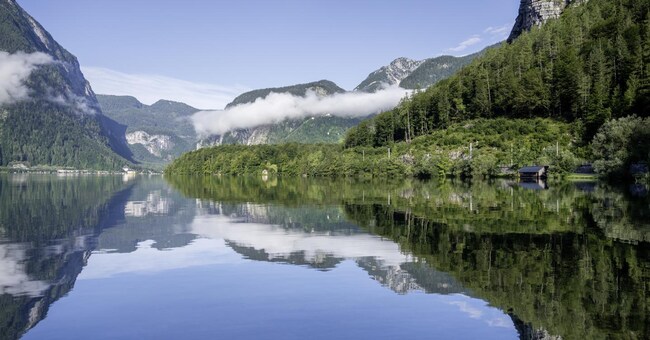
.The Austrian town is located in an area (the Salzkammergut) that is emblematic for the beauty and harmony of its landscape, for the dialogue between nature and culture, located between Upper Austria, Salzburg and Styria. This year, Bad Ischl, together with 22 other municipalities in the area, was elected European Capital of Culture 2024. For the first time in history, a European Capital of Culture is located in an Alpine and rural region. Here are some tips on what to see in this corner of Austria.
The region born of salt
.The Salzkammergut region was born from salt, became rich with salt and now looks to the future with the motto: 'Culture is the new salt'. The region offers a wealth of memorable events, places and people, set in an impressive landscape and it is thanks to its famous summer resorts that it has been declared a UNESCO World Heritage Site. A visit to the Imperial Villa - a wedding gift from Archduchess Sophie to the young couple Franz Joseph I and Elisabeth - is therefore not to be missed. It gives an idea of why the neoclassical building was so dear to the emperor, who loved it more than his splendid Viennese residences. The spirit of times gone by can still be felt in the rooms that have remained intact. On the occasion of Franz Joseph I's birthday on 18 August, the 'Kaiserfest' is celebrated every year in Bad Ischl with great festivities. Also worth a visit is Villa Lehar, which once belonged to the operetta composer of the same name and today houses the Town Museum, while the graves of the imperial family can be found in the austere local cemetery. The town is also famous for its modern thermal centre: its waters have considerable success in the treatment of diseases of the respiratory tract, the musculoskeletal system and the cardiovascular system.
The hiking trails
.Around Bad Ischl you can discover 100 km of marked hiking trails. To admire the beautiful villas of the Attersee, it is recommended to board one of the three ships named after famous Austrian artists: Gustav Klimt, Gustav Mahler and Christian Ludwig Attersee. The three artists spent their summer holidays on the Attersee and found inspiration on its shores. In addition to connections, the boat also offers exciting themed excursions and delicacies on board. Such as Klimt tarts with coffee from the Ottet patisserie, smoked trout fillet from the Ecker fishmonger's or a cold beer from the Bierschmiede brewery.
A nature park becomes Dark Sky Park
.Appreciated by holidaymakers since the early 19th century, painted by Gustav Klimt in the early 20th century, the cultural and natural landscapes of the Attersee and Traunsee lakes area, with blossoming fruit trees in spring, flowering meadows in early summer and colourful forests in autumn, have been shaped by man over the centuries. After a scientific analysis of the quality of the night sky and existing lighting situations, the area between these two Upper Austrian lakes was considered ideal for certification as a night landscape protection area. The exceptional darkness of the night sky, which makes it possible to see the Milky Way with the naked eye, enabled the Attersee-Traunsee Nature Park to become the International Dark Sky Park.

