
Europe's first protected dolphin sanctuary in the sea off Taranto
Close to the island of São Paulo, it will house cetaceans from decommissioned aquariums and zoological facilities. A 7-hectare area equipped with monitoring equipment. A control room on the mainland

Key points
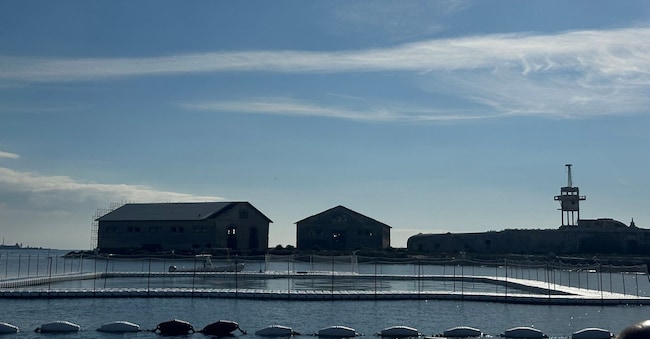
In contrast to a narrative that describes the city as a prisoner of the pollution of the former Ilva and overlooks the progress that has been made in recent years, Taranto's seas - yes, those over which the steel factory stands - are showing resilience and becoming a place of unexpected and surprising vitality that combines beauty, research, environmental protection and tourism. In fact, for years now the Mar Grande roadstead has been home to dolphins, whose evolutions are a source of attraction for guided tours. In addition, 150 more seahorses from the Genoa Aquarium were released in Mar Piccolo a few days ago - the second release in 2025 - and now, also in Mar Grande, near the Marina Militare's island of San Paolo, the Mediterranean's first protected refuge has taken shape. It is intended to house the dolphins that will gradually be freed from aquariums and zoological facilities that are being decommissioned. Cetaceans that will therefore move from a state of captivity to a natural and supervised environment through a process that will require several stages of adaptation.
The Evolution of Jonian Dolphin Conservation
At the heart of the sheltered shelter project, called 'San Paolo Dolphin Refuge', are the Taranto-based association Jonian Dolphin Conservation, which has long taken care of dolphins in the city's waters, and Fondazione con il Sud. The latter is an alliance of banking foundations, the third sector and volunteers and aims to promote social infrastructure in Southern Italy. The Municipality of Taranto is also a partner in the initiative.
It started with research, study, care and valorisation, including tourism and the environment, of dolphins, and then arrived at the establishment of Kètos, a centre dedicated to the sea and cetaceans, in one of the most beautiful buildings in the old city - Palazzo Amati - and now the new steps are the protected shelter at sea, which is nearing completion, and the fitting out of the first and second floors of Palazzo Amati to house other sea-related activities, but above all, the control room. This will supervise the protected refuge and the dolphins housed there, and will oversee one of the two planned workshops, while the other will be at sea. Fondazione con il Sud has put almost EUR 2 million into the project. The municipality of Taranto has the availability of the building.
Capacity to accommodate up to 17 dolphins but will be fewer
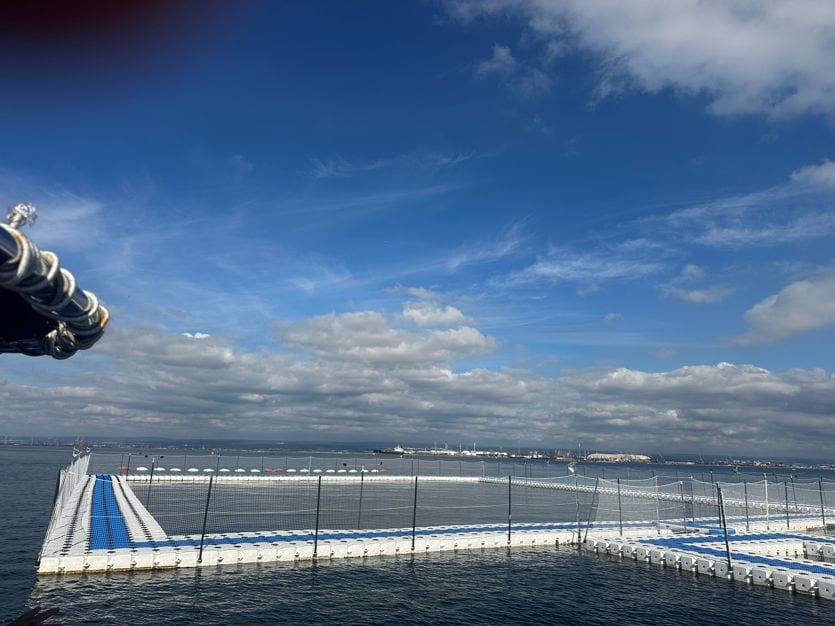
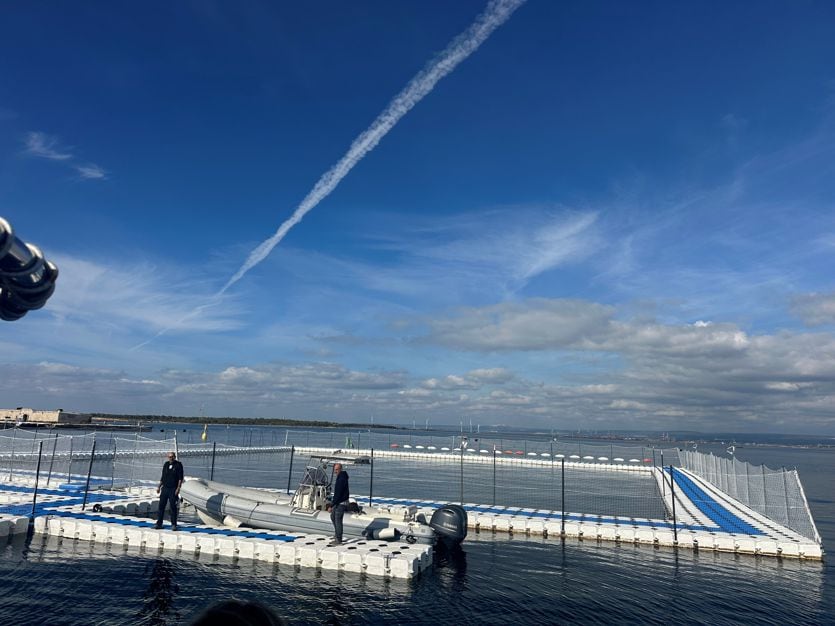
The protected shelter is a 7-hectare area in the sea inside which there will be a tank, made up of floating structures on the surface and nets reaching down to the seabed, of about 1,600 square metres. In particular, the Con il Sud foundation details, "in the sea there will be large natural tanks, 40x40 metres, made up of floating docks to house the dolphins, plus a veterinary tank with a 24-hour surveillance system using cameras and sensors to monitor environmental parameters. In addition, there will be four buoys in the area, three of which will be signalling buoys and one equipped with instruments to monitor air quality and everything that happens at sea. The refuge is sized to accommodate up to 17 dolphins, but in reality - we count from next year - fewer will be accommodated to allow these cetaceans, after years of living in captivity and in concrete tanks, the best possible conditions for reintegration into the natural marine environment. Carmelo Fanizza, founder of Jonian Dolphin Conservation, says that this will be the place for the dolphins' quiet 'retirement', as their release back into the open sea is ruled out. For Fanizza, "the 'San Paolo Dolphin Refuge' constitutes an experimental and replicable model that will foster the development of new protocols and infrastructure for the sustainable management and long-term welfare of cetaceans.
At Mase the application to be a zoo
"The shelter,' continues Fanizza, 'is almost ready, the last step is missing, the positioning of the floating laboratory, which will take place in the next few weeks. After that, we will submit the application to the Ministry of the Environment for the final authorisation to become a zoological garden. We expect to close the process within six months'. And at that point, explains Monica Barnaba, veterinary surgeon, the places of origin, the dolphins destined for the Taranto refuge, and their characteristics will be identified "and for these cetaceans an initial adaptation course will begin in the structures that currently house them, followed by a second course of approach to the new destination site and, finally, a third, final one, once they arrive in the protected refuge".

