In the wake of the Grand Tour, a map of literary cafés as part of a project by the University of Oxford
“Mapping Italian Literary Cafés”, a project carried out by two young researchers, showcases Italy’s oldest cafés and their business histories, from Cosenza to Trieste. It will go online in a year’s time

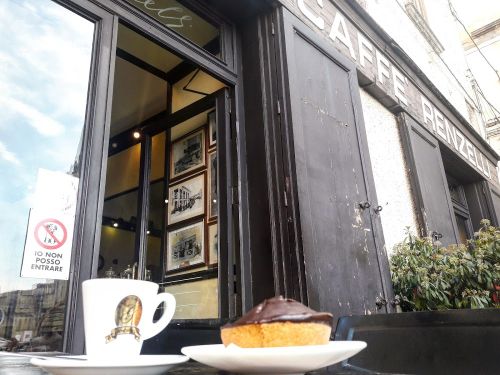
A slice of Varchiglia – shortcrust pastry, dried fruit and chocolate – made according to an ancient recipe from the Discalced Carmelite nuns. A slice of Torta Telesio – made with lupin flour, almonds and black cherries – with which the philosopher Nuccio Ordine, who passed away far too soon, used to start his day, drawing inspiration from the great Bernardino, a 16th-century Calabrian naturalist philosopher. A small cube of roasted nougat, the sort that for 40 years has accompanied parliamentarians’ coffees at the Montecitorio café. Seated at the tables are a flâneur engineer, another who writes verses in the local dialect as a hobby, a British linguist and various other patrons sipping coffee laced with Vov.
Gran Caffè Renzelli in a study by the University of Oxford
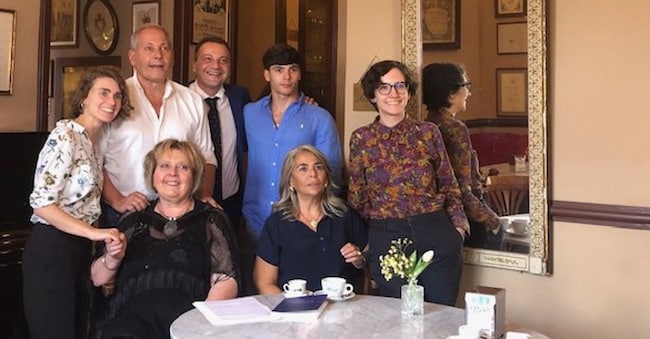
The Gran Caffè Renzelli in Cosenza, listed amongst Italia’s 200 historic cafés, retains the spirit of the Belle Époque but, without any nostalgia, looks to the future from this ancient Bruzio city: a researcher in Italian literature at the University of Oxford, originally from Naples, Fanny Clemente, and Greta Colombiani from Crema, a PhD student in English Literature at Cambridge, affiliated with the oldest academic institution in the English-speaking world, are conducting a study on Italian literary cafés. Following the route of the Grand Tour, they set off from the south to visit the venues that have shaped the history of our cities.
The modern role of literary cafés
The aim of the research, funded by the British Academy and the Leverhulme Trust with an initial grant of 10,000 pounds, is to create a digital map to be published on the website of the prestigious University of Oxford, ‘demonstrating how literary cafés are still places of culture and thought. And as such – explains Greta Colombani – they must not only be preserved but nurtured and kept alive, by combining local history and traditions with innovation and digital technology’.
Spaces for cultural and civic development
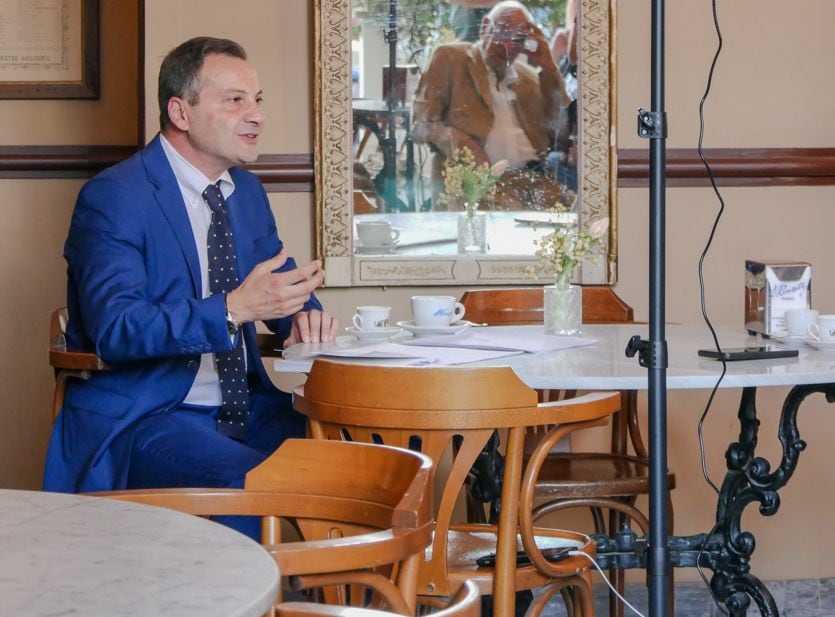
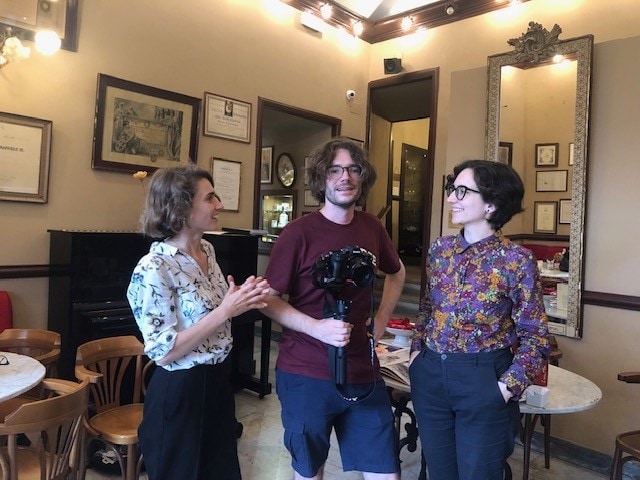
In the spotlight of a videographer, pressed by questions from the two researchers, Francesco Renzelli – who, together with his siblings Stefano and Enza, runs the historic café situated in the historic heart of the city, between the cathedral (a UNESCO World Heritage Site) and the Archbishop’s Palace – said: ‘We’re like a new café chantant. There are no ladies, but we remain a space for discussion, for meeting and for exchange, serving our community, which, historically, has found in our rooms opportunities and spaces for its own cultural and civic development. Now the historic centre is in urgent need of a revival, and the Gran Caffè Renzelli – which, as you can see, is alive and kicking – aims,’ concludes the Cosenza-based entrepreneur, ‘to act as a catalyst for its rebirth.’
Family businesses
“Families are the common thread running through these establishments,” adds Fanny Clemente. “Behind Italian literary cafés, there are almost always businesses passed down from father to son. These businesses are sustained by strong synergies and a deep attachment to the original entrepreneurial vision.” This is certainly true of Caffè Meletti in Ascoli Piceno, an Art Nouveau salon in Piazza del Popolo, founded in the early 1900s by the entrepreneur who produced the famous Anisetta.