
In the western Ligurian hinterland, a picturesque weave of stone houses, alleyways and views
Among the Imperiese valleys, some surprising and little-known villages, enveloped by the silvery green of the olive groves in a landscape that tells of the culture and tradition of olive oil

Key points
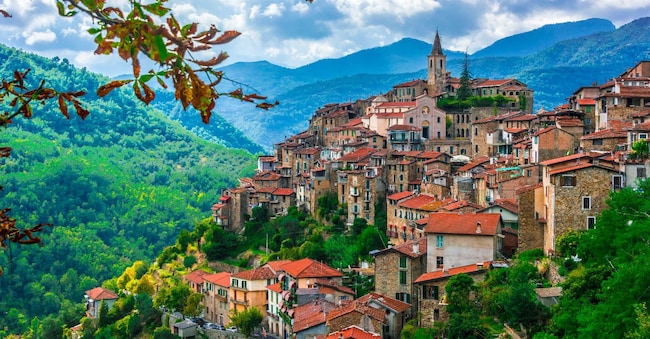
When the colours of the foliage light up the woods and invite you to leave the sea behind and climb up the slopes of the mountains, it is the ideal time to discover another Liguria. Among the Imperiese valleys, in the western hinterland, there are in fact surprising and little-known villages, enveloped by the silvery green of the olive groves: a landscape that tells of how the culture and tradition of olive oil have always been one of the pillars of this territory. A slow itinerary to discover small medieval villages immersed in nature and silence, discreet guardians of architectural, historical and cultural treasures.
Bussana Vecchia reborn with art
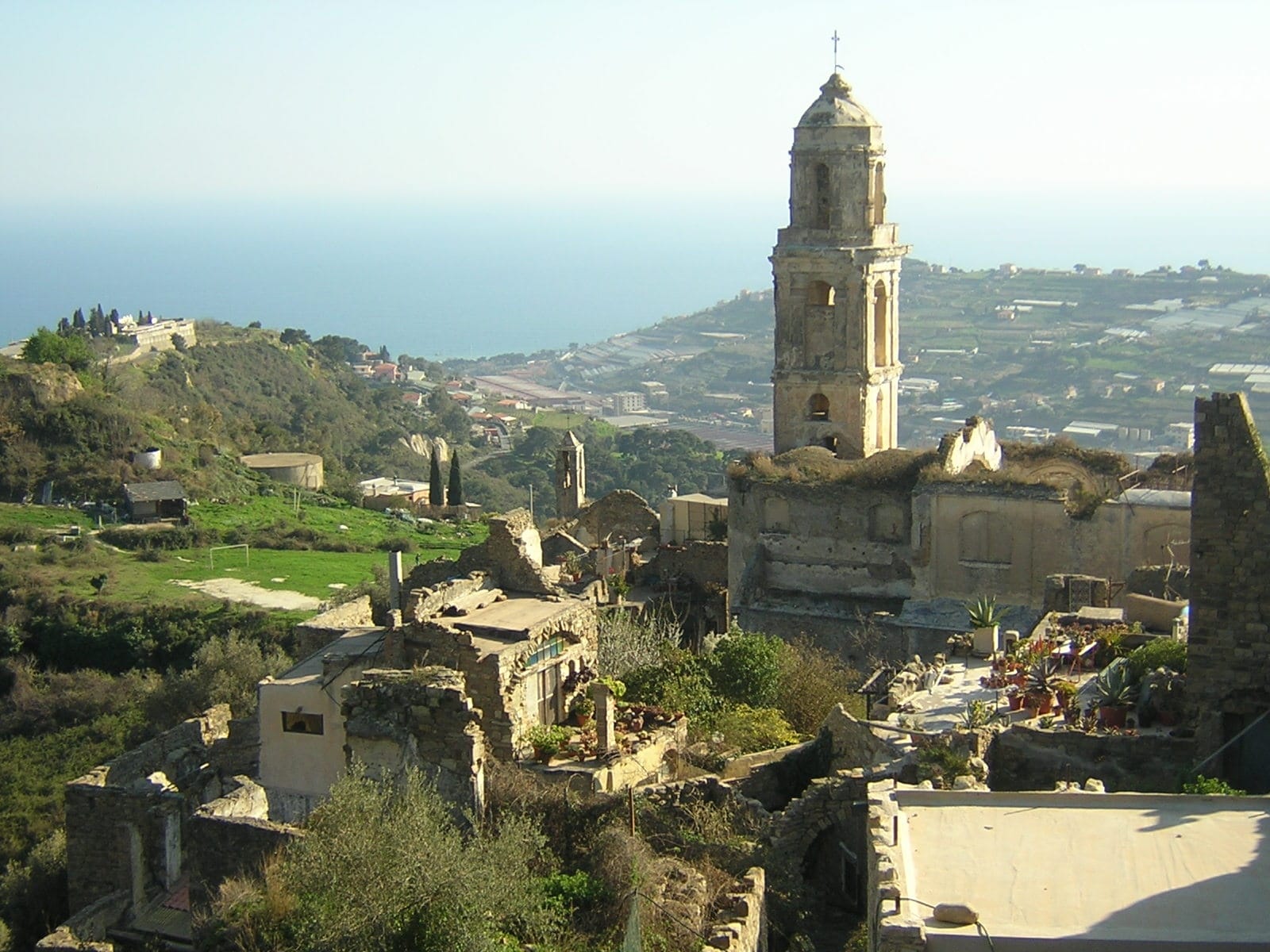
For years, Bussana Vecchia, an ancient village in the hinterland of San Remo founded in the 11th century, remained abandoned following the violent earthquake that struck the area in February 1887. Today, however, among the alleys and restored houses, one discovers a surprising place where a movement of artists from all over the world has found inspiration. The rebirth of Bussana Vecchia began in the late 1950s, when the Turinese sculptor and ceramist Mario Giani, aka Clizia, decided to settle here. With his presence, he began to establish an international community of artists, even endowed with its own constitution, people who breathed new life into a forgotten place and, over the years, transformed what remained of the old, damaged buildings, recovering and restoring them while respecting the original mediaeval structure, into ateliers, workshops, creative spaces and art galleries that coloured the village, to the point that Bussana Vecchia became the 'artists' village' that attracted visitors and the curious.
Between valleys and castles, Dolceacqua and Apricale
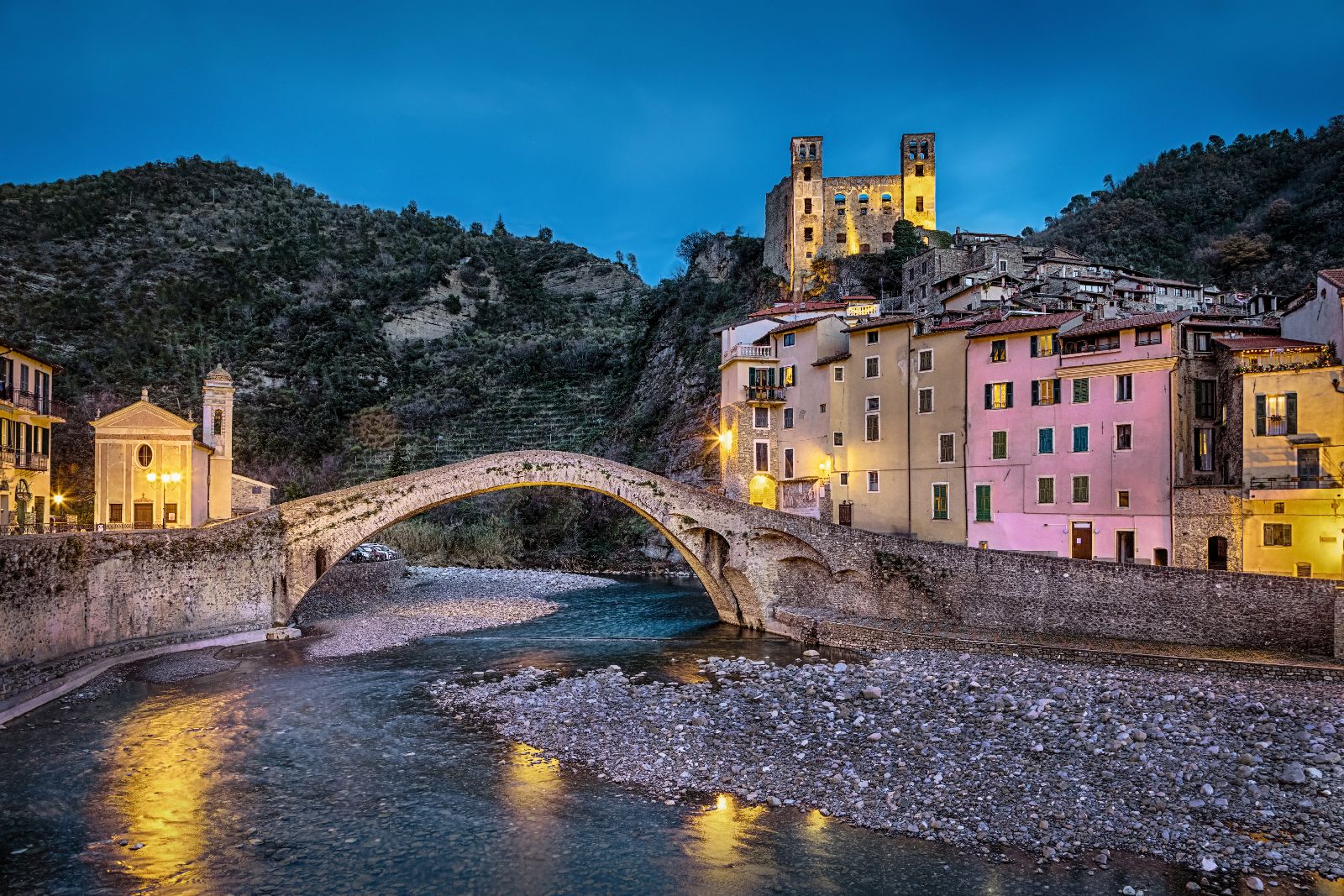
It is in the heart of the Imperia hinterland, in the Nervia valley and along the course of the stream of the same name, that Dolceacqua rises. The arrival in the village immediately arouses amazement thanks to the poetic glimpse given by the ancient 15th century Romanesque bridge, with an imposing thirty-three metre arch, and the Doria Castle that dominates the village from above. A view that enchanted even Claude Monet during a trip to the Ligurian hinterland: the French painter was so impressed by it that he included it in his 1884 painting Le Château de Dolceacqua. Passing through the alleyways of the historic centre, called Téra (land) by the inhabitants to distinguish it from the more recent area known as Borgo, we climb up to the Doria Castle. Today, the rooms of the manor house tell, through the support of multimedia technology, the history of the owner families, first the Counts of Ventimiglia and later the Dorias, as well as the history of the territory, culture and traditions of the village. Dolceacqua is also famous for the production of the Rossese DOC red wine, which is even celebrated by a fountain in the centre of the village.
Already from its name, which derives from the Latin apricus meaning 'sunny', Apricale brings with it the light that illuminates it thanks to its panoramic position. Perched on a hill about three hundred metres above sea level, the village - one of the most beautiful in Italy (it is also an Orange Flag holder by the Italian Touring Club) - is a picturesque tangle of stone houses and alleyways that lead to the summit where the Lizard Castle, built in the 10th century by the Counts of Ventimiglia, stands. Today, inside the building, which houses the Apricale History Museum, you can retrace the history of the village and the events that saw ancient noble families as protagonists: artefacts, documents and objects take you on a fascinating journey through time. Other sights in Apricale include the Oratory of San Bartolomeo, which houses a 1544 wooden polyptych depicting the Madonna of the Snow, and the Church of Santa Maria degli Angeli, embellished with 15th-century frescoes.
Tappa Triora and Dolcedo
The itinerary continues in the Argentina valley, where, at an altitude of eight hundred metres, stands the peculiar village of Triora. Known as 'the village of witches' because it was here, in 1587, that a long and documented trial for witchcraft was held involving several women who were later sentenced to death. A historical period that affected the entire village and traces of which can still be found by visiting the Cabotina, a cottage where witches were believed to have gathered, and the Triora Museum, currently open to the public from Friday to Sunday. Inside there are several sections: from witchcraft to ethnography, local history and educational trails. Triora is also famous for a symbol of the local culinary tradition: the typical bread, dark and round in shape, prepared according to an ancient recipe using bran. Finally heading back towards the sea, we come to the Prino valley with the stream of the same name, overlooked by the medieval village of Dolcedo. Characterised by houses with colourful facades, the small medieval village welcomes visitors with the Ponte dei Cavalieri di Malta, also known as Ponte Grande, built in 1292. A stroll through the carruggi leads to the historic centre, called Piazza because the market used to be held there, and the Baroque church of San Tommaso. The western Ligurian hinterland, among ancient villages and traditions, preserves its most authentic face.

