
‘A plan and a ZES for AI to encourage investment’
An action plan that brings together the research sector, incentives and infrastructure

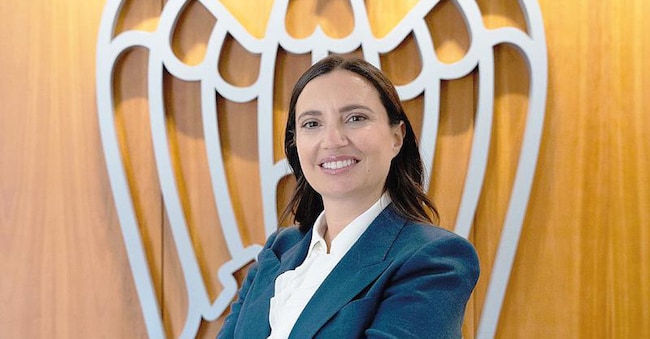
“Artificial intelligence is the greatest revolution of the modern age. It has implications for work, businesses and society; it can enable our businesses – especially small ones – to make a very rapid leap in quality. It is a challenge that Italia must overcome.” Maria Anghileri, president of Confindustria’s Young Entrepreneurs’ Association, refers to a figure cited by the Governor of the Bank of Italy: with rapid and widespread adoption of artificial intelligence, labour productivity could increase by more than one percentage point per year. ‘A crucial figure for a country like Italia, which must return to growth.’ AI will be at the heart of the Capri conference opening on Friday: ‘StrategIA. The future is a human endeavour’. “This technology can transform our capabilities, but how we use them remains a human choice. It is not a question of choosing between man and machine; it is more important to decide what we want to entrust to it, combining artificial intelligence with entrepreneurial intelligence.”
Our country is lagging behind in digitalisation and, consequently, in the application of artificial intelligence. How can we quickly catch up?
The reality in Italy is that small businesses struggle to adopt AI due to cost and training issues. Italia has adopted an Artificial Intelligence Strategy, which now needs to be implemented through concrete and targeted measures. Our proposal is an ‘AI Adoption Act’, an action plan that brings together the worlds of research, incentives and infrastructure, to be implemented through a steering committee that coordinates efforts for the adoption and development of AI in Italia. We need to create an ecosystem to support businesses adopting artificial intelligence; we are seeing this in the roadshow we are running as Young Entrepreneurs alongside Alberto Tripi, Confindustria’s special adviser on AI. There are many examples of excellence, but coordination is lacking.
Is it just a question of cost?
No, skills come first and foremost, so we need to invest in schools, universities and the ongoing training of workers. We then need to focus on business processes and invest in digitalisation. Small businesses often lack the resources required for a comprehensive adoption of AI that would lead to genuine business transformation. It is a very complicated process, but a necessary one.
How can we secure the necessary investment?
Our proposal, which we will launch in Capri, is to create ZES-IA to channel public and private investment into artificial intelligence, including through the use of specific financial instruments for start-ups and innovative businesses. These investments are to be channelled through a streamlined process, drawing on the model of the single Special Economic Zone (ZES), which has worked well in the South.


