
In Turin, the Try a Game studio creates board games for Marvel's giants
Founder Andrea Chiarvesio works on licensed projects: 'Playful activity is a high form of socialisation'

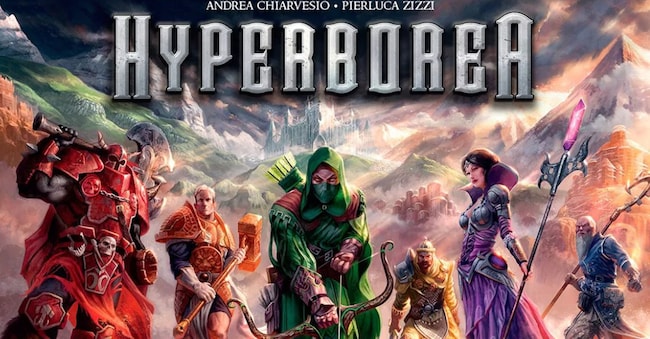
For giants such as Marvel, it creates board games inspired by successful video games or films. The Try a Game studio founded by Andrea Chiarvesio is a treasure trove of creativity that has been working for years on stories, logical plots, virtual schemes and possible paths. "The design development studio in Turin does game design consulting mainly for games based on licences for some of the most important publishers in the world," Chiarvesio explains. They work on the rules of the game, the unfolding of the plots along the logical twists, the elements that must be present for the game to unfold.
The studio has important work under its belt such as Marvel United, for DC, and has also produced for Disney. "We are currently," Chiarvesio says, "working with a publisher whose name we cannot disclose. In this sector we do a lot of work through crowdfunding and online fundraising campaigns, so before the launch of a new game is announced, we are careful not to anticipate news in order to maintain the surprise effect'.
Major players in the publishing industry also initiate campaigns to raise resources, 'we happened to contribute to the campaign for the launch of Marvel United, which reached 18 million dollars'. Andrea Chiarvesio and the members of the team were actively involved in the initiative - in the first collection tranches crowdfunding was done on KickStarter, then for the game's expansions, on Gamefound - participating in live youtube broadcasts, answering the questions and curiosities of the thousands of players who supported the project and improvising game design at the last minute.
The crowdfunding system, first born as a system to support authors who have the ideas but not the resources, thus becomes a real reservation system and a pre-sale platform. "It is nevertheless a valuable tool because it allows us to give players the game, in its best, richest and most evolved version," Chiarvesio explains.
Purely analogue board games, then, in a time dominated by electronic consumption. A sort of antidote to the screen game, modern heirs of traditional games such as Monopoly or Risk. The board game market is made, Chiarvesio explains, of titles that come from the world of video games or films, with projects developed under licence - this is the case of Marvel games, Pokemon, Cyberpunk or Assassin Creed - alongside original titles that instead have no licence and come from the creativity of studios. Among them, a production of the studio Try a Game is the game New Era, "inspired by video games like Civilitation, but for all intents and purposes an original game that traces the history of mankind," explains the founder. The studio has three people working full time, plus a number of external 'token' collaborators scattered around the world, from Brazil to Greece.


