Cinema

In Venice, ‘Un bon petit soldat’: Stéphane Briz’s great moral lesson

The French filmmaker’s new film, starring Alba Rohrwacher, is in competition at the Venice Film Festival

4' min read

Translated by AI
Versione italiana

4' min read

Translated by AI
Versione italiana

Stéphane Brizé returns to explore the world of work: following his acclaimed and beautifully crafted trilogy comprising *The Measure of a Man*, *At War* and *Another World*, the French director has presented *Un bon petit soldat* in competition at the Venice Film Festival, a new feature film centred on the theme that has made his cinema increasingly celebrated.

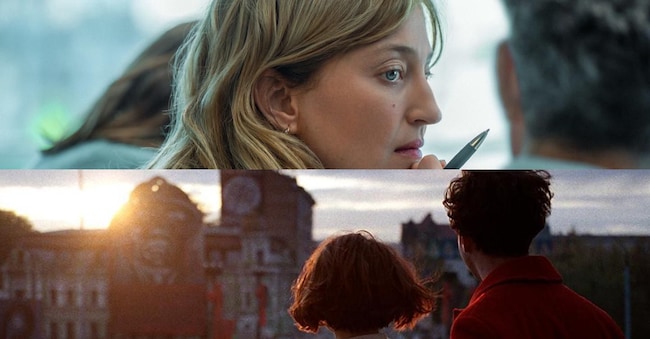
Three years after the wonderful *Le occasioni dell’amore*, Brizé once again chooses Alice Rohrwacher to play the lead role, entrusting her with the delicate part of Carla, a brilliant executive entirely devoted to her work. Behind her impeccable façade lies a deep sense of insecurity, yet she has still managed to build a successful career, often at the expense of her family life. Having recently been appointed Head of Human Resources at a large company, she is tasked with balancing the well-being of employees with the performance targets set by senior management. But when she uncovers a case of toxic management, her already fragile equilibrium could be shattered completely.

Loading...

A profound and brilliantly witty satire on the corporate world, *Un bon petit soldat* is yet another great moral lesson from Brizé, who, like very few others in contemporary cinema, is able to explore human relationships in a manner that is both extremely natural and profound.

Whilst the first part often has a comedic tone, thanks to an effective satire of certain dynamics associated with the world of work, as the minutes pass, drama (both personal and professional) takes over, building to an increasingly sombre and unsettling climax.

Whilst the director’s technical execution is already impeccable, the dialogue is even more striking in a film whose greatest strength lies precisely in its screenplay: Brizé creates believable and decidedly intense characters, without ever succumbing to rhetoric; on the contrary, he employs a lightness of touch that is, to say the least, enviable.

The starkness of the staging complements the extremely harsh tone the film adopts in certain scenes, particularly when the company’s CEO – played by an excellent Vincent Lindon, who is also superb in the role of an extremely unsympathetic character – is on screen.

Alba Rohrwacher is also outstanding in one of the most intense roles of her career: as in *Le occasioni dell’amore*, the Italian actress reaches truly remarkable heights of acting when directed by Brizé and is a strong contender for the Coppa Volpi for Best Actress. What is certain is that a film like *Un bon petit soldat* deserves a place on the final list of winners, and we hope the official jury agrees.

The competition programme also featured the highly anticipated “DAU”, a film directed by the Russian dissident Ilya Khrzhanovsky, whose participation in Venice had been contested by the Ukrainian government a few weeks before the festival began.

It should be emphasised, however, that this new feature film forms part of a massive multidisciplinary project, conceived by the director himself and straddling the worlds of cinema, art and anthropology.

The first screenings took place in 2019 and subsequently involved various museums and festivals (two feature-length films were included in the programme at the 2020 Berlinale) featuring a vast amount of footage in which the actors and actresses were involved in a sort of Big Brother-style experiment, where they remained in character throughout the entire filming period. As the director himself pointed out, the film presented in Venice is ‘the result of over twenty years’ work: a work that brings together footage shot fifteen years ago and recent scenes in a cinematic experience that is only possible today’.

Loading...

Inspired by the physicists (in particular Lev Landau) who contributed to the development of the Soviet atomic bomb, “Dau” follows the journey of a brilliant physicist of Greek origin who arrived in the Soviet Union in 1928, through four decades of upheaval. Driven by a desire to uncover the laws of the universe, the idealist Dau is called upon to serve the state in creating one of the deadliest weapons in history. In a secret research institute, life is governed by scientific ambition, power, surveillance and privilege. As his personal freedom dwindles, Dau seeks a form of liberation elsewhere, outside his marriage, through a series of relationships, ultimately losing sight of himself and his capacity to love.

‘DAU’ is a film you either love or hate; it is easier to understand and interpret if you have already had the chance to explore the overall project in depth, but in some respects it is also a standalone film that follows the development of a genius, who is, however, oppressed by a power that allows him no freedom of choice.

Khrzhanovsky depicts the degeneration (not coincidentally the title of an earlier film in the project) of a man in his private life, who is unable to defend his values without compromising, and of a society founded on violence and ideology.

In places, the film feels a little repetitive and there are a few lulls in the second half, but the overall vision is powerful and there are several superbly crafted sequences, starting with a scene featuring a fire in a tower that is even reminiscent of the cinema of a giant such as Andrei Tarkovsky.

The Venice Film Festival was bold to include this film in the competition, but the decision proved to be a winning one.

Copyright reserved ©
Loading...

Brand connect

Loading...

Newsletter

Notizie e approfondimenti sugli avvenimenti politici, economici e finanziari.

Iscriviti