Labour Market

Incentives to postpone retirement and keep the most experienced in the company: the case of Italy and Spain

Italy has reversed course on retirement age in recent years. Spain implements policies to stay longer in the labour market and support older employment

by Matteo Prioschi (Il Sole 24 Ore), Ana Somavilla (El Confidencial)

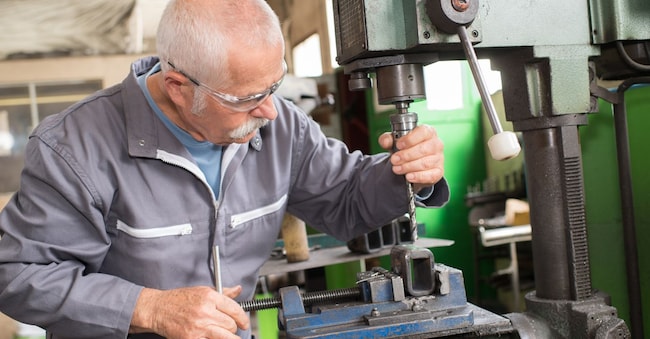
(Adobe Stock)

6' min read

6' min read

After the euphoria of early retirement thanks to quota 100, which later became quota 102 and then the much less attractive quota 103, the Italian government reversed course and from 2023 introduced a kind of premium for those who choose to postpone retirement and continue working. The management of the transition from work to retirement has been the subject of fluctuating decisions.

If, until the beginning of the last decade, pension requirements were too generous, at least for the financial sustainability of public pensions, the Fornero reform at the end of 2011 entailed, at least on paper, a generalised forced retention at work, without rewards. Then, a few years later, here was the reversal of course with the return of 'quota' requirements (sum of age and years of contributions), only to decide that no, perhaps it is better for older people to stay at work a few years longer. Decisions dictated more by financial constraints (when it comes to raising the requirements) and by the desire to broaden political consensus (if the requirements are relaxed), rather than by the need to cope with the demographic winter, which is less and less prospective, and the consequent shortage of workers.

Loading...

Maroni bis bonus

The penultimate intervention on this front dates back to 2023, when an incentive to postpone retirement for employees was introduced: those who had fulfilled the requirements of quota 103 (at least 62 years of age and at least 41 years of contributions) could postpone retirement and continue working, receiving in their pay envelope the share of contributions they had to pay (around 9%) of their taxable salary for social security purposes. This amount, however, was subject to taxation, i.e. it was added to the amount of the salary and was taxed as such. The 'competition' of the 6-7% contribution exemption for gross monthly salaries taxable for social security purposes up to EUR 1,923, which did not entail any reduction of the future pension, combined with the fact that in most cases those who fulfilled the requirements for quota 103 were inclined to retire immediately or almost immediately, resulted in the limited success of the incentive. Furthermore, it must be taken into account that by not paying part of the contributions, one has a higher salary in the immediate future but a slightly lower pension afterwards than if one continued to work while paying contributions.

Thus, for this year, it has been enhanced by introducing tax exemption. As well exemplified by the Parliamentary Budget Office, the usefulness of this choice for the worker is precisely related to not having to pay taxes on the additional portion in the pay envelope, because the higher pay determined by the unpaid contributions is subsequently neutralised by the lower amount of the future pension. However, even this version, made accessible to those who meet the requirements for the ordinary early retirement pension (at least 42 years and 10 months of contributions, one year less for women, regardless of age), is not expected to be very successful: the government has estimated that it will be activated by 7,000 people in 2025.

Maroni Bonus

Far more generous was the original Maroni bonus, which was available from 2004 to 2007 to private sector employees who met the requirements for a retirement pension without accessing it. By postponing retirement and continuing to work, they could receive all their contributions (i.e. also the employer's share) in their pay envelope, i.e. about 33% of their salary, tax-free. The amount of the pension was 'crystallised' when accessing the bonus, which was chosen by about 100,000 workers.

Part time incentivised

.

Little success, on the other hand, for the part-time incentive available from 2016 to 2018 for private sector employees who would have reached the requirements for an old-age pension in that time frame. These workers, if they had a full-time and open-ended contract, could agree with the company on a reduction in working hours of between 40 and 60 per cent, but could count on paying social security contributions as if they had continued to work full time and at the same time collecting, tax-free, the contributions corresponding to the reduction in hours. In reality, this bonus was not an incentive to retire (since it ended when the age requirement for old age was reached) but aimed at encouraging a gradual exit from work even in the face of the increase in pension requirements introduced by the Monti-Fornero reform from 2012.

A new version of this part time is contained in the annual bill on SMEs under discussion in the Senate, to be used in 2026-27, in the form of a generational relay: in exchange for an older worker switching to part time, a young one is hired at a reduced cost for the company because he or she can count on specific facilities.

Working pensioners

Beyond the availability or otherwise of incentives to postpone retirement, there is a quota of people who access retirement but continue to work. According to the most recent data released by Istat, referring to 2023, 10.8% of pensioners between 50 and 74 years of age, i.e. 712,000 people, worked. 9.4 per cent (13 per cent in the European Union) continued to do so immediately after retirement, a third of which for economic necessity. These are the official numbers, net of work activities that escape the statistics because they are more or less irregular.

The situation in Spain

.

Several strategies, programmes and laws have been implemented in Spain to encourage more experienced workers to stay longer in the labour market. Among the main measures is the reform of the pension system, which established a gradual increase in the legal retirement age up to 67 in 2027, as well as economic incentives for those who decide to postpone retirement. In addition, there are formulas such as active retirement, which allows combining pension payments with employment, and partial retirement with a replacement contract, which facilitates a gradual transition to retirement. The government improves the compatibility of retirement and employment by regulating active and partial retirement. Congress validates the improvement of retirement, which allows a gradual exit from the labour market and the hiring of new professionals. Some companies have adopted internal age management policies, such as job matching, intergenerational mentoring or more flexible working conditions, recognising the added value provided by more experienced workers. These measures respond both to the challenge of an ageing population and the need to ensure the sustainability of the pension system.

Working after retirement: between choice and necessity

In Spain, working after retirement is still uncommon but growing. According to the 2023 data of the National Institute of Statistics, reported by Inmaculada Ruiz Martín, president of the Unión Democrática de Pensionistas (UDP), about 185,000 people between 50 and 74 years old continued to work in the six months after their first pension cheque. For 18.8% the motivation was economic; almost half did so out of personal interest or because their spouse was still working.

Similar data come from the Unión de Jubilados y Pensionistas of UGT, which distinguishes two phenomena: on the one hand, the 'active pension' (i.e. the legal possibility of working while receiving part of the pension), chosen by only 0.9% of pensioners in 2024; on the other hand, a wide swathe of informal and unregulated work, often invisible in official statistics.

According to UGT, the reasons for continuing to work are mainly economic. More than 3.3 million pensioners receive less than EUR 750 per month, and around 450,000 people - mostly women - live on non-contributory pensions of around EUR 515, below the poverty line. There is no shortage of those who work by choice: consultants, trainers, professionals who wish to remain active. But many older people work in precarious sectors such as domestic help, agriculture, informal trade - often without protection.

UDP emphasises that the right to a decent pension should not be made conditional on the willingness to work. According to Ruiz Martín, forcing a longer working age can have negative impacts, including health effects, as shown by studies of the Fundación Fedea. Women are particularly penalised, especially those with discontinuous careers.

Both unions also denounce the spread of ageism - age discrimination - which, according to UDP, turns inactivity into a sentence for many over 50, preventing a truly free choice. UGT also draws attention to the growing role of the elderly as economic support for entire families.

In conclusion, work after retirement can be a resource, but it must not become an obligation imposed by precariousness. It is a question of rights, dignity and social justice.

Copyright reserved ©

Brand connect

Loading...

Newsletter

Notizie e approfondimenti sugli avvenimenti politici, economici e finanziari.

Iscriviti