
Encouraged patronage, identity is linked to territory
The Ferragamo Group among the first beneficiaries of subsidies

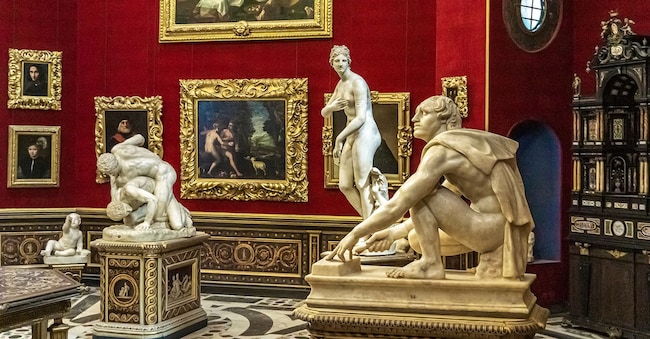
The year is 2015. The Uffizi are planning the restoration of ten rooms dedicated to 15th century Florentine and Umbrian painters, an intervention that integrates the best technological solutions for ventilation, air conditioning, anti-theft and security. "For the works requiring resources amounting to 600,000 euros, the Superintendency contacted the Ferragamo family, which has always been sensitive to the protection and enhancement of Tuscany's cultural heritage: the adhesion was immediate, and while Ferragamo and the Uffizi agreed on the donation, the Art Bonus came into force". Giuseppe Abatista, group tax consultant of the company, summarises the event that led the company to be among the very first to benefit from the measure.
The fountain in Piazza della Signoria
The group's second major Art Bonus donation - 1.5 million euro for the City of Florence - fully financed the aesthetic and conservative restoration of the Fontana del Nettuno in Piazza della Signoria. "Together with the City Council, we have set up the donation contract with disbursements in Sal (work progress, ndr), on the model of structured finance contracts: a win-win solution marked by transparency and collaboration between the public beneficiary body and the patron group," continues Abatista.
The other interventions
Over the years, further donations have followed for the benefit of the Municipality of Florence (which have fully financed the restoration of the sculptures of the Loggia della Signoria and Piazzale Michelangelo, the equestrian statue of Cosimo I de' Medici), and annual donations to support the activities of two of the city's most important cultural institutions: the Palazzo Strozzi Foundation, which organises exhibitions and events of classical and contemporary art, and the Maggio Musicale Fiorentino Theatre.
In 2017, the Region of Tuscany introduced the regional Art Bonus, making donations to Ferragamo even more advantageous for tax purposes. "The measure has thus further incentivised thepatronage of a group that has the attention and generosity for the territory in which it operates at the heart of its identity," Abatista comments. "Pairing the regional Art Bonus with the national one has a twofold effect: on the one hand, it incentivises citizens and businesses to contribute to the cultural (and not only) development of the Region they belong to, by choosing the best projects and cultural entities to support; on the other hand, it pushes public and cultural entities to develop projects that can attract private patrons, both for their quality and for their ability to speak to the public. A virtuous circle that also has effects on regional attractiveness and the economy of the territory'.


