
Inclusion and war, the Beirut coffee shop where disabled children work
The shop is called Agonist, opened in 2018 by physiotherapist Wassim el-Hage. Now closed due to war: 'We help displaced people'. The event in Catania

4' min read
Key points
4' min read
Education as a lever for a new model of social enterprise capable of accompanying the development of countries, such as Lebanon, where it is increasingly urgent to create employment and inclusion opportunities for all. A need that also arises as a response to the ongoing war, which is jeopardising the work of many realities that have been engaged for years in training and inclusion projects dedicated to the most disadvantaged population. The story of Agonista, the coffee shop in Beirut born in 2018 from an idea of physiotherapist Wassim el-Hage and arrived in a few years to engage around 20 young people with intellectual disabilities, stands out as a model of pioneering social enterprise dedicated to the training and job placement of people with special needs, leading the first vocational training programmes in the entire Mena region (Middle East and North Africa). It has received prestigious awards for its social impact, including winning the UN-ESCWA's 'Empowering Abilities Challenge 2023' and the first prize at the 2023 Arab SME Summit.
The Story
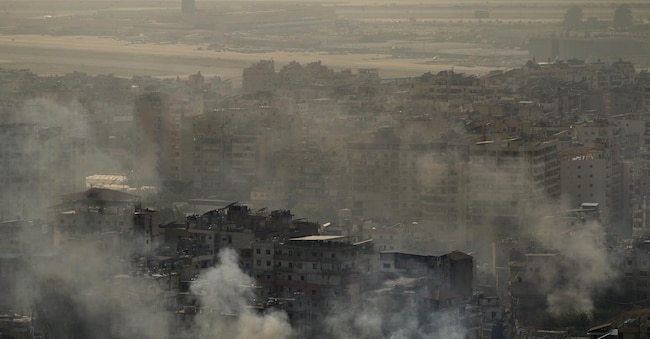
.A rocky start, which ran up against the Lebanese economic crisis in 2019, then the pandemic until the aftermath of the Beirut port explosion in August 2020, which severely damaged the structure of the first café, and the Israeli bombings that necessitated the closure of outlets. An uphill climb that has not deterred el-Hage, so much so that it is aiming to double the number of outlets in 2021 and increase occupancy. "Today we are closed," explains the founder of Agonista, "because the priority is to protect the lives of our employees. At the moment, all resources are allocated to the emergency to support the basic needs of the displaced people. This makes it very difficult for us and other social enterprises to continue operating. We try to pay salaries and our suppliers, but the situation is getting worse and worse. In addition, we collaborate with some NGOs in preparing food for the displaced people. To support this aid network, however, we need funds.
The war shifts the focus from planning to immediate need, a strong awareness that makes the value of the work carried out by social enterprises even clearer. "We are going through a dramatic situation, but when the war is over, social enterprises will have a lot of work to do, often starting from scratch," comments the founder of Agonista. "We will need to change our approach and mentality, to adapt to the changes imposed by a conflict that could last for a long time. Most of the displaced people are housed in public schools and universities, which means that teaching activities are suspended and we will have to face a huge educational problem. This frightens us because our interlocutors, our partners usually have a good level of education. A community deprived of this right, how will it be able to foster the future of social entrepreneurship?".
An international network to look beyond the difficulties
.An opportunity is represented by an international support network, hence the willingness to participate in the fifth edition of the Social Enterprise Open Camp in Catania, an international training event dedicated to social entrepreneurship and impact investing, conceived and promoted by Fondazione Opes-lcef and Consorzio Nazionale CGM, in collaboration with Isola Catania, in which Uli Grabenwarter, director of equity investment at the European Investment Fund, also took part.
"When we started impact investing in 2007, we had the ambition to be the one to go where no one else was going and we told everyone that we did not have to face any compromises,' Grabenwarter comments. But the reality is that the compromise we face is gigantic: the way we live we consume four times the regenerative capacity of the planet and 75 per cent of the population lives beyond its means. How will we deal with this? We will try to change the way we monetise in our society. We need to think of solutions to meet today's challenges, but who but us will venture to places where we have not already been?

