
Inclusive justice: over 260 million in European funding has already been allocated for the reintegration of prisoners
This represents 93 per cent of the 280.30 million planned. The Ministry of Justice’s aim is to move beyond the notion of imprisonment as the sole solution and to reduce reoffending rates

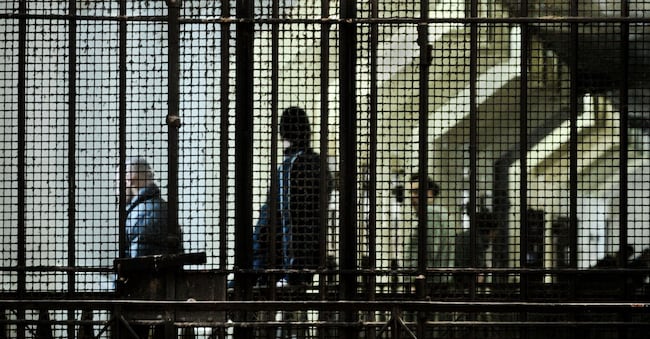
To develop a structured model for reintegration into society, moving beyond the notion that prison is the only solution to crime. This is the objective set by the Ministry of Justice’s project to promote the social and labour market inclusion of prisoners, as part of the 2021–2027 National Programme for Inclusion and the Fight against Poverty. The results of the work were presented at Palazzo Madama during the event ‘A More Inclusive Justice System: The New Italian Model for the Enforcement of Criminal Sentences’: €260.14 million of the €280.30 million allocated (93 per cent of the total) has already been committed.
Who is the plan aimed at?
As Deputy Minister of Justice Francesco Paolo Sisto explained, the project aims to ‘restore dignity to people, offering them a genuine second chance and, by reducing reoffending, ensuring greater safety for the whole community’. According to Sisto, in fact, ‘the certainty of punishment must never be separated from its rehabilitative function’. It is precisely with this in mind that the ‘A More Inclusive Justice’ plan was devised, with the aim of creating a ‘new Italian model for the enforcement of criminal sentences’.
The project operates on two parallel tracks: the strengthening and enhancement of community-based measures, and interventions within prisons. The Ministry of Justice’s initiatives therefore concern both those held in prison and the much larger group of people serving their sentences through alternative measures, working synergistically across the entire system. The problem, in fact, does not stop at prisons. Whilst 65,661 people are currently detained in prison, a further 143,027 are under the supervision of the Criminal Enforcement Offices. Of these, over 101,000 are subject to alternative measures, whilst the remainder are under supervision pending investigations or counselling.
As regards prisons, over 144 million euros have already been allocated. Part of the funding has been allocated to work and training programmes for prisoners, with a particular focus on the green economy and agriculture, whilst the remainder has been used for the refurbishment and upgrading of facilities in 90 prisons. Outside the prison system, meanwhile, nearly €74 million has been allocated to local support networks designed to assist those serving their sentences outside prison.
Projects for young people
A great deal of attention is also being paid to children and young adults. The Ministry of Justice has announced that, following the recent selection of 62 third-sector organisations, 800 young people serving criminal sentences or leaving residential care will be supported by a tutor to help them become independent.

