The interview

'Greater efficiency in pension fund investments'

Economics Undersecretary Federico Freni explains the new features of the decree with guidelines for regulations

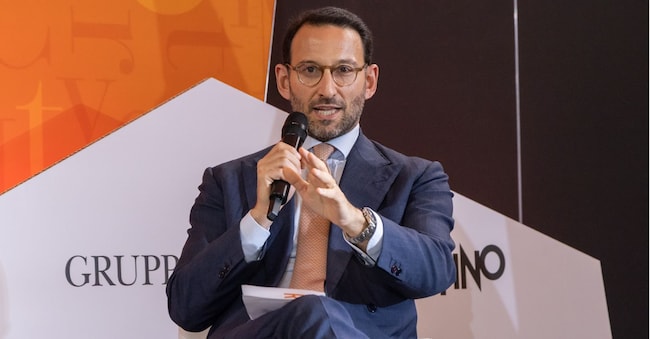
Nella foto: Federico Freni.

3' min read

3' min read

The decree laying down guidelines for the preparation by the professional pension funds of ad hoc regulations on investments is in the home straight. Managing to bring home a regulation envisaged by a 2011 law (Law no. 111, converting Decree Law no. 98/2011) is Economy Undersecretary Federico Freni, who has been working on it since 2021.

Mr Freni what is the aim of this regulation?

Loading...

After 14 years of unacceptable silence, the time has come tovalue the role that pension funds have within ourinvestment system. For too long, some people have thought of them as big, reckless charlatans intent on squandering members' contributions. The new regulation puts in black and white that the Casses have been and will be serious and reliable investors. No one denies the difficulties, linked to the erosion of the underlyings of some professions, but their role as a pillar of the real economy is beyond question. Now is the time to go a step further: each Cassa will have to equip itself with regulations adhering to the new framework, adapted to the specificities of each institution.

Doesn't this decree reduce the autonomy of the authorities, since it does not only provide guidelines but also sets stakes?

Far from it. It is a way of safeguarding the autonomy of the funds, within a general framework inspired by principles of balance and common sense. The State, as is right and proper, supports and accompaniesinstitutional investors who bet on our country. No stakes, therefore, rather a series of precautions to be taken in advance in order to better focus the use of their assets.

Why does Article 10 provide for incompatibilities for control functions? Does this not take away the possibility for the funds to directly verify how their assets are managed?

The incompatibility on the performance of control functions, as well as of administration and management, is an element of the system of checks and balances that inspires the entire Regulation. Without prejudice to the subsequent supervisory powers that are in the hands of the ministries, there is no desire to limit the management of the funds' assets. It is simply to protect the role of the contracted manager, rather than that of the investees, avoiding overlaps that may harm both the funds and these entities. The objective is a transparent and effective governance, not a tangle of rules that creates confusion.

Doesn't making the Procurement Code compulsory for the choice of manager entail risks? I imagine the case where the manager does not meet the expectations of the Fund and to change him by tender takes time with the risks that this entails. 

One must first ask whether these are services excluded from the scope of the Contracts Code. But in any case, even this formulation, which is the result of the indications of the Council of State, guarantees the operator sufficiently adequate autonomy. It is perfectly compatible with the room for manoeuvre of the operator.

What, in your opinion, is the added value that this decree brings to the world of the funds?

In a word: more autonomy. Hence greater responsibility in asset management and a broader involvement in the heart of the real economy, coordinating the public function and private nature of the funds. With the Regulation, an efficient ecosystem is finally born, where efficiency comes from the possibility of hooking up to safe, reliable and, above all, remunerative investment instruments. I am thinking, for example, of the Fund of Funds, an instrument of investment in the real economy that will allow the funds that adhere to it to enhance portfolio diversification, as well as greater capital growth.

Copyright reserved ©
Loading...

Brand connect

Loading...

Newsletter

Notizie e approfondimenti sugli avvenimenti politici, economici e finanziari.

Iscriviti