India Art Fair 2026: sales, new galleries and the rise of South Asia
With 135 exhibitors and strong international interest, the fair confirms India's role as a strategic global market hub

The 17th edition of the India Art Fair, which took place from 5 to 8 February in New Delhi, concluded with a week of solid sales and intense collecting activity, confirming India's role as one of the most dynamic markets in the global art system. The fair demonstrated a growing ability to attract capital, talent and curatorial interest, reinforcing its position in the international fair calendar and reaffirming its centrality as one of the country's most significant cultural events, where emerging artists and established names confront each other in front of a global audience.
With 135 exhibitors, including 94 galleries and 24 major art institutions, India Art Fair confirms itself as a strategic hub of the global market at a time when international attention is increasingly focused on South Asia and its art production. Alongside a solid presence of Indian galleries, the fair saw significant international participation, with important returns such as David Zwirner and Galleria Continua, flanked by seven newcomers: Whitestone Gallery, LAMB (London), Rajiv Menon Contemporary (Los Angeles), 193 Gallery (Paris), Gowen Contemporary (Geneva), Danfe Arts (Kathmandu) and DMINTI (New York). The Indian galleries presented masterpieces by the pioneers of modernism, whose legacy continues to influence contemporary artistic thinking. Among them, the works of M.F. Husain offered by Aicon Contemporary (New York), with prices ranging between USD 2 and 6 million, attracted particular attention, also in the light of the recent opening of a museum dedicated to him in Doha.
Emerging Artists, New Practices and Plurality of Languages
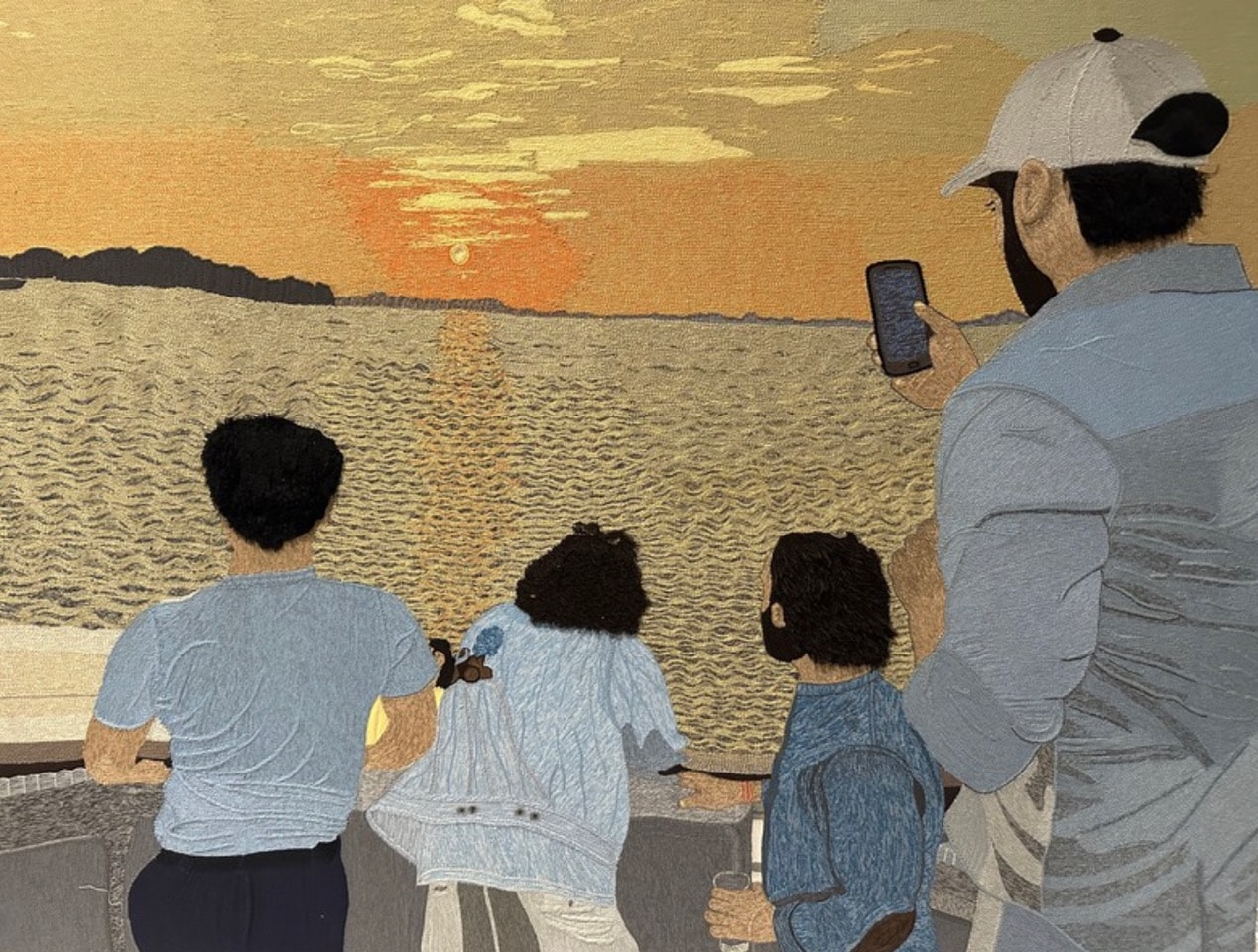
Of great interest was the Focus section, which foregrounded only shows devoted to artists from the South Asian region, resolutely including a new generation of artists born in the 1990s. In this context, LATITUDE 28 (New Delhi), which has always been attentive to mentoring and supporting experimental practices, presented the works of Viraj Khanna (1995), whose practice stands out for its experimental use of textiles and embroidery, employed in a satirical and surrealist key to investigate consumer culture, the aesthetics of Indian wedding ceremonies and the construction of the ideal image in the age of social media (prices between 900 and 2,500 dollars). Alongside him, Yogesh Ramkrishna (1991) proposed works between engraving, drawing and installation, often with interactive elements, exploring the conflict between Indian traditions and urban lifestyles, as well as the new identities that emerged during the pandemic (prices between $1,250 and $3,150).
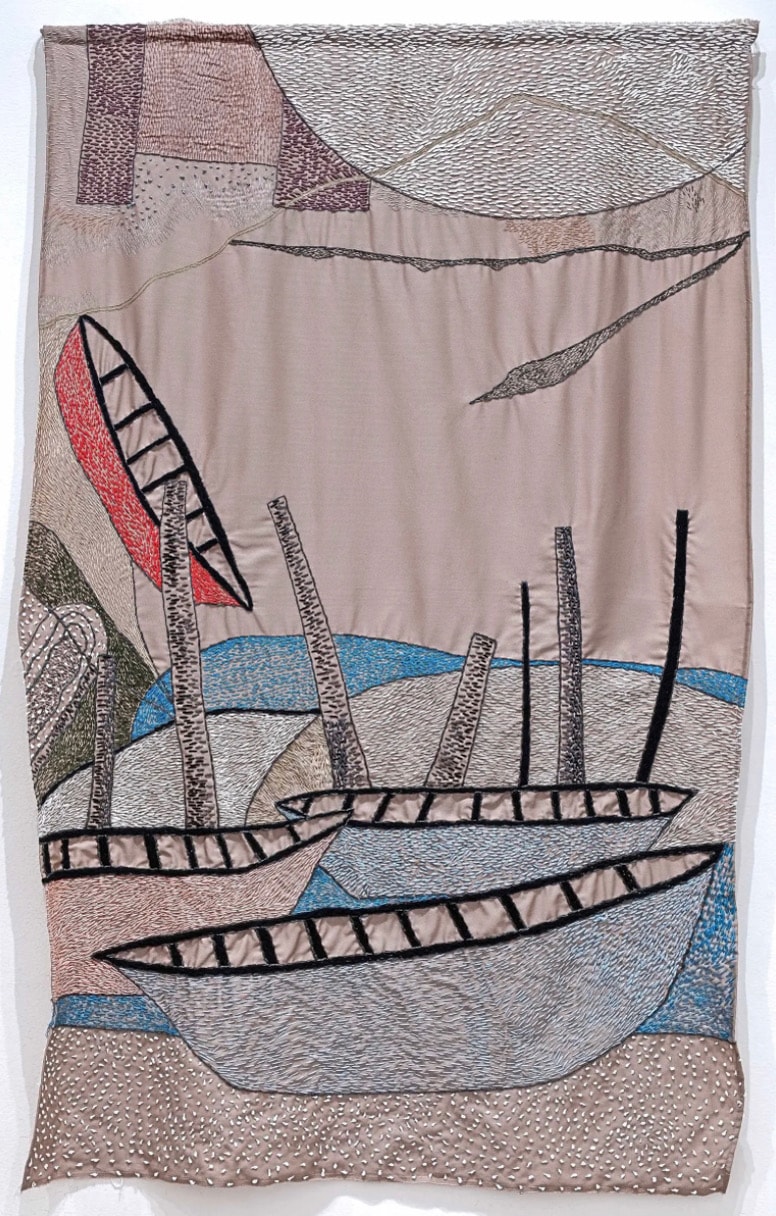
Among the most significant discoveries in the emerging landscape, Emami Art (Kolkata) presented the works of Manmita Ray (1996), an artist from North-East India whose practice, rooted in forest ecology and material memory, develops through organic forms understood as traces of time and generative memory. Describing herself as a 'palaeontologist of the landscape', Ray blurs the boundaries between natural and human history in an animistic narrative that immediately attracted the interest of collectors, with works offered at around 3,500 rupees. Similar attention was received by Sayanee Sarkar (1999), the youngest artist at the fair, whose works investigate the emotional dynamics in the liminal spaces between self and other, through a use of colour capable of evoking bodily sensations while maintaining a deeply introspective register.
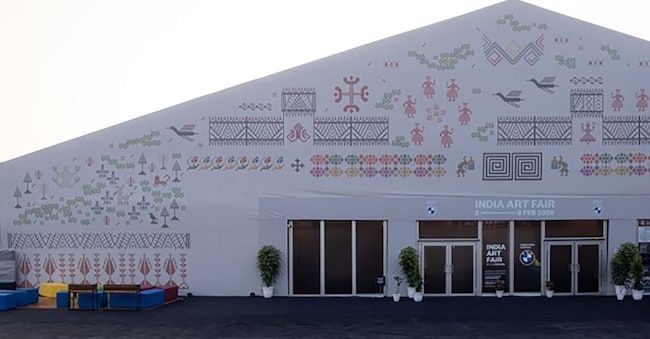
The multi-disciplinary gallery Experimenter (Kolkata, Mumbai), which also operates as an incubator for ambitious and challenging contemporary practice, presented 18 artists at the fair, including Afrah Shafiq, who was selected to realise the India Art Fair and BMW Art Commission 2026, on the occasion of the 10th anniversary of the collaboration between the two. With Giant Sampler, Shafiq transformed intimate embroidery motifs into a monumental surface on the façade of the fair, highlighting labour, memory and rituals that shape women's lives. His practice fuses tradition and technology, translating craft knowledge into algorithmic and digital forms, complemented by an interactive layer of augmented reality. A set of three works, inspired by embroidery motifs, was offered at a price of $5,000.
On the painting and digital reflection front, Nature Morte presented new works by Thukral & Tagra from the 'Arboretum' series, a project that explores the increasingly blurred boundaries between online and offline existence. Conceived as a speculative arboretum, the works show trees deforming, dissolving into pixels or folding in on themselves, while abstract figures observe the viewer from the foliage. The paintings deliberately slow down perception, turning contemplation into an almost devotional gesture, in contrast to the acceleration imposed by digital systems.