
India attacks 5 sites in Pakistan: 34 dead. New Delhi: 'Right to defend ourselves'
New Delhi's armed forces responded to the massacre of tourists a fortnight ago. Artillery strikes on the border: 15 dead in India and 6 in Pakistan

3' min read
3' min read
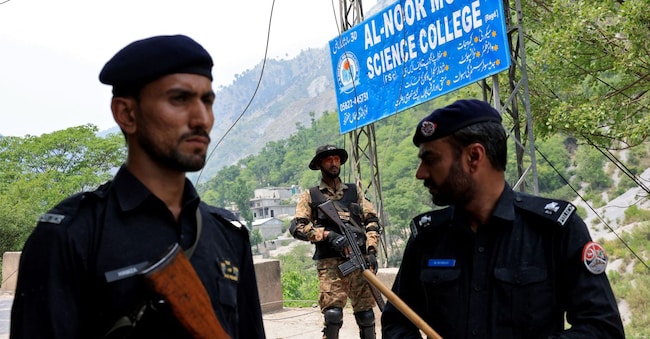
On the night between Tuesday and Wednesday, the Indian armed forces launched a series of missile attacks in Pakistan and the portion of Kashmir administered by Islamabad. The operation, reads New Delhi's communiqué, did not target military installations, but 'places where attacks against India have been planned' and 'by its very nature is not to be considered an escalation'. Five sites were targeted. According to the head of the Armed Forces in Islamabad, there were 26 victims, all civilians, including two girls. Pakistan responded with artillery strikes that allegedly cost the lives of 15 Indians, New Delhi reported. Six were killed on the other side of the border.
A fortnight ago, a militant group killed 26 civilians, including 25 Indians, in the portion of Kashmir administered by New Delhi. In the night, Indian Foreign Minister S. Jaishankar wrote on X that 'the world must show zero tolerance against terrorism'.
Pakistani Prime Minister Shehbaz Sharif declared that his country 'has every right to give a robust response to India's act of war'. A UN spokesman made an appeal on behalf of the secretary-general for the two countries to show 'utmost restraint' in their military actions. US Secretary of State Marco Rubio spoke to National Security Advisors on both sides. China is willing to 'play a constructive role' in easing tensions between the two countries. Concern expressed by Paris, while the EU and even Iran call on India and Pakistan to exercise restraint.
According to Pakistani Defence Minister Khawaja Muhammad Asif, the air force in Islamabad had shot down five Indian fighter jets, but there was no confirmation from New Delhi. Asif added that the Indian claim that the attacks targeted 'terrorist training camps' was false. After the explosions, Muzaffarabad, the capital of the Pakistan-controlled portion of Kashmir, plunged into darkness.
According to Rajeswari Pillai Rajagopalan, senior researcher at the Australian Strategic Policy Institute, the Indian action and the Pakistani response so far mirror previous incidents, and indicate a reluctance on the part of the two sides to escalate the conflict. "Things could get out of control," he said. "This is something that political leaders on both sides are aware of. If you look at their repeated conflicts over the past 30 years, since the two countries have nuclear weapons, both sides have shown restraint."


