The vote

India, stock market at highs awaiting Modi's confirmation

The election results on 4 June. According to the consensus of polling institutes, Modi's Bharatiya Janata Party is expected to substantially increase its haul of 303 seats from 543 five years ago

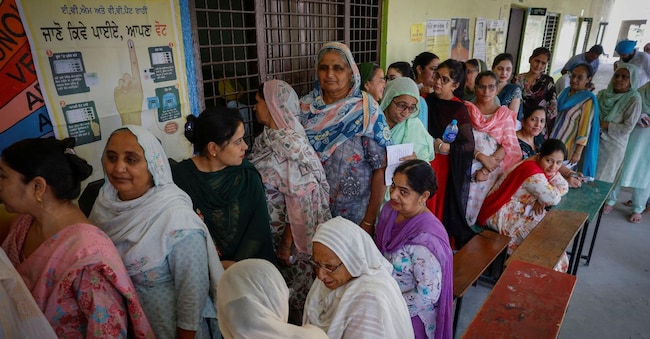
Gli elettori in coda per esprimere il loro voto in un seggio elettorale durante la settima e ultima fase delle elezioni generali, in un villaggio nel distretto di Firozpur, Punjab, REUTERS/Adnan Abidi

3' min read

3' min read

From our correspondent

NEW DELHI

Loading...

While waiting for the actual results of the general elections to be known on Tuesday, investors returned to the Indian stock markets, pushing them to all-time highs after exit polls at the weekend predicted a solid majority for the National Democratic Alliance, the coalition that has supported the premiership of Narendra Modi and his Hindu nationalist party, the BJP, for a decade.

The National Stock Exchange's Nifty Index closed at +3.25% after gaining 3.59%, while the Bse Index closed at +3.39% after gaining 3.76 intraday. Both indices almost doubled in value in the five years since the day before the announcement of the 2019 election results. Among the day's best stocks were those of the group headed by Gautam Adani, the Indian tycoon who just became Asia's richest man again and is considered the closest businessman to Prime Minister Modi. Adani Power closed at +16.17 per cent.

Among government bonds, the ten-year yield touched 6.9421%, the lowest level since 8 April 2022. The rupee strengthened to 83.1425, the highest level since 19 March, marking the best session in five months.

The markets see Narendra Modi as a more business-friendly leader than the opposition, although a comparison of the performance of the Indian economy during these 10 years under BJP traction and the previous Congress-led decade rewards the latter, both in terms of GDP growth rates and stock market indices. It must be said that in its ten years in power, the BJP also had to manage the pandemic in an extraordinarily vulnerable country.

According to the consensus of polling institutes, Modi's Bharatiya Janata Party is expected to substantially increase its haul of 303 seats from 543 five years ago. The figure is broadly in line with what was expected before the vote, but better than the estimates that have been circulating in recent weeks, when there had been a number of indications hinting at a more balanced result.

Precisely for this reason, some investors may decide to wait for the official results, since exit polls in India have in the past given even grossly incorrect indications. In recent times, they underestimated the BJP's margins of victory; in 2004, they even indicated as the sure winner a side that was defeated in the vote.

Making predictions on the course of the Indian elections - in these six weeks, 642 million people in 28 states and 8 territories have voted - is not easy, because the factors that decide the voters' orientations are multiple, some national, others purely local, not to mention religious and caste affiliations, the weight of regional parties and the volatility of alliances. Further complicating the reading this year may also have been the political climate in the country, which is not particularly lenient with the government's opponents and may have reduced the number of votes cast in favour of the opposition.

Not only that. The last five years have seen uneven economic performance: from the meltdown during the pandemic to the 8.2% GDP increase in the fiscal year ending 31 March. Even the post-pandemic recovery has created rifts between the upper classes, who have benefited from a boom that is dragging on consumption of luxury goods, and the lower classes, who have continued to grapple with high unemployment, jobs at 80% or more in the informal sector, and low wages. It is no coincidence that the Modi government has extended for another five years a welfare programme that distributes 5 kilograms of rice per month to over 800 million people, or 56% of India's population.

Precisely because of the difficult readability of the electorate, the election period has brought a certain degree of uncertainty to the markets, especially because of the foreign funds that, after having invested USD 20.7 billion in the two Mumbai stock exchanges in 2023, have in recent months shifted some of their capital, about USD 3 billion, elsewhere. Then there is the bubble factor. According to analysts at Kotak Institutional Securities, the Indian markets offer little in the way of growth at the moment because many stocks are allegedly overvalued.

Copyright reserved ©
Loading...

Brand connect

Loading...

Newsletter

Notizie e approfondimenti sugli avvenimenti politici, economici e finanziari.

Iscriviti